 One of my favorite globalization books is The Box: How the Shipping Container Made the World Smaller and the World Economy Bigger by Marc Levinson. It is the story of how the invention of the standard shipping container (those 20-foot steel boxes you see on ships, rail cars and truck beds) made international trade much cheaper, more efficient and more secure. Now it looks like another kind of box is about to shake up the wine world.
Cheap and Nasty
I’m talking about box wines or bag-in-box (BIB) wines (the Australians call them cask wines) that feature an airtight wine-filled plastic bladder inside a cardboard box. You use a built-in spigot to get to the wine. They can be found on the bottom shelf of the wine wall and behind the bar and out of sight at your local restaurant. They come in several sizes — 3 liter and 5 liter containers are the most common.
Box wines have a bad reputation. They first appeared in the 1970s and were filled with generic bulk wines. They were one step down from the popular 1.5 liter “magnum” bottles of “Burgundy,” “Chabils” and the notorious “Rhine” wine. Box wine was cheap, nasty stuff that acquired a frequently deserved bad reputation.
[Re]-Thinking Inside the Box
It’s time to reconsider box wine. Screw caps had a bad reputation, too, until quite recently. We associated them with low grade swill until fine wines appeared under screw cap (the New Zealand producers were in the vanguard) and we began to appreciate that that screw caps have many advantages. Now screw caps are actually associated with quality for some types of wine, especially youthful whites, and no one expects to pay less or get less because of the screw-top closure.
The technology of box wine is very solid. The airtight bladder is a neutral container that is well suited to holding wine for relatively short periods of time. (Don’t cellar box wine — consume within a year of production — check out the “drink by” date on the box.) The bladder and spigot do in fact protect the wine from oxygen in the short run, so it will last longer once opened (especially if the box is stored in the fridge) than similar leftover wine in bottles.
 Bladders are so good at the particular thing that they do that they have become an industry standard technology for bulk imported wines, which are shipped in huge bladders inside steel shipping containers (big bag in big box) and then bottled in the import market. So you may already be drinking box wine and not know it.
The Box Also Rises
The most recent Nielsen retail wine sales figures (reported in the October 2009 issues of Wine Business Monthly) suggest that box wine sales are growing. Wine sold in 3, 4 and 5 liter containers (most of it is box wine, I think) accounts for just under 10 percent of US supermarket wine sales, according to the Nielsen data (compared to 65% for standard bottles with the remainder in 1.5 liter and other formats). Sales are rising in this category, with 3 liter packages up 8.7% in the last year on a dollar basis, for example, and 5 liter packages are up 9.3% by value.
The total market for box wines rises if we include on-premises sales. Recent data (see previous posts) indicate that box wines (served to customers in carafes and by the glass) are strong sellers in casual dining establishments.
The rise of box wine is part of the trading down effect, clearly, since most box wines fall into the two price categories that are experiencing the highest growth. Sales of wines that are less than $3 per 750ml bottle equivalent have risen 7.1 percent according to Nielsen and by 10% for wines between $3 and $5.99. Supermarket sales of $20+ wines, on the other hand, have fallen by 3.4%.
Nasty, Brutish and Short?
Does this mean that Americans have traded down all the way to the bottom, back to the nasty box wines of the 1970s? The answer, incredibly, is no. Or at least not necessarily, according to the October 15 issue of Wine Spectator. You can’t miss this issue on the newsstand — it features a cover story on “500 Values for $20 or Less” and includes a set of box wine reviews that make interesting reading.
Wine Spectator purchased 39 box wines in packages that ranged from 1 liter to 5 liters. Twenty seven wines were rated as “good” (a score of 80-84) and ten “very good” (85-89). The names of the 2 wines that scored below 80 were not reported.
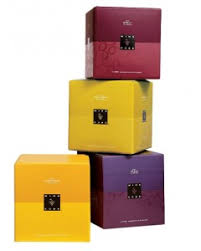
The top box wine, going by the rating numbers, is a white: Wine Cube California Chardonnay, which sells in Target Stores for $17 per 3 liter box, which is $4.25 per standard bottle equivalent. It earned a very respectable 88 points. Wine Cube is a partnership between Target and Trinchero, the maker of a wide range of wines including Sutter Home.
The best red wine (at 87 points) is the Black Box Cabernet Sauvignon Paso Robles 2006, which costs $20 for 3 liters or $5 per standard bottle equivalent. Black Box is a widely distributed Constellation Brands product.
Good and Cheap?
Some box wine, apparently, is both pretty good and pretty cheap. Perhaps just to show that they really do rate wines blind, Wine Spectator gave a pretty good 84-point score to a non-vintage Carlo Rossi Cabernet Sauvignon California “Reserve” wine. Five liters for $13, in case you are interested, That’s $1.97 per standard bottle equivalent.
How can decent wine be this cheap? One answer, of course, is that you can choose to make the wine itself less expensive by economizing in the cellar in many ways (less oak or none at all for red wines, for example). But to a considerable degree the box itself is responsible for the savings.
The bag in box container costs less than $1, according to the Wine Spectator article, which automatically saves $4 to $8 compared with a similar quantity of wine in standard glass bottles and the box they come in. Shipping costs are also less since the boxes weigh much less than glass bottles for the same quantity of wine and are less likely to be damaged in transit. There are environmental benefits too, especially in areas where glass bottle recycling is problematic because the sour economy has undermined the market for recycled glass.
Is box wine the future of wine? No. The wine market is too complex to be dominated by any single trend. But with better wine in better boxes (and with consumers embracing a more relaxed idea of wine) box wine deserves to play a bigger role in the future of wine. Another triumph for The Box!
>>><<<
November 1, 2009: I was recently interviewed about box wines by Simon Morton of Radio New Zealand’s This Way Up . Click on the link to listen to the interview.