Cracking the Coffee-Wine Paradox

My last post, Starbucks and and Coffee-Wine Paradox, raised questions about the relative price of wine. We think of coffee as being expensive, especially coffee drinks at Starbucks and other gourmet espresso bars. But compared to wine they seem like a bargain.

You can get an excellent coffee drink for less than the cheapest glass of on-premises wine. And the price difference between generic coffee and the best (a factor of 16 according to a Decanter article) looks great compared to wine, where the cheapest bottle costs a couple of bucks and there’s almost no upside limit.

Coffee and wine are both simple quotidian pleasures (or should be). Why are their relative prices so different? Several readers and colleagues offered answers to this question.

Cost Plus Wine

Suggestions (click on the article link above and scroll down to the comments section) focused on cost differences . Coffee is cheaper to ship and store, for example, and as Rob Boyd pointed out coffee isn’t typically aged for years like red wine, which increases cost.

Wine is typically bottled at the source, so to speak, which also contributes to the cost difference. Weight gets added relatively early in the wine supply chain whereas coffee gains weight at the point where it is combined with water, brewed and served — a real advantage. “If coffee was brewed in Colombia and then shipped to Starbucks around the world,” Steve DeLong wrote, “the price would be astronomical.” (See note below.)

Steve also had the insight that, while Starbucks-style coffee products are pretty labor intensive to make, this cost also comes at the final stage of production, whereas wine’s high labor costs come much earlier and are magnified by multiple mark-ups in the distribution system. An additional  dollar of labor in the cellar translates to maybe $2 higher retail price for wine here in the US with our three-tier distribution system. An extra dollar of barista wage cost at the end of the coffee product chain has less of an impact on price.

Cost and Price

The comments I’ve received go a long way toward unraveling the paradox. As I expected, however, most people try to solve the puzzle on the cost side — focusing on why wine costs are relatively higher than coffee costs. These are good answers, but it is important to consider the demand side, too. Everyone knows that some prices are determined by production cost, but others are dictated by what people are willing to pay.

Cost rules in highly competitive markets, where products are undifferentiated and good information is readily available. Willingness to pay is more important in imperfectly competitive markets with highly differentiated products and asymmetric information.  The markets for generic coffee and wine fall into the first category, fine wines and specialty coffees into the other.

What Will You Pay?

Why do highly-rated wines cost so much to buy? Production cost is a factor, particularly for generic coffee and wine, but it alone doesn’t explain the big price gap between the bottom shelf and the top. Fine wine and gourmet coffee cost so much because people are willing to pay these prices — and they lack the confidence to pay less in some cases because they associate lower price with lower quality (or maybe lower status).

So I think Steve Kirchner is on to something when he points to differences in marketing between coffee and wine. Gourmet coffee, Steve argues, is a relatively new phenomenon and it is certainly true that the range of choices is still limited compared to wine.

Closing the Coffee-Wine Gap

How many different coffees does your grocery store sell? Probably a few dozen at two or three price points. How many wines? Probably one or two thousand at many more price points!

Fine wine is more complicated than fine coffee and there is more uncertainty surrounding it. This makes the market more “imperfect” in the jargon of economics, and price and cost are more likely to deviate.

Will coffee producers ever catch up to their wine-making cousins? Not soon, I suspect, but I think they will close the gap!

>>><<<

Note: Steve’s comment about brewing coffee and then shipping it reminds me of a story I picked up back when I did tax policy economics.

When coffee was first introduced in Great Britain, it was subject to high excise taxes intended for luxury goods. Coffee shops reacted by adding non-coffee ingredients to the brew to stretch their precious grounds. Adulterated coffee. Ugh.

The tax authorities, seeing a revenue shortfall,  responded by ordering all coffee to be brewed in designated central canteens, then transported full-strength to the shops and reheated there. Twice cooked coffee. Ugh again! More expensive, of course, and adulteration was still possible, but at least the tax was paid.

Thus did high taxation ruin Britain’s taste for coffee, which has only recently recovered thanks in part to market entry by quality sellers like Starbucks.

Starbucks and the Coffee-Wine Paradox

The Water-Diamond paradox is a classic problem in economics. Water is essential to life, but it is relatively cheap in most situations. Diamonds, on the other hand, are non-essential luxuries in most uses, yet they cost the earth compared to water. How is this possible? How can market price deviate so clearly from practical value? A tough problem. John Law, John  Locke, Copernicus and Adam Smith all tried to provide sensible answers.

In Vino Paradox

Starbucks (the Seattle-based company that sells coffee with a side of lifestyle) presents us with a similar puzzle today. I call it the coffee-wine paradox in honor of the original problem.

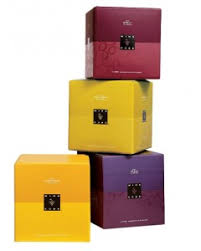
Starbucks has started selling wine. Not at branded Starbucks stores, but at three experimental “15th Avenue Coffee and Tea” shops in Seattle.  As near as I can tell they have not yet begun to market a Starbucks wine (the image here, courtesy of Google Image Search, is apparently bogus), but who knows what will happen in the future?

I know a number of coffee bars here in the Pacific Northwest that double as wine bars and authentic espresso bars in Italy nearly always serve alcoholic beverages including wine. Starbucks knows how to sell branded goods. Connect the dots. Maybe there is Starbucks Pinot Grigio in your future?

So what is the paradox? Well, the joke is that Starbucks coffee products are very expensive. You know what I mean — the mythical four dollar caffè latte? But when you compare Starbucks coffee to wine, it looks like coffee is unbelievable cheap. Thinking in terms of absolute price both wine and coffee cost a lot but, as in the water-diamond problem, their relative prices seem totally out of line. Why is wine so expensive compared to coffee and why is coffee so darn cheap?

Pulling the Supply Chain

Coffee cheap? Well, consider what a diagram of the global supply chain for a Starbucks latte would look like. The high tech espresso machine is usually Italian-made. The milk is probably a local product and the labor likewise, but the coffee and flavorings such as chocolate and vanilla come from all over the world and pass through many processes and middleman hands on their way to you.

Wine, by contrast, is the simplest of products. It practically makes itself. Even with the notorious three-tier distribution system here in the US, it is a whole lot easier to get wine into your glass than coffee into your 20-ounce cardboard takeaway cup.

And think about the wine bar versus espresso bar experience. Servers at the wine bar retrieve the bottle and pour some in your glass.  Pretty simple. At the espresso bar, by contrast, your coffee made to order with sometimes extravagant special requests (a tall half-caff soy vanilla latte with caramel?). No doubt about it, in terms of both global sourcing and labor-intensive local production,  Starbucks coffee seems like it would be a lot more expensive to produce and serve than my mythical Starbucks wine.

So here’s the paradox. $4 for a cup of coffee (or espresso-favored coffee drink) seems impossibly expensive. Ridiculous. A joke. But $4 is impossibly cheap for a glass of decent wine these days when you are dining out. What do you think Starbucks would charge for a glass of wine? If they conform to the industry rule of thumb (and I don’t know if the 15th Avenue shops do) the price for each glass would equal the wholesale cost for the bottle. So you’d expect to pay $6 and up for fine wine (wine poured from a bottle in this context) or less if it is drawn from a bag-in-box hidden somewhere in the back room.

Generic industrial wine sells for more than a premium custom-brewed coffee product. No question about it. Wine costs too much and coffee is too cheap. Why? That’s the first part of the coffee-wine paradox.

A Factor of Sixteen

A second aspect of the coffee-wine paradox is revealed in the November 2009 issue of Decanter magazine in a short but very interesting article on coffee. It seems that coffee, like wine, comes in all sorts of variations from cheap bulk product to the equivalent of vineyard-designated grand cru coffee cuvées (if that isn’t stacking the adjectives a bit too high).

Coffee connoisseurs will pay enormous sums to get the finest, rarest coffees. Decanter quotes the price of the winning coffee from a recent international competition at £13 per 250 grams of roasted beans or roughly 40 U.S. dollars per pound. On a per-cup basis, according to the article, the top coffee sells for about sixteen times the most humble Cup of Joe. That’s a pretty high premium to have the best instead of the simply pretty good.

Consider the corresponding wine ratio. If we take Two Buck Chuck as our Nescafé equivalent, the most expensive wine on the market would cost $32 in California (where Two Buck Chuck really costs $1.99) and $48 dollars per bottle nearly everywhere else in America. But this is ridiculous. The most expensive wines cost much more than this. If you read the wine magazines you frequently encounter prices of hundreds and even thousands of dollars for the finest, rarest wines. The coffee factor is sixteen from bottom to top. The wine factor, by comparison, is fifty, sixty, a hundred, even more.

What is the solution to the coffee-wine paradox? Why does wine seem to cost so much more than coffee despite the factors that would seem to raise coffee’s cost? And why do the best wines cost so much more, in relative terms, than the best coffees? What’s your answer? Watch this space for mine!

Wine and the China Syndrome

A few years ago I edited a book on globalization for a New York Times series. I was given everything that was published in the NYT in the 20th century and asked to tell the story of globalization’s rise and fall and rise again. One of the things I uncovered as I studied the history of world trade over those 100 years was what I call the China Syndrome.

Nightmares and Dreams

The China Syndrome is both the dream that China will buy all the goods we try to sell her and the fear that she will return the favor and take over our markets. The Times was full of China Syndrome a hundred years ago. History buffs might want to look up an article called “The Future of our Trade with China” that promoted the dream on April 13, 1900 and an early suggestion of the nightmare in “Japan and China find a Ready Market Here” published on September 3, 1905. Both are reprinted in my NYT volume.

The same dreams and nightmares are commonplace today. I was reminded of this recently while reading the Grape Wall of China blog, a reliable source for China wine news and views.  An article by Jim Boyce (aka Beijing Boyce) caught my eye: “No Worries: Australian targeting China wine market at every level.” The article tells of Australia’s dreams for Chinese wine sales.

The Blunder Down Under

The Australian wine industry is dreaming about a Chinese future because their present reality is an emerging nightmare. Australian wine is being battered by a number of factors, both natural and market driven. Australian wine sales are falling here in the United States and in Britain, too, I understand. Although there are many distinctive and delicious Australian wines, “Brand Australia” is pretty much defined by one-dimensional Shiraz and over-oaked Chardonnay, both of which have fallen from consumer favor. The “brand” was easy to understand and promote, but it didn’t have legs. Many consumers seem to have moved on and there are plenty of options for them to choose from. The recession only makes things worse.

The situation in some parts of Australia is really dire. Constellation Brands, for example, is closing its second Australian winery for lack of either a market for its output or a buyer for its assets. The global recession puts the big multinationals like Constellation under more pressure than in the past. They are less able to afford to nurse along failing brands. That’s bad news for the particular part of Australian wine that seems to define the brand. It’s time to dream up a better plan.

Australia has adopted a new marketing plan called Landmark Australia that is meant to highlight the quality and diversity of its fine wine industry. It’s a good idea but a difficult one to put into practice — hard to un-ring the Yellow Tail bell, if you know what I mean. And I am generally suspicious of regional or national marketing plans because I think collective brands (especially quite diverse and ill-defined ones) are always harder to sell than private brands.

Working in China … or Not

The Landmark Australia plan may be working in China. Or maybe not.

Beijing Boyce reports that Australia is promoting its new image pretty vigorously and has risen to #2 in bottled wine imports after France. The French have 40% of the fine wine market to Australia’s 20-22%. The U.S., Italy and Chile trail far behind. So perhaps Australia will be successful in redefining itself in a new market and maybe, ultimately but with more difficulty, in markets like America and Britain where it is already established. The geographical proximity to China is certainly an advantage.

There’s evidence of the China Syndrome dream in the data, but also hints of a possible nightmare. It seems that Australia is doing even better (in terms of rising market share) in the bulk wine market than in sales of bottled wine. Grape Wall reports that

… in the first half of 2009, Australia ranked second as a source of imported bulk wine. While Chile (~15 million liters) represented half of the ~31.5 million liters entering China, Australia came second with a quarter. Argentina (last year’s number two, with a quarter share) and the United States (~6.5 percent each), Spain (~5 percent), and South Africa and France (just over 1 percent each). This is quite a leap from the past four years, when Australia represented from 2 percent (2005) to 10.5 percent (2007).

One reason for higher sales at the low end of the market is that surplus bulk wine is being dumped (sold below cost). Hard to compete with that, of course. I know it is better to get something than nothing for all that surplus wine, but it is hard to be optimistic when this market segment is Australia’s greatest Chinese success. Australia wants to get out of the bulk market, in terms of its brand, not deeper into it.

China versus Colorado

How real is the dream part of the China Syndrome for wine? I asked Tom Hedges of Hedges Family Estate (an important independent producer here in Washington State and a pioneer in the Red Mountain AVA) because he is particularly knowledgeable about export markets in Asia. Tom put the dream into perspective. Here is his take:

As an American producer, we have the U.S. market, which today is number one or number two in the world for total consumption.  An example is flying to Denver costs $300 round trip, and takes no time.  Our potential to sell in Colorado alone is equal to or better than that in all of China;  the Chinese consume very little wine, in total, of which 85% is Chinese production.  And, being [an emerging] consuming market, they want only two kinds of wine:  Famous and cheap.  About 99% of the world’s wineries are neither, which means you have to develop a market for your brand.  Costly!

Tom’s clear conclusion was that he could achieve more and do it more economically by focusing on Denver and Boulder instead of Shanghai and Beijing.The allure of China is great,” he says, “the economic reality not so great.  American producers still have lots of Colorados to conquer here in the U.S.

This view aligns perfectly with my own, for now at least. Not many of those folks who dreamed the China Syndrome dream a hundred years ago woke up to great wealth, although a few probably did. I guess that’s why the call them dreams.

Gourmet, Rachael Ray, Chardonnay Connection

1940-2009 RIP

I was trying to explain to my students the lasting importance of Robert Mondavi and I suddenly realized that Julia Child was the key. Mondavi tried to do for wine in America what Julia tried to do for food. This made me think about other parallels between our wine and food cultures — and the significance of the last issue of Gourmet magazine.

The End of Gourmet

Condé Nast announced yesterday that it was pulling the plug on Gourmet magazine, America’s signature culinary monthly since 1940. The cause of death, clearly, is the economic crisis, which has reduced advertising pages by over 30 percent. Gourmet‘s subscribers (there are nearly a million of them) will have to find something else to read on the still-cluttered Food & Lifestyles section of the newsstand. Bon Appétit (another Condé Nast title) is the obviously choice, although it is not a perfect substitute — more recipes I’m told, and less upscale travel and leisure.

Gourmet‘s obituary appeared everywhere — even on the front page of the New York Times. The Times made it clear that this wasn’t just a business decision (although Condé Nast assured us it was — the McKinsey consulting firm made the call). This is really the end of an era. And not a good end.

“It’s Rachael Ray’s world now,” the story declared, referring to the 30-minute-meal Food Network star; “we’re all just cooking in it.” Roll over, Julia Child (as Chuck Berry might have said) and tell Escoffier the news.

Rachel Ray Chardonnay?

Setting aside for a moment the premise of the Times article — that Gourmet defines the era — I wonder if what’s true for food in America is also true for wine? This must be a valid concern because it is he gist of the question that I’m most frequently asked by journalists — is the current slump in fine wine sales (especially wines selling for $20 or more in the shops) a temporary trend or a permanent shift in demand? Is this the end of an era for wine? When the economy perks up eventually, will people want to buy very expensive wines again? Or is the switch to cheaper, simpler wines (my made-up Rachel Ray Chardonnay) here to stay?

The question became more interesting as I read the Times article. I tried to substitute wine terms for food terms in the article and it seemed to make sense. Here’s what I mean.

The death of Gourmet [insert name of expensive wine] doesn’t mean people are cooking less [drinking less] or do not want food magazines [good wine], said Suzanne M. Grimes, who oversees Every Day With Rachael Ray, among other brands, for the Reader’s Digest Association.

“Cooking [wine drinking] is getting more democratic,” she said. “Food [wine] has become an emotional currency, not an aspiration.”

It has also become democratized via the chatty ubiquity of Ms. Ray [Gary Vaynerchuck?] and the Food Network stars. Ms. Reichl [the Gourmet editor — insert Robert Parker or maybe Jancis Robinson] is a celebrity in the food [wine] world, but of an elite type. She [or maybe he] “is one of those icons in chief,” said George Janson, managing partner at GroupM Print, part of the advertising company WPP. But what harried cooks [budget conscious wine drinkers] want now, it seems, is less a distant idol and more a pal.

The substitution works, pretty well, don’t you think? And the McKinsey consultants surely did their job. Food and wine down the tubes. Maybe Robert Mondavi and Julia Child are both turning in their graves!

Exaggerated Rumors

But rumors of the death of both fine dining and fine wine are probably exaggerated, as Mark Twain might have said. Gourmet is an iconic brand and the fact that Condé Nast cut it rather than Bon Appetit surely does mean something. But we have to remember that print magazines themselves are an endangered species in this internet age. What information we consume and in what form are both changing very rapidly. Magazines will change rather rapidly in the next few years to remain relevant or else they’ll fade away. Gourmet isn’t the first and won’t be the last to bite the dust.

So I am not willing to declare fine wine (or the Gourmet food lifestyles) dead on the basis of this news alone. The question of whether Americans will return to their old wine-drinking habits when the recession ends remains open for now.

Note: A lot of great wine writing appeared in Gourmet over the years. Look for a future post that tries to understand the changing American wine work through the Gourmet lens.

Wine’s Future: It’s in the Bag (in the Box)

One of my favorite globalization books is The Box: How the Shipping Container Made the World Smaller and the World Economy Bigger by Marc Levinson. It is the story of how the invention of the standard shipping container (those 20-foot steel boxes you see on ships, rail cars and truck beds) made international trade much cheaper, more efficient and more secure. Now it looks like another kind of box is about to shake up the wine world.

Cheap and Nasty

I’m talking about box wines or bag-in-box (BIB) wines (the Australians call them cask wines) that feature an airtight wine-filled plastic bladder inside a cardboard box. You use a built-in spigot to get to the wine. They can be found on the bottom shelf of the wine wall and behind the bar and out of sight at your local restaurant. They come in several sizes — 3 liter and 5 liter containers are the most common.

Box wines have a bad reputation. They first appeared in the 1970s and were filled with generic bulk wines.  They were one step down from the popular 1.5 liter “magnum” bottles of  “Burgundy,” “Chabils” and the notorious “Rhine” wine. Box wine was cheap, nasty stuff that acquired a frequently deserved bad reputation.

[Re]-Thinking Inside the Box

It’s time to reconsider box wine. Screw caps had a bad reputation, too, until quite recently. We associated them with low grade swill until fine wines appeared under screw cap (the New Zealand producers were in the vanguard) and we began to appreciate that that screw caps have many advantages. Now screw caps are actually associated with quality for some types of wine, especially youthful whites, and no one expects to pay less or get less because of the screw-top closure.

The technology of box wine is very solid. The airtight bladder is a neutral container that is well suited to holding wine for relatively short periods of time. (Don’t cellar box wine — consume within a year of production — check out the “drink by” date on the box.) The bladder and spigot do in fact protect the wine from oxygen in the short run, so it will last longer once opened (especially if the box is stored in the fridge) than similar leftover wine in bottles.

Bladders are so good at the particular thing that they do that they have become an industry standard technology for bulk  imported wines, which are shipped in huge bladders inside steel shipping containers (big bag in big box) and then bottled in the import market. So you may already be drinking box wine and not know it.
The Box Also Rises

The most recent Nielsen retail wine sales figures (reported in the October 2009 issues of Wine Business Monthly) suggest that box wine sales are growing. Wine sold in 3, 4 and 5 liter containers (most of it is box wine, I think) accounts for just under 10 percent of US supermarket wine sales, according to the Nielsen data (compared to 65% for standard bottles with the remainder in 1.5 liter and other formats). Sales are rising in this category, with 3 liter packages up 8.7% in the last year on a dollar basis, for example, and 5 liter packages are up 9.3% by value.

The total market for box wines rises if we include on-premises sales. Recent data (see previous posts) indicate that box wines (served to customers in carafes and by the glass) are strong sellers in casual dining establishments.

The rise of box wine is part of the trading down effect, clearly, since most box wines fall into the two price categories that are experiencing the highest growth. Sales of wines that are less than $3 per 750ml bottle equivalent have risen 7.1 percent according to Nielsen and by 10% for wines between $3 and  $5.99. Supermarket sales of $20+ wines, on the other hand, have fallen by 3.4%.

Nasty, Brutish and Short?

Does this mean that Americans have traded down all the way to the bottom, back to the nasty box wines of the 1970s? The answer, incredibly, is no. Or at least not necessarily, according to the October 15 issue of Wine Spectator.  You can’t miss this issue on the newsstand — it features a cover story on “500 Values for $20 or Less” and includes a set of box wine reviews that make interesting reading.

Wine Spectator purchased 39 box wines in packages that ranged from 1 liter to 5 liters. Twenty seven wines were rated as “good” (a score of 80-84) and ten “very good” (85-89). The names of the 2 wines that scored below 80 were not reported.

The top box wine, going by the rating numbers, is a white: Wine Cube California Chardonnay, which sells in Target Stores for $17 per 3 liter box, which is $4.25 per standard bottle equivalent. It earned a very respectable 88 points. Wine Cube is a partnership between Target and Trinchero, the maker of a wide range of wines including Sutter Home.

The best red wine (at 87 points) is the Black Box Cabernet Sauvignon Paso Robles 2006, which costs $20 for 3 liters or $5 per standard bottle equivalent. Black Box is a widely distributed Constellation Brands product.

Good and Cheap?

Some box wine, apparently, is both pretty good and pretty cheap. Perhaps just to show that they really do rate wines blind, Wine Spectator gave a pretty good 84-point score to a non-vintage Carlo Rossi Cabernet Sauvignon California “Reserve” wine. Five liters for $13, in case you are interested,  That’s $1.97 per standard bottle equivalent.

How can decent wine be this cheap? One answer, of course, is that you can choose to make the wine itself less expensive by economizing in the cellar in many ways (less oak or none at all for red wines, for example). But to a considerable degree the box itself is responsible for the savings.

The bag in box container costs less than $1, according to the Wine Spectator article, which automatically saves $4 to $8 compared with a similar quantity of wine in standard glass bottles and the box they come in. Shipping costs are also less since the boxes weigh much less than glass bottles for the same quantity of wine and are less likely to be damaged in transit.  There are environmental benefits too, especially in areas where glass bottle recycling is problematic because the sour economy has undermined the market for recycled glass.

Is box wine the future of wine? No. The wine market is too complex to be dominated by any single trend. But with better wine in better boxes (and with consumers embracing a more relaxed idea of wine) box wine deserves to play a bigger role in the future of wine. Another triumph for The Box!

>>><<<

November 1, 2009: I was recently interviewed about box wines by Simon Morton of Radio New Zealand’s  This Way Up . Click on the link to listen to the interview.