Five Things I Think I Learned at the Napa Valley Wine Writers’ Symposium

wine-words1Sue and I are back from the Professional Wine Writers’ Symposium at the Meadowood Resort in the Napa Valley and it is time to reflect upon the experience. Herewith some notes and a list of five things that I think I learned about the wine writing business.

Anatomy of an Amazing Experience

The wine writers’ symposium has been going on for about a dozen years and it is an amazing experience. The idea is that you bring together a faculty of experience professional wine writers to teach, coach, mentor and help network a group of rising star wine writer participants. (This year’s “student” group was so well qualified that the student and faculty roles sometimes reversed — a good thing.)

The setting is fabulous. Classes and accommodations are at the Meadowood Resort, which is also one of the sponsors along with the Napa Valley Vintners association and the Culinary Institute of America’s Greystone Napa Valley campus. Bill Harlan of Harlan Estate wine fame co-founded Meadowood and actively supports this initiative. The CIA’s sponsorship derives from its wine education program for budding hospitality professionals.

People come to the symposium to learn to be more effective wine writers and especially to find ways to be more successful on the professional side of things — career development and income generation being important factors. Sue (who was a career and writing coach) and I (one of the speakers) came to learn more about how the wine writing business fits into the wine industry generally and of course to meet all the talented participants.

Reflecting upon four days of intense activity at Meadowood, the CIA Greystone and a tasting at the historic Charles Krug winery, I have come up with a list of five lessons we took away from this experience.

Lesson One: An Industry in Transition

The wine writing business (Jamie Goode would correct me here — the wine communicating business) is an industry in transition. Ironically, although wine is more popular and integrated into popular culture than ever, the number of traditional media outlets for wine writing has declined. There are fewer newspaper wine writing jobs, for example, and fewer newspapers, too.

There is more wine content available to consumers than ever before, but much of it is on the web and provided for free by both professional and amateur authors. Some of the amateurs are highly qualified, of course, but their freely provided content makes earning an income in this field more difficult.

The internet and the move to mobile communications are disruptive technologies generally and the wine writing business is no exception. That said, disruption creates both challenges and opportunities and the key lies in choosing a strategic response.

Lesson Two: How Wine Writers Are Like Actors

Wine writers are a little like actors from an economic point of view.The most commonly repeated line among aspiring actors, it is said, is something like “My name is Robert and I will be your waiter tonight.” Day jobs may suck, but having a secure source of income is very useful. Being an actor is hard. Making a living acting is even harder. Ditto wine writing.

A small number of wine writers do very well indeed! They work very hard and earn good incomes, achieve a certain level recognition and even celebrity. Most wine writers, however, work very hard and scramble to scrape together a living with multiple jobs and non-wine writing projects — the economic equivalent of an actor’s waiter gig.

Even the most successful contemporary wine writers pursue multiple disciplines, however, generating content for newspapers, television, the web and organizing sponsored tastings, wine classes, consumer programs and much more. Jancis Robinson used to jokingly refer to her wide-ranging set of activities as “the empire” although an economist would recognize it as a diversified business model built around a core expertise.

Hong Kong-based Jeannie Cho Lee MW’s “empire,” for example, includes books, university teaching, her food and wine website AsianPalate.com, a job advising Singapore Airlines on their wine selections, a television series, magazine articles and much, much more.

Support yourself with a single type of work (magazine editor? wine book author?)? Yes, it is done — Eric Asimov, the chief wine critic of the New York Times is an example — but that’s the exception not the rule. Need to create that diversified empire. And then hope for some luck, too.

Lesson Three: No Single Path

There is no single sure path to success in wine writing. Some of the top people in the field are Masters of Wine or Master Sommeliers, for example, but others like Asimov are self-taught. That said, I noticed that a great many of the talented “students” were seeking WSET credentials. The detailed wine knowledge is important, of course, but this is also a way to signal potential clients of serious commitment, which is useful in a crowded and competitive marketplace.

It seems to me that many of the successful writers leveraged specific assets effectively. Jamie Goode was a successful science editor, for example, and the scientific foundation of his writing clearly differentiates his product. Decanter contributor Jane Anson’s deep knowledge of Bordeaux gives her a comparative advantage.

The day of the generalist (I am thinking of our fantastic keynote speaker Hugh Johnson, who seems to know everything about wine) seems to be passing or perhaps has passed as a business model.

Specialization is important, whether by market segment, winemaking region, or wine issue area. But, as noted above, the ability to make connections and to communicate across several platforms is also critical to success.

Lesson Four: Passion is Not Enoughpassion-portugal-red-blend-77x300

The writers we met who seem to have the greatest success share drive and passion, but they are also strategic in the way that they invest their time and other resources, entrepreneurial in seeking out and making their own opportunities, and multidisciplinary. They leverage their core comparative advantage effectively to make themselves valuable to clients and readers, not simply to be more visible to the public.

Let me repeat part of that. They think about their clients and audiences and what they can do to create value for them. Then, of course, they have to persuade their clients of the return on investment and convince them to share some of those returns with them.

More work is needed to measure the value created by high quality wine communications and to distinguish it  from freely available web content, for example. The statistics we heard about low and stagnant “dollars per word” freelance writing rates suggest that  professional wine writing has low value, that its value is not widely appreciated, or perhaps that professional writers are in a weak negotiating position when it comes to writing fees. (Alder Yarrow argued that this is due to an over-supply of wine writers.)

Lesson Five: The Value is There

Ironically, even as the average return to professional wine writing has declined, its importance to the industry has actually increased as the wine industry becomes more competitive with other sectors that compete for sales and attention.

Wine writers tell wine’s story and story-telling is a valuable skill. Consumers do not just sniff with their noses and slurp over their tongues. Lots of things smell good or taste good. The key, it seems to me, is to engage the imagination and take wine enthusiasts on a journey and the people we met at Meadowood and others like them are skilled and valuable guides.

Or at least that’s the lesson I take form the substantial investment made by the symposium sponsors. Napa Valley Vintners, Meadowood and the CIA will  get some direct publicity from the symposium itself (this column, for example) but the real payoff comes down the road as all the participants become more effective in their work and better able to tell the Napa Valley story and the story of wine more generally.

The sponsors actually kicked up the investment a notch this year. In the past most “students” paid symposium expenses while a small number received fellowships to offset cost. This year a new “all fellowship” model was rolled out, with fewer “students,” high admission standards, and full-tuition fellowships. Plans are coming together to build an endowment to sustain the full fellowship model into the future. I like the forward thinking behind this.

There was a lot to absorb at this conference and I am only scratching the surface here, but these are some of the things I think I learned at Meadowood.

>>><<<

Thanks the symposium’s organizers for inviting us to take part and to the sponsors for their generous support of the program. Thanks, as well, to all the Napa Valley wineries who donated the wines we used in classes and the meals and receptions. Shout-outs to so many including especially Jim Gordon, Julia Allenby, and Antonia Allegra.

Sue and I also want to thank Cain Winery for inviting us to an intimate dinner they hosted at Terra Restaurant in St Helena where we had a glorious meal and tasted Cain Five wines from 1986, 87, 97, 98, 2006, 07, 10, 11 and 2012. It was an awesome experience. Thank you!

>>><<<

Say, when is someone going to write a song about wine writing? Try substituting “wine communicator” into the song at the appropriate place and see if it works. Cheers.

Four Faces of Sustainability at the Unified Wine & Grape Symposium

sonomaSue and I recently returned from the Unified Wine & Grape Symposium in Sacramento and we noted several important themes in the meeting rooms, on the trade show floor and in our many conversations with wine industry colleagues. One significant recurring topic was sustainability, which was also on the lips and minds of the people we met last November at the SIMEI meeting in Milan. Here’s a brief report.

Sustainable Sonoma

The week  began with the announcement that the Sonoma County Winegrape Commission had received the Governor’s Award for Sustainability, California’s highest environmental honor. The group, which represents more than 1800 grape growers, set an ambitious goal two years ago — to have 100 percent of the county’s vineyards certified sustainable by 2019. Did I say ambitious? Make that very ambitious!

And yet they seem to be doing it, increasing the proportion of vineyards with third-party sustainable certification from one-third in 2015 to 48 percent this year. Overall 64 percent of the county’s vineyards have had a sustainability assessment and the proportion continues to grow. It is obvious that Sonoma County winegrowers appreciate the importance of sustainability and are making impressive progress.

Will they achieve 100 percent sustainability by 2019? That’s a big goal and complete compliance may be difficult to achieve. But who would have guessed that they could come so far so quickly. I would not bet against them.

Fred Franzia’s Lecture

The next day’s program featured a luncheon speech by Fred Franzia, the head of Bronco Wine Company and Mr. Two Buck Chuck to his legions of fans. Franzia doesn’t give many public speeches and this event sold out quickly. The room was packed with industry executives and winegrowers.  (You might enjoy this article about the speech from the Italian wine press — I love the headline “Un Irriverente Fred Franzia Scalda Sacramento.”)

Franzia’s speech ranged over many topics. He honored important figures in California wine, talked about his own family’s long history in wine, and made some pointed comments about current wine policies. He also announced the sale of the one-billionth bottle of Charles Shaw wine and Bronco’s acquisition of the Petri Wine name from The Wine Group and the return of that name to Bronco’s historic Escalon winery. Petri was at one time the largest winery in the U.S., dwarfing current world production leader Gallo.

Bronco is involved in a number of important sustainability initiatives (for example it recently received a Zero Waste Gold certification), but Franzia’s speech focused on a topic of particular importance to the growers in the audience: water. Franzia noted that many growers in the San Joaquin Valley have been slow to adopt drip irrigation technology to their large vineyards. He explained the benefits of this technology and called upon the group to be better stewards of scarce water resources.

Sustainable State of the Industry

Once again this year I moderated and spoke at the big “State of the Industry” session on Wednesday. Last year all three of us who spoke talked about the importance of sustainability in different aspects of the wine business and the topic appeared again this year, but in a different guise.

Nat DiBuduo of Allied Grape Growers found himself with the unhappy task of telling the audience that it looked like thousands of acres of vines would need to be grubbed up in the San Joaquin Valley. Why? A combination of ageing vines, unmarketable grape varieties, falling demand in the value wine category and higher profits in other crops, especially tree nuts. Not the news Nat wanted to give. He planted some of those vineyards himself and hates to see them go.

Does the perfect storm of changing market dynamics spell doom for winegrapes in the Central Valley? A restructuring is needed, Nat said, but the key is to move the business upmarket to higher quality. There is a growing market for higher quality wine made from better grapes and sustainability is part of that package, he advised. Environmental and economic sustainability are not enemies, they need to be partners in this key winegrowing region.

EcoVolt Waste Water Innovation

Sustainability has many faces and we found lots of them on the trade show floor. The Unified is the western hemisphere’s largest wine industry gathering, so it attracts a diverse crowd, including entrepreneurs working on projects to help wineries that are committed to sustainability to achieve their goals.

We saw a number of interesting products, but the one that especially caught my attention was the EcoVolt Sustainable Wastewater Treatment system from Cambrian Innovation. Cambrian is a biotech company that was spun out of MIT labs in 2006. The EcoVolt product uses a proprietary bio-electric process to remove more than 99 percent of contaminants from waste water (and wineries generate a lot of waste water), in the process producing methane gas, which an integrated co-generation process converts into heat and power. Microbes do the heavy lifting, cleaning the water and producing the gas, and innovative technology brings all the pieces together.

I was particularly interested in the EcoVolt Mini, which is housed in a standard 53-foot shipping container (see image below) and scaled for wineries producing 200,000 to 500,000 cases per year. Bigger units scaled to larger needs are also available. With so much water used in the cellar, the need for products like this is clear.

Four Faces and More

I like that Cambrian’s product addresses several aspects of sustainability — water, power, cost — in this innovative way. If the goal of a sustainable wine industry is going to be reached we are gong to need a lot of faces involved — of regional organizations, growers and winemakers beyond the North Coast and innovators both inside the wine sector and those bringing ideas from other areas.

For a long time it has seemed to many of us that sustainability was often more talk than action. Lots of people talked about sustainability, but real progress was sometimes hard to see. Have we turned a corner? Are we really moving ahead? We saw positive signs in Sacramento.


How to Make a Small Fortune in Wine … Story-Telling Time in Napa Valley

Sue and I are in Napa Valley, California this week to participate in the 2016 Professional Wine Writers Symposium at Meadowood Resort. The symposium is a project of Meadowood Napa Valley, the Napa Valley Vintners Association and the Culinary Institute of America. The theme this year is “Taste Locally, Publish Globally.” You can read the program here.

No Joke: Writing About Wine Business

Sue is a career and writing coach and I am going try to convince the participants to think seriously about writing about the wine business as well as more conventional topics such as wine-makers, wine regions and wine tasting. My talk is called “How to Make a Small Fortune Writing about the Wine Business.” The title, as you have already guessed, it a variation of the world’s oldest wine joke, which begins “How do you make a small fortune in the wine business?”

small fortune

(In case you haven’t heard the joke (which seems unlikely) I will provide the answer at the end of this column.)

The symposium takes place in rather regal settings. The Meadowood Resort looks like a fantastic place (I’ve not visited before) and we have classes at Meadowood, the CIA Greystone facility (the historic Christian Brothers winery) and local wineries.

I have taught in many types of classrooms around the world (ask me about the Communist-era blackboards in an old university classroom building in Prague), but nothing as elegant as this!

Wine and the Dismal Science

And we are in rather illustrious company, too. Hugh Johnson and Jay McInerney are the headliners, but really all of the speakers and coaches are headliners in my book. You can see names, faces and read bios here.  My talk is sandwiched between McInerney and the New York Times’s Eric Asimov. No pressure!

I am a little bit of a fish out of water here. I am not really a wine writer (I can see some of you nodding in agreement!). I’m an economist who studies and writes about the global wine industry and most of my talks are aimed at the industry audience. Wine and the dismal science — an unexpected pairing but a very interesting one.

No Complaints!

Don’t get me wrong —  I have no complaints about being included in this wine writer group. The perks of writing about the wine business are pretty appealing, including the chance to rub elbows with these wine celebrities and to learn from them and from everyone here like the student I hope ever to be.

I think everyone will have fun at the symposium but, returning to the theme of my talk, this is real business not a holiday junket. It is business to the participants, who make their living writing about wine. And it is all business for the organizers, too, who have a strong interest in nurturing wine communication.

Wine is all about telling stories, so how smart is it for the Napa Valley industry to invest in the story-tellers? Very smart and very forward-looking.

>><<<

OK, here is the promised punchline. How do you  make a small fortune in the wine business? You know the answer. Start with a big one!

How Much Has the Strong Dollar Affected U.S. Wine Exports?

loonieLast week I wrote about the strong U.S. dollar and its impact on U.S. wine imports. My conclusion was that there was an exchange rate effect, but it was less than you might otherwise expect because of specific factors that are at work in the sparkling, bulk, and bottle wine import markets today.

This week we turn to U.S. wine exports. Econ 101 tells us that a strong currency discourages exports by increasing their cost to foreign buyers and this is an important factor. Thus, for example, we would expect U.S. wine exports to Canada to have fallen over the last year.

Loonie Times

The U.S. dollar has appreciated  dramatically against Canadian dollar (or “Loonie,” as they call it) over the past two years. After coming close to parity in 2014 the Canadian dollar nose-dived and it now takes in the neighborhood of C$1.45 to purchase one U.S. dollar.

After weathering the global financial crisis better than most countries, Canada has fallen victim to its dependence on natural resource exports, especially oil exports. As the price of oil has fallen the foreign exchange value of the Canadian dollar has plunged, which raises the cost of imports for Canadian buyers. They are feeling the pain.

How bad is it? The New York Times reported that the combination of drought in California, which raised agricultural goods prices, and the falling Loonie has resulted in  soaring imported fruit and vegetable prices. How high? Eight dollars for a head of cauliflower! Yikes!

Canada is largest single market for U.S. bottled wine exports so you would expect this situation to depress wine sales to Canada and to have a similar but perhaps smaller effect in other countries where the exchange rate shift has not been as extreme. Has it happened? Let’s look at the data.

us ExportsU.S Wine Exports by the Numbers

Here are wine export data for the first three quarters of 2015 as as provided by Wine by Numbers, a publication of the Unioni Italiani Vini (click on the chart to enlarge). These data show that U.S. wine exports actually increased in the time period covered here rather than decreasing as theory predicts. The story varies from country to country (as it did with imports), but the overall trend is to higher exports — exactly opposite of the textbook prediction. What gives?

A first answer is that perhaps it takes more time than has passed so far for the higher exchange rate value to pass through to higher import prices, higher wholesale prices, higher retail prices and then for the quantity effects (lower depletions, lower reorders etc) to funnel back. International finance theory has a whole chapter on how these lags can create distortions. There is something to this lag theory, but I think there is more going on.

A second factor, especially on higher value bottled wines, is branding strategy. Rather than raise price and lose market share, it is possible that some big players are absorbing lower margins to keep on the shelves and in the game abroad. How long can they do this? Some Argentinean wineries have been doing it for three or four years so far here in the U.S. It’s expensive, but could be worthwhile if things turnaround before too long.

A third factor, which applies especially to the bulk wine market, is that U.S. tanks are full of these wines with no indication that domestic consumer demand for them will pick up soon. Better to sell them off abroad as bulk exports than dump them out when they are too old and tired to find buyers.

A final piece of the puzzle is the duty drawback program, which I wrote about last year. This is a very peculiar U.S. government program that under some circumstances will refund import duties for a winery if it exports a similar U.S. wine abroad. Sometimes this makes it seem like exports subsidize imports and, as now, it might be true that imports provide rebated duty funds that can subsidize exports. To be honest, I am not really sure of the net effect except to say that there is an incentive for large integrated wine companies to balance imports and exports.

As we saw last week, while bulk wine imports have not surged due to the exchange rate effects, they have remained significant. This fact means that, for certain companies (especially larger wineries) importing and exporting the right wines to and from the right places, duty drawbacks can be significant.

General Conclusions

Looking back over these two columns, the first conclusion is that so far in this cycle the pure foreign exchange effects have largely been offset by specific forces in different sectors of the wine business and in different countries. Exchange rates matter, but they are just one of many forces at work. Since those forces are likely to be different in the future, it is important to be cautious in projecting these trends ahead too far.

I used to warn my students against trying to forecast foreign exchange rates. Too many variables. Too many unknowns. Exchange rates are the most difficult thing in economics to predict, I would tell them. But now I know that I was wrong. Wine trade may be more difficult because it is affected by all the forces that hit the exchange rate and a whole lot more.

>><<<

I encourage readers to drill down in the data provided here because there are a lot of individual country stories to be examined along with the big picture analysis I have provided here.


How Much Has the Strong Dollar Affected U.S. Wine Imports?

euroAbout this time last year I wrote a column that analyzed how the rise in the U.S. dollar’s international exchange value was likely to impact the wine market. My conclusion was that the simple Econ 101 rule that a stronger currency leads to higher imports and lower exports might not perfectly apply to wine. I cited research from the falling dollar era to support the idea that the impacts would be different in different market segments and for different sets of countries.

So it is a year later now and enough time has passed to begin to see some impacts. What is the story so far? I’ll review the exchange rate effects and focus on imports this week. Next week’s column with analyze U.S. wine exports and try to draw some broader conclusions.

The Strong Dollar Storyoz

The U.S. dollar has increased in value dramatically over the last two years relative to several important currencies, making products from those countries potentially cheaper to U.S. buyers. The euro, for example fell from almost $1.40 to about $1.10 during this period, meaning that a €10 bottle of wine would have moved from $14 to $11 if the exchange rate effect was fully realized.

That is a substantial price shift for a bottled wine. Price changes like this can be especially important in the bulk wine market where margins are sometimes just pennies per liter and small changes can shift competitive advantage from one country to another.

The euro’s fall has a lot to do with monetary policies. The U.S. Federal Reserve is raising interest rates while the European Central Bank has pushed them into negative territory. Other currencies that are important to the wine industry such as Australia, Chile, and South Africa have also fallen but due instead to China’s slowing growth.chile peso

When China’s growth began to stumble, it affected natural resource imports from Australia, Chile and other countries, reducing the demand for their currencies and pushing the value down as the next two charts show.

The result is that both the Australian dollar and the Chilean peso are much cheaper making their wine exports relatively cheaper to dollar buyers both in the U.S. and in some other countries. This is one reason why Australian wine exports rose to their highest level since 2007.

Chilean exports and those from New Zealand and South Africa have also benefited from strong dollar/weak local currency effects. How has this affected U.S. imports from these countries?

Imports in the U.S. Market


US Imports

Here is a snapshot U.S. wine imports for the first three quarters of 2015 as provided by Wine by Numbers, a publication of the Unioni Italiani Vini (click on the chart to enlarge). The numbers suggest that the exchange rate changes have had some effects, but that those impacts are different by market category and country. And they also show that the exchange rate is far from the only thing that affects the wine market.

Take sparkling wine, for example. Overall imports of sparkling wines grew by more than 21 percent by volume and 19 percent by value during this period while average unit prices fell. This pattern has the Econ 101 textbook direction, but the magnitudes are much higher than you would expect if the exchange rate was the only factor. Sure enough there is something else going on — the Prosecco boom that has broadened the whole sparkling wine category. The cheaper euro certainly aided this process, but it wasn’t the whole story by any means.

Now look at bulk wine imports. As I noted before, bulk wines in the past were more sensitive to exchange rate changes than other types of imports, so looking only at the strong dollar you would expect a big increase in bulk imports. But instead we see a dramatic decrease in bulk imports (although this varies by country). Yikes! What’s going on here?

As with sparkling wine there are other factors than the exchange rate at work. U.S. producers have substantial existing  inventories of bulk wines and are less interested in imports now, even if prices are attractive. The demand for wines selling for $9 and less has been declining in the U.S. market in the last two years and large harvests in the Central Valley have reduced the need for imports substantially. The strong dollar has probably kept bulk wine imports from falling even more but foreign currencies would have to plunge dramatically to make higher bulk imports attractive.

Bulk versus Bottle

Finally, the market for bottled wine imports shows rising import volumes and falling import expenditures and prices, which is what the textbook analysis would suggest for products with an inelastic demand. The question here is why didn’t imports rise even more?  The inventory/depletion/reorder time lags in the wine market are one reason.

But a more important factor is the reality of brand strategy pricing for higher-priced bottled wine products. One lesson of the financial crisis is that once your reduce sticker price it is hard to persuade consumers to pay more again. As a result, I suspect that many import producers are absorbing some of the exchange rate changes in the form of higher margins or spending it on importer and distributor incentives rather than retail price cuts. Some of the growth we see here is from new entrants (and re-entrants) into the market (and there are many of them) who are taking advantage of the exchange rate to launch campaigns in the U.S. market.

So, as you can see, the exchange rate has been a factor, but the picture is complicated. It is even more complicated if you break it down country-by-country. Come back next week for my take on the export side of the equation.

What Next for U.S. Wine? Unified Symposium’s “State of the Industry”

whatnextSue and I are in Sacramento for the annual Unified Wine & Grape Symposium trade show and meetings that start today and run through Thursday. This is the Western Hemisphere’s largest wine industry gathering and there is a lot going on this year, both on the trade show floor and in the ambitious seminar program.

I will be moderating the “State of the Industry” panel on Wednesday and also speaking about the global wine market “big picture.” Nat DuBuduo of Allied Grape Growers will explain what’s happening in the vineyards (Allied’s most recent newsletter suggests Nat will have some dramatic statistics to reveal), Steve Fredricks of Turrentine Brokerage will examine bulk wine market dynamics and Jon Fredrikson of Gomberg, Fredrikson & Associates will break down the U.S wine market and name his Winery of the Year.

It will be a great session. There’s a lot happening in U.S. wine and this may be the best place to go to learn about it.

Uncertain Prospects

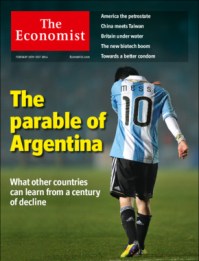
The Economist cover shown here captures the essence of my part of the program. The global economy faces uncertain prospects as we enter 2016. Where will economic growth come from in 2016? I will examine the usual suspects and come up with a surprising answer.

I will also highlight four global  trends that I think will be important for the U.S. wine industry  in 2016. (1) The slowdown in the Chinese economy, which is likely to have significant direct and especially indirect effects. (2) The possible renaissance of the Argentina wine export machine (I have written about this in my last two columns on The Wine Economist).

(3) The “Euro-Doillar Twist” that is taking place as U.S. interest rates rise slowly this year and European interest rates continue to move into negative territory. No one really knows how this will play out in terms of direct and indirect effects, which adds a major element of uncertainty to any economic forecast for 2016.

A Very Good Year?

Finally (4) I’ll talk briefly about the possibility of contagion as economic events in one part of the world cascade through the system. With some countries on the brink of crisis, it wouldn’t take much to set off a chain reaction.

I will conclude my very brief remarks by asking if 2016 will be a very good year for the U.S. wine industry? The answer? Maybe! (Which may come as an optimistic surprise after all the gloom and doom of my previous points.) There are definite positive prospects for U.S. wine this year, but lots of potential problems, too.

What next? Lots of uncertain possibilities. Get ready!

>><<<

A very good year? That calls for Sinatra. “I think of my life as vintage wine …”

Will Argentina Wine Export Growth Return in 2016?


Last week’s column analyzed the reasons Argentina’s wine boom fizzled out. Wine exports to the U.S market have more or less plateaued since 2010 after a decade of rapid growth. Part of the problem, I wrote, is increased competition in the wine market, particularly from the so-called Red Blends that seem to have taken some of the momentum from Argentinian Malbec.

But the biggest factor has been Argentina’s domestic economic policies, which made it very difficult to do business and squeezed the margins of export industries, including wine. The squeeze has been particularly severe in the value wine categories, where the margins are so tight (or even negative) that Argentinian producers have been squeezed out.

Yes / No / Maybe?

Will Argentina wine growth in the U.S market return in 2016? Maybe is the answer, although 2017 looks like a better bet than 2016. The main reason for optimism is the change in government that took place in December 2015 when Mauricio Macri became President of Argentina, promising an end to the policies that crippled the economy, especially export industries like wine, and pushed inflation skyward.

The Economist magazine reports that Macri is “off to a fast start,” removing export taxes and allowing the peso to fall from its artificially high level. These actions will benefit exporters, but also send a shock to the domestic economy through higher interest rates and a short-term boost in the inflation rate due to rising import costs.

Argentina’s wine industry it likely to be twisted in 2016, with falling domestic economic activity offset by the exchange rate’s boost for exports. Growth in both domestic and export markets will have to wait until 2017 and beyond.  Good news under the circumstances even if it is far short of an instant cure for the ailing industry.

Like a Normal Country

But some of my friends in Argentina tell me that they are not expecting a miracle. They just want Argentina to be “like a normal country,” as they put it, in terms of its politics and economics and perhaps that’s what they will get.

If “normalization” works, will Argentina’s wine boom return to the U.S market? Perhaps, but things have changed and adjusting the macroeconomic levers won’t turn back the clock entirely. Argentina will come back, that’s for sure, although it will take a while for the foreign exchange and other factors to be fully felt  But don’t expect a return of the boom.

The best that Argentina should hope for — and it is actually a good thing — is to be like a “normal country” when it comes to the U.S. wine market. By this I mean that its exports are driven by the normal factors and not subject to booms or crises. Being a normal country in this context suggests a focus on the $10 and above price points, because that is where market grown and margin opportunities are.

A recent Rabobank report on Argentina’s wine sector notes that the reforms will allow more competitive pricing for Argentine wine exporters, but cautions against a rush into the value wine segment where Argentina used to be strong. “There are now opportunities to be more flexible with pricing,” Rabobank’s Stephen Rannekleiv notes, “but these need to be managed carefully in order to avoid undermining the long-term premium positioning of the brand and the overall category. … Excessive pricing moves may allow for windfall profits today, but could create headaches in the long run.”

And being a normaql country also means resisting the temptation to define Argentina as Malbec-ville. I know the temptation to adopt a particular grape as a region’s “signature variety” is strong, but I don’t see it as the best path for the industry.

Three-Dimensional Argentina

Argentina has Malbec, and that’s a good thing. But before the growth slowed smart Argentinean producers were already trying to add dimensions to their market space. Terroir is an obvious dimension that is even more important in signalling quality and  authenticity than it was a few years ago. I think many consumers now look for region — Uco Valley? Salta? — and especially elevation (Malbec develops differently in Argentina depending on the vineyards’ altitude) as quality indicators.

Another way to add dimensions is to exploit grape varieties beyond Malbec. There are so many wines that do well in Argentina besides Malbec and Torrontes, the two “designated” signature grapes. I love Mendel’s old vine Semillion, for example, And we recently surprised a Syrah-loving friend at a local Argentinean restaurant by ordering a higher elevation Syrah from the Uco Valley. He loved it, but would never have thought of  ordering an Argentine Syrah. Time to get that thinking started.

The options are nearly endless, as we learned a few years ago when we visited Buenos Aires and had lunch with sommelier Andrés Rosberg (you can read about the lunch here).  Andrés knew that we would taste many Malbecs during our visit and he wanted to be sure that we understand that Malbec was only the most visible part of the story — not the whole story and maybe not even the best story.

No Sure Things

So he served us a line-up of wines that featured everything except Malbec and it was great. Lesson learned and it was reinforced as we met with winemakers and tasted distinctive Chardonnay, Cabernet Sauvignon, Cabernet Franc and even Bonarda. Malbec? Yes and that’s a good thing. But a lot more, too.

This is an age of discovery for wine and Argentina has much to discover, both within the Malbec terroirs and beyond Malbec. That’s the sort of strategy that “normal countries” are embracing in the U.S. wine market today.

Argentina has little experience as a normal country, making its way without crisis or drama. The success of Macri’s economic policies is not a sure thing since they depend on short-term sacrifice for long-term gains in an uncertain and even unstable global economic environment. It won’t be easy to become normal, but it is an important step.

Sometimes, as Argentina’s national soccer team has demonstrated, great players and great ideas can come to a disappointing end. I am optimistic, however, and hopeful that the wine sector gain will regain momentum while avoiding the boom-bust cycles of the past.

Whatever Happened to Argentina’s Wine Boom?

Whatever happened to Argentina’s wine boom (and can that country’s wine industry recover the momentum it has lost)?

Argentina is an important player in world wine. Recent OIV statistics (click here to download the pdf) tell us that Argentina is the fifth largest wine producer in the world (behind the USA and ahead of Australia) and the eighth largest consumer country. Just a few years ago it seemed like Argentina was poised to become the next New Zealand in terms of its export growth, especially here in the U.S.

Anatomy of the Malbec Boom

New Zealand somehow manages  to sell more Sauvignon Blanc each year and it seemed like Argentina might find a way to do the same with its signature Malbec wines. In fact, the boom was so strong that it made some people nervous, as the award-winning 2011 documentary Boom Varietal revealed. Maybe it was too good to be true? Maybe the world would suddenly get tired of Malbec and move on to something else? What then? Bust?

The boom had many causes. Perhaps the most important was the Argentine Peso Crisis of the early 2000s. The collapse of the peso and the opening of the economy to foreign investment was a painful transition for the people of Argentina, but it restored international competitiveness and encouraged foreign investment, both critical to the industry’s rise.

Shift to US Exports

Like many European countries, wine consumption in Argentina is in long-term decline and the economic crisis made things worse for the domestic market, where inexpensive jug wines dominate. As explained in Laura Catena’s book Vino Argentino and Ian Mount’s The Vineyard at the End of the World, Argentine producers found themselves with no choice but to focus on export markets for growth and that meant major investments to improve quality. The U.S. market was the prime target, a different strategy than Chile, which developed more diversified export opportunities.

The US-led export push was effective for several reasons. First the wines presented good value and rapidly improving quality. The U.S. wine market was growing and consumers were turning away from Merlot and later Syrah/Shiraz, opening the door for easy to drink and understand Malbec.

Some of the most important brands established effective distribution partnerships, which enabled them to lead Argentina into the market and firmly establish the category. Catena partnered with Gallo, for example, to make Alamos the market leader No wonder Argentina’s wine exports boomed year after year.

The only questions, it seemed at the time, were would demand continue to rise and, if it did, could Argentina produce enough Malbec to satisfy thirsty buyers?

Argentina

The End of the Boom

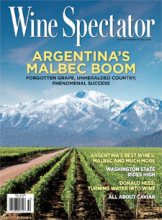
And then? Well, the boom didn’t turn to bust as many feared, but Argentina’s export growth has skidded to a stop. As Kim Marcus reports in his recent Wine Spectator article, exports to the U.S. have plateaued at about 13.2 million cases overall. Recent Nielsen data for off-premises sale as reported in Wine Business Monthly paint only a slightly more optimistic picture, with a meager 0.3% growth rate over the previous 52 week and a 2.5% fall in sales revenues over the most recent four weeks.

The Wine By Numbers figures for January through September 2015 shown above (click on the table to enlarge it) tell the story in detail. Export volume is up overall, but revenues are down because of falling unit price. Good success in bottled wine sales in some markets (UK, Germany and China, for example), is offset by declines elsewhere, including Sweden and Denmark. Note the huge rise in UK bulk sales. But the US market is still #1 for Argentina and it remains flat.

An article by Angel Antin in the current issue of Market Watch adds more detail about the U.S. market situation. Impact Databank statistics show that Argentina wine shipments to the US market peaked in 2010-11 in terms of volume after a decade of rapid growth. 2014 volume was modestly down from that peak, but lower than any year since 2009. The boom seems to have faded.

The situation for individual brands depends very much on price point and margin. Constellation’s Marcus James was the market leader in 2009 with 425 thousand  cases in the U.S. market compared with Alamos with 75 thousand cases. But the situation has changed. Alamos, which sells at a premium price point, has plateaued at 900 thousand cases in 2014. Marcus James, selling at a much lower price point, has slumped to just 180 thousand cases.

The Red {Blend} Menace

What accounts for this situation? The U.S. market has indeed shifted. “Red Blends” are now the fastest growing red wine category, rising to #2  after Cabernet Sauvignon and ahead of Merlot and Pinot Noir. I suspect that some of the Red Blend growth is coming at the expense of Malbec sales.

The Red Blend category is very diverse, encompassing all sorts of blends (even some that include Malbec). I like to joke that the key to Red Blend success is that many of the products are blends of two wines that consumers say they hate but secretly love: Merlot and Shiraz. Whether this is really true or not, Red Blend is a convenient category for producers with stocks of red wines and an inconvenient truth for Argentina producers.

But Red Blends are far from the most important problem. It seems to me that the most severe constraint on Argentina exports in recent years has been supply not demand. Not so much difficulty growing grapes and making wine as navigating the harsh economics of the situation.

Economic Policy Squeeze

The economic policies of the government of President Cristina Fernández de Kirchner pushed up inflation rates, which pushed up wage rates, which increased the cost of producing wine. At the same time, the exchange rate was frozen at an artificially high rate, which squeezed margins. Capital controls added to the problem by making it difficult for Argentina to import technology and winemaking supplies from abroad.

The inflation/exchange rate squeeze was particularly hard on the value wine exports that were the initial key to Argentina’s success. It is nearly impossible to profit from exports of Argentinian Malbec with a retail price below about $10, so many of these wines have simply disappeared from the market (a few brave firms are absorbing short-term losses to maintain their market positions for the future).

The good news is that the $10+ part of the U.S. market is growing, and so the Argentinian wines that remain are in a good place. The bad news is that this market segment has become intensely competitive, so it will not be easy to survive and thrive. And of course the Red Blend trend continues.

I’ll end on a positive note. Economic policies are changing in Argentina, which gives hope for the wine industry there for 2016 or perhaps 2017. I’ll analyze the changing market environment in next week’s column.

>><<<

Here’s a good soundtrack for any discussion of a boom. Enjoy.

Bach, Beethoven, Bordeaux? Classical Music & the Terroirists’ Revenge

The Future Symphony Institute has published an essay that I wrote for them titled “The Revenge of the Terroirists.” It talks about the complicated relationship between fine wine and classical music in the modern world. Because it is very brief the arguments are not fully developed, but I think you will see where I am going with it.

I invite you to click on the links above to read the essay and to learn about the Future Symphony Institute and its ambitious mission.

What Can Wine Teach Classical Music?

The idea for this essay springs from a series of conversations I have been having with Andrew Balio, the principal trumpet of the Baltimore Symphony Orchestra and the executive director of the Institute. Balio’s mission is to try to help the musical world think through the economic and intellectual crises that confront classical music and to begin the process of rethinking and renewing it for the 21st century.

The website puts it this way: “Our mission is to formulate a strategy for the renaissance of live classical music and to translate that strategy into programs made freely available to everyone they may benefit.”

Balio was interested in wine because it seemed to him that the wine world had resisted some of the forces that are plaguing classical music. Not all wine is great, but there is substantial and expanding support of and interest in the practices, values and traditions associated with authentic wine and wine culture.

And the interest in fine wine is not limited to the rich or the elderly. It is a very broad movement and an expanding one. If wine can do this, he wondered, maybe classical music can do it, too.

The Terroirist Cause

I am interested in this project for three reasons. First, I see Balio and his colleagues as “terroirists” who push back against commodification and unnecessary simplification.  I wrote about and championed the terroirist cause in my 2011 book Wine Wars. Second, I am a fan of classical music, especially chamber music, and I hope they will achieve their ambitious goals.

Finally, as a member of the board of trustees of a liberal arts college, I recognize that many of the issues that confront classical music organizations are similar to the challenges facing the liberal arts.

Once upon a time there was broader understanding and appreciation of the value and purpose of both classical music and liberal arts education. But for somewhat similar reasons both have become very expensive to produce and their critical role in civilization seems to have been forgotten by many.

Both sets of institutions need to rethink their business models to address the new reality, but that will not be enough. Both need to engage society in new ways that will renew understanding and appreciation without diluting or distorting the values that made them important in the first place. Both need a strong dose of terroirism combined with thoughtful and effective strategy.

The Future Symphony Institute seems like one place where this might happen. I hope my brief essay will help the Future Symphony Institute as it launches a series of articles examining ways that wine can inform classical music and help move it back to center stage.

>><<<

The illustration above is from a poster created by the Walla Walla Symphony Orchestra that uses the language of wine to talk about their music. That’s a great idea that works both ways. Haven’t you heard a wine described as “harmonious?”

Wine Economist Year in Review & Looking Ahead to 2016

Past and Future - Two-Way Street Sign2015 was a busy year here at The Wine Economist and 2016 is shaping up to be pretty interesting, too.

Looking Back at 2015

In January I spoke in the “State of the Industry” session at the Unified Wine & Grape Symposium in Sacramento. Then we left for New York City where I spoke at “Vino 2015,” a conference and trade show organized by the Italian Trade Commission.

North to Alaska: I traveled to Juneau and Anchorage to give talks and do a fund-raising wine dinner for the World Affairs Council chapters in those cities. Then it was east to Boise, Idaho to speak at the Idaho Wine Commission annual meeting. Both Anchorage and Boise were surprisingly warm, but …

It was really really cold in Ontario when I visited in March to speak to the Winery & Grower Alliance of Ontario meetings, but the people were warm and it was a great experience. Then a quick trip to Walla Walla to talk about wine industry at a regional business summit.

South to California in May, to speak at the Ramona Valley AVA symposium, then a fund-raiser for the Admiral Theatre Foundation in Bremerton along with my friends from Hedges Family Wines. Sue and I were delighted to be invited to the 50-year retrospective tasting of Oregon’s Eyrie Vineyards in Portland, too.

Italy and a Few Surprises

June’s highlight was lecturing at the Conegliano Wine School in Italy and visiting with winemakers in the Veneto and Friuli.While we were in Cormons I got word that around the globe in Yantai, China the Wine Economist had received the Gourmand International prize for the “Best in the World” wine blog. Incredible.

Back home it was north again in July, to speak at the British Columbia Wine Institute annual meetings, then south to Napa Valley to talk at the California Association of Winegrape Growers summer conference.

Two books came out in the fall, my newest volume Money, Taste, and Wine: It’s Complicated and the paperback edition of Extreme Wine. 

We visited Barboursville Vineyards while in Virginia to meet with Luca Paschina and we were lucky to able to meet up with Marc Hochar in Richmond and taste some older vintages of Lebanon’s Chateau Musar on the same trip.

I spoke at the Seattle meetings of the Academy of International Business and then flew to Milan to participate in a discussion on sustainability organized in conjunction with the big SIMEI trade show there.

The year ended on a high note when we learned that Money, Taste, and Wine will receive the Gourmand International award for the year’s best wine writing in a U.S. book. As the U.S. winner it is a finalist for the “Best in the World” award to be revealed in Yantai, China in May 2016.

What’s Ahead for 2016?

The travel schedule is coming together for 2016. I am looking forward to going back to Sacramento at the end of January for my fifth year moderating the “State of the Industry” program at the Unified Wine & Grape Symposium.

A few weeks later we will head to Napa where Sue and I are on the faculty for the Professional Wine Writers Symposium.

Then it is north to Anchorage for another World Affairs Council fund raising program before returning to Walla Walla for the big Reveal Walla Walla trade auction.

It looks like we will be going to Portugal in May to speak at a conference organized by Wines of Alentejo and later to Seattle for Riesling Rendezvous, an international conference sponsored by Chateau Ste Michelle and Dr Loosen.

That’s what’s on tap for 2016 so far, but the year is still young. No wait — it actually hasn’t even started yet. Who knows where the wine rivers and roads will take us.

That’s the look back and ahead. Hope to see you somewhere on our travels in 2016. In the meantime, cheers to all! And have a great New Year.

>><<<

Sometimes I feel like I have been everywhere in the wine world to speak to wine industry groups, but the truth is … I’m not even close!