VinoVip al Forte: Money, Taste, & the Future of the Italian Wine Industry

What’s holding back the Italian wine industry and how can it change to be more successful in the hyper-competitive global market environment? These questions brought us to a Tuscan seaside resort last month. Read on to see what we discovered.

>>><<<

vinovip1The icons of Italian wine gather in Cortina D’Ampezzo for a few days every other summer to spend some time thinking, talking (and, inevitably, eating and drinking) in contemplation and celebration of their wines. The event, VinoVIP Cortina,  has always focused on taste, wine, and the inspirations and sacrifices that winemaking entails.

What Do We Talk About?

This year the event moved to the Tuscan coast, the famous resort town of Forte dei Marmi. The focus of VinoVIP al Forte shifted, too, from taste and wine to money and wine. We always talk about taste, someone told me, now we need to discuss the business side of wine with equal passion, candor, and serious purpose.

Alessandro Torcoli, editor of Civiltà del Bere, which organizes VinoVIP, invited me to lead off the program, inspired (or maybe provoked) by my book Money, Taste, and Wine: It’s Complicated. I was honored to be on the roster, which included Angelo Gaja, Prof. Attilio Scienza, Allegra Antinori, and Piero Mastroberardino and other notables.  Quite a line up!

My presentation analyzed key trends in the global wine markets and one of the points I made concerned brands. Brands are a powerful tool for wine marketing, I argued, because consumers find them so useful. It can be easier for a consumer to understand (and remember) a brand in a crowded retail setting. Trustworthy brands encourage consumers to open their wallets and pull more corks. If you approach the topic of money and wine from the consumer’s point of view, it is impossible to ignore the importance the brand.

Branded Wine and Its Discontents

But there is a risk. Branding can go too far in making wine user-friendly, I argued, citing what I have called Einstein’s Theory of Brands (Einstein said that everything should be as simple as possible, but no simpler — can you see how this could apply to wine?). Brands are back as a key wine marketing element, I said, although they are evolving along with wine buying consumers.

Italian wine features some iconic brands, including Gaja, Antinori, and Mastroberardino, of course. But the single most powerful Italian wine brand based upon volume of sales in the U.S. market is actually Riunite Lambrusco, a sweetish sparkling red wine made by a cooperative winery in Emilia Romagna and imported into the U.S. market by marketing powerhouse Banfi. It is the best-selling imported wine in U.S. history.

Brands and their power were on the minds of other speakers as well and formed one interesting theme of the conference.

Italian Wines at French Prices

gajaAngelo Gaja is famous for the high prices he asked for wines early in his career. People thought he was crazy and some, he told the audience, were even angry with him for asking French prices for his Italian wines. French  wines benefited from a reputation for higher quality. Italian wines, even excellent ones like Gaja made, were thought to be in a different, lower class.

No one is shocked by Gaja prices now — he has proved his wines to be worth what he asks — but, he said,  the same status upgrade cannot be said about Italian wine more generally.

Gaja stressed the importance of raising average bottle price of Italian wine exports and building stronger brands is part of that process. Cooperative wineries, he proposed as an example, should focus less on producing anonymous private label wines for foreign retailers and invest more in building their own brands so as to increase average bottle price and raise margins.

This was the first time that I have heard Angelo Gaja speak and I can report that he is a powerful orator who is not shy about stating his opinions. He presented a to-do list of things that the Italian wine industry needs to change, and quickly. Quite an experience!

Beyond “Small is Beautiful”

Piero Mastroberardino’s brief concluding presentation was much different in style from Gaja’s (much more professorial — in a good way), but no less of a challenge to the status quo. Mastroberardino’s topic was the Italian wine system — the industrial organization of the wine sector– which is made up primarily of cooperatives and small family firms. Indeed, it is not too much of an oversimplification to say that the family vineyard or cellar is the fundamental economic unit of the wine industry.

Family ownership presents a trade-off, Mastroberardino noted. As I discussed in Around the World in Eighty Wines, family wine firms have many advantages over corporate structures, which is why the wine sector generally has more family firms (some of them quite large — think Gallo) than other global industries.

But there are disadvantages, too, which was Mastroberardino’s point here. Scale can be limited and the strength of the brand affected by the fact that it is so closely associated with the founding family. In a world where scale and strong brands are important, family firm limitations sometimes get in the way. It is time, Mastroberardino said, to move beyond the “small is beautiful” idea of the Italian wine sector.

Mastroberardino called for more attention to building scale and strengthening brands to increase the competitiveness of the Italian wine sector and there was some evidence during the conference that others appreciate this point. Allegra Antinori, for example, spoke about how the Antinori family have adopted a new ownership structure in order to strengthen the firm’s long-term financial sustainability. A trust locks up ownership for a 90 year period, giving the firm stability and accumulating resources for future needs.

Theory & Practice

Sue and I spoke with Gianluca Bisol about Bisol’s partnership with Lunelli, which was initiated in 2014 in order in part to give family-owned Bisol the leverage it needed to expand forcefully into global markets. Bisol’s Prosecco and Lunelli-owned Ferrari Trento’s sparkling wines may sometimes compete with each other for shelf space, but they mainly work strategically to open market doors. It’s the sort of initiative the Mastroberardino’s analysis suggests is a necessary next step.

Gianluca expressed great satisfaction with the partnership and early indications are that the winery’s recent rebranding efforts, which stress history and terroir, are enjoying success.

The conference ended with a grand tasting at La Capannina di Franceschi, a famous disco located right on the beach. What a blast! Based on this sample of Italian wines, which featured many white and sparkling wines because of the summer seaside location, the Italian wine sector has no trouble with taste and wine. It is important that they now give more attention to money and wine and we are glad to have made a small contribution to the emerging conversation.

>>><<<

Thanks to Alessandro Torcoli and everyone at VinoVIP for their hospitality during the conference. Special thanks to Sylvia Conti and Maria Gilli of the Italian Trade Agency for their help and support. Sue and I clearly enjoyed ourselves and learned a lot from everyone we met! Here’s a photo of the two of us taken by Megumi Nishida at the post-conference lunch.

vinovip2

Shaw Organic: Is This the Next Miracle from Bronco Wine & Trader Joe’s?

shaw1“It’s very popular — one of the varietals is nearly sold out already.” That was my friend Kelly’s response to a question about a new wine at her Trader Joe’s store: Shaw Organic. It is the latest wine from the people who brought you Charles Shaw (a.k.a. Two Buck Chuck) and I think it might say something about where the wine market could be going in the U.S.

Two Billion Buck Chuck

I wrote about the “miracle of Two Buck Chuck” in my 2011 book Wine Wars. The miracle, I said, wasn’t that the Bronco Wine Co.  could make a wine that Trader Joe’s could sell for just $1.99 (the price has gone up over the years, but it is still inexpensive). Making value wine is all about controlling cost and there are many ways of doing that. In Europe some hypermarkets have sold what I call One Buck Chuck:  one liter for one Euro in a tetrapack container. That’s about a dollar per 750 ml bottle equivalent.

No, there’s no miracle in making a wine to sell for two bucks. The miracle is getting people to buy it because they tend to confuse price with quality and are suspicious that anything that costs so little could be any good.

I gave credit to Bronco for making clean, consistent, drinkable wines and Trader Joe’s for backing the wines with their reputation for quality and value. The miracle continues — Fred Franzia announced in 2016 that Bronco/Trader Joe’s had reached the one billion bottle milestone, which provoked  Paul Franson to christen Franzia “two billion buck Chuck” for the massive total expenditure on this modest wine.

Organic Wine vs “Made with Organic Grapes”

shaw2Shaw Organic is an extension of the Charles Shaw / Two Buck Chuck line that is noteworthy in several respects. First, there is the organic element. Bronco is very careful not to call this an organic wine, noting correctly that it is wine “made with organic grapes.”

What’s the difference? To be certified an organic wine by the USDA it must use only organic grapes and be produced with no  added sulfites in a certified facility. Wine that is “made with organic grapes” is allowed up to use  100 ppm of added sulfites, which is how Shaw Organic is made. Most but not all conventional wines have less than 100 ppm of added sulfites, according to my quick wine wine literature review.

The Shaw Organic wines we saw were priced at $3.99 per bottle for Rosé, Cabernet Sauvignon, Chardonnay, Pinot Noir, and Pinot Grigio. How is it possible to make a sell a wine made with organic grapes at such a low price? Well, as with Two Buck Chuck, economies of scale are part of the answer. In this case, the story starts in the vineyards.

You may know that Bronco is America’s largest vineyard owner, with about 40,000 acres of grape vines. You may not know that Bronco is also the largest grower of organic wine grapes in the United States. According to a 2016 article by Deborah Parker Wong (pdf)  Bronco has converted more than 5000 acres of vines to certified organic status — enough to produce 400,000 cases of wine. That’s roughly a third of all the organic wine grapes produced in the U.S.

Unscrew the Cork? 

Alternative packaging is a hot trend in wine markets these days and Shaw Organic features the latest twist from Amorim Cork: a twist-cork closure called Helix that allows consumers to have the cork stoppers that research shows they often associate with wine quality along with the convenience that comes with a screw cap.

shaw3The Helix cork closure  is a special cork and bottle combination. You grab the cork, which looks a bit like a fat sparkling wine cork, and twist it out to open. Reverse to re-close the bottle. Helix has been around for a couple of years, but not everyone has seen it yet. The Shaw Organic wines we saw had informative tags on the bottle necks to explain the how cork system works.

Amorim and Bronco worked closely on this project so I asked Antonio Amorim to comment on the partnership. “Shaw Organic features an innovative packaging that seamlessly matches the unique sustainability of cork with easy-to-open, consumer-driven convenience,” he said.  “All this is now available enhancing the premium aspects of an organic wine ”

Sue and I have been on a Rosè wine binge recently, so we bought a bottle of the Shaw Organic Rosè to try at home. We were surprised at the quality, especially given the $3.99 price tag. The Shaw Organic Rosè was subtle but refreshing and opened up a bit with time. It’s quite dry, which I didn’t expect. I’d be pleased to have it in my glass at a party or reception or just sitting on the patio any time.

Do You Believe in Miracles?

So will I be writing about the Miracle of Shaw Organic in my next book? Well … maybe. But if it does perform a miracle, it will be a different one from Two Buck Chuck. TBC democratized wine — the low price and consistent quality gave millions of consumers the confidence to try wine. Many of them stuck with TBC, but others moved up the wine wall to more expensive products.

Can Shaw Organics do the same thing for consumers who are interested in organic products? Maybe. It will certainly draw consumer attention to the organic category for wine. The conventional wisdom is that there are so few mass market wines with “organic” anywhere on the label because producers fear that buyers will be turned off by the designation. (It’s a complicated problem — I wrote about the “Organic Wine Paradox” here.)

Bronco and Trader Joe’s are bold to push the concept to the fore. Maybe they will give other producers confidence to “go organic” and it would be great if they could expand the overall market for these wines the way that Two Buck Chuck did for wine generally.

Three Faces of Languedoc Wine: Aimé Guibert, Robert Skalli & Gérard Bertrand

rosesAimé Guibert and Robert Skalli — these were the key protagonists in my analysis of globalization and wine in the Languedoc in my 2011 book Wine Wars.  Both Guilbert and Skalli revolutionized Languedoc wine, but in different ways. And they had different opinions of globalization, too.

If I were writing a second edition of Wine Wars today (readers: do you think I should?) I would add a third name — a champion of Languedoc wine who is revolutionizing it in another way today. That name is Gérard Bertrand.  Here’s the story.

Mondovino meets Mondavi-no

Aimé Guibert starred as one of the heros of the 2004 anti-globalization wine documentary Mondovino (flying winemaker Michel Rolland was one of the villians!).  Guibert helped revolutionize Languedoc wine at his estate Mas de Daumas Gassac  Working with Emile Peynaud and others, Guibert produced exceptional wines that changed the way that many viewed the Languedoc and its potential for fine wine. An impressive achievement and a great story.

That’s not the story that Mondovino told, however. The film was more interested in his opposition to Robert Mondavi’s plans to invest in the Languedoc and produce large quantities of branded varietal wine to be sold around the world. The local uproar eventually discouraged Mondavi, who turned his attention elsewhere. Did Guibert and his activist colleagues win? Mondavi was gone, but not the market strategy he represented.

That’s because, as I argued in Wine Wars, Robert Skalli was already at work to revolutionize Languedoc wines in a Mondavi-esque way. Skalli met Mondavi in California and was inspired by both his modern wine-making and by his marketing strategy, which focused on easy-to-understand varietal labels rather than sometimes-obscure appellations. Skalli was so impressed that he opened his own Napa winery (St. Supery, sold a few years ago to French icon Chanel) and invested in clean, modern, market friendly varietal wines at home including especially the popular brand Fortant de France.

Skalli embraced globalization just as Guibert shunned it, but they both drove change in a region that surely needed it and helped set the stage for the emergence of the new Languedoc wine world that Sue and I discovered during our recent visit. They also helped pave the way for the Languedoc’s current global market champion, Gérard Bertrand.

Celebrity Wine?

laforge.jpg

It didn’t take long for Gérard Bertrand’s name to come up. We landed in Toulouse and on the road to our hotel in Carcassone our well-informed driver pointed to a vineyard on the right and said that he’d been there the day when the crowds gathered and a helicopter descended carrying Bertrand and his special guests, rocker Jon Bon Jovi and his son. Bon Jovi is famous for his music. Bertrand is possibly more famous (at least in this part of France) for his exploits for club and country on the rugby field.

Sport, music, and wine — a potent mix! Bertrand’s father was in both businesses– wine and rugby.  Besides running the family estate he was a professional referee; his son learned both disciplines from the earliest age.

The helicopter gathering was the launch of a joint Bon Jovi-Bertrand project — a Rosè wine called Diving into Hampton Water. A limited edition celebrity wine, for sure, its first vintage sold out on allocation in short order.  The wine lists for $20-$25 here in the U.S. when you can find it.

I don’t know much about Diving into Hampton Water, which has received mixed reviews, but I’m pretty familiar with another Gérard Bertrand Rosé, the Cotes des Roses pictured above. It’s a lovely wine in a distinctively graceful bottle that is easily found on the shelves of upscale supermarkets and even in Costco bins in my region. There is a red and a white wine in the Cotes des Roses portfolio, according to the website, but I see only the pink one in my market.

tj

You can think of the Cotes des Roses as an upscale evolution of the Robert Skalli idea of Languedoc wine. It is a wine made for the market, that represents the Languedoc very well, but does so by reaching out to consumers with a clear image and strong brand. That’s kind of how I thought of Gérard Bertrand wine at the start of my visit — and the Bon Jovi connection reinforced that perspective. But I soon learned that there is a good deal more.

The first formal masterclass in Carcassone was devoted to tasting a cross section of Cru du Languedoc wines and one of the favorites was the Gérard Bertrand 2011 La Forge.  This was very different from Cotes des Roses — it was a serious wine of origin and it made me rethink the whole Bertrand project. Bertrand is Cotes des Roses and Hampton Water, but it is also a collection of very well made wines that celebrate and explore the multiple regions and terriors of Languedoc and Roussillon, Gérard Bertrand’s home (he first played rugby for Narbonne).

legendAmbassador Bertrand

Bertrand’s wines appeared twice more in our program, reinforcing this more complex view. Tasting through a lineup of Crèmant de Limoux sparkling wines, I stumbled across Gérard Bertrand Cuvée Thomas Jefferson. Jefferson fell in love with Crèmant de Limoux when he was U.S. ambassador to France and championed the wine, shipping quantities back home to Virginia.

Bertrand’s bottling honors the appellation and its historic connection to Jefferson. I was beginning to think of Gérard Bertrand as more of an ambassador (like Jefferson) of the Langeudoc than a simple celebrity. His project includes many of these terroir wines that together paint a picture of the region.

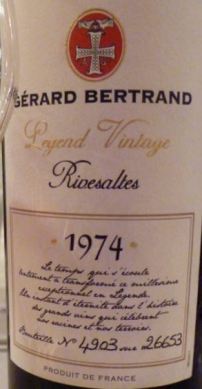
Then, at a gala dinner at Château de Pennautier, we were served a lovely mature sweet wine, the 1974 Gérard Bertrand Legend Vintage Rivesaltes. What a wine! And a wonderful tribute to this appellation. The Legend Wine series includes select Rivesaltes vintages going back to 1875! Bottled history.

I’ve Got a Little List

And so I think you can see why I have added Gérard Bertrand to my Languedoc icons list. He seems determined to push Languedoc forward, but not just in one direction and always with an eye on his roots. A fine ambassador indeed.

Every emerging wine region needs a brand ambassador to help break into the market and get attention. Napa had Mondavi, for example. Strong brands, if linked to time and place, can open doors a bit wider. As Languedoc and Roussillon re-emerge in their contemporary form, effective ambassadors like Bertrand are especially important.

Languedoc has many faces and these three tell a story of the ways that the region has changed to adapt to new market conditions. Bertrand’s complex inks to and respect for the past make him a particularly interesting addition to my little list. But there are many more faces to consider — you should pull some corks and see for yourself.

>><<<

The Wine Economist will pause for a couple of weeks while Sue and I are in Italy. We’ll visit old friends in Bologna (I taught at the Johns Hopkins/SAIS Center there years ago) and tour Eataly World before heading to Forte dei Marmi, where I’m speaking about Money and Wine at VinoVIP on June 18.

State of the Art? Aussie Wine Tourism Invests in Asia & Digital Strategies

unwtoWine tourism is an increasingly important element of wine marketing and sales as both authenticity and identity grow as ways to differentiate products in today’s incredibly crowded and competitive global market. Nothing like the personal experience that wine visitors often receive to turn customers into ambassadors.

Of course wine tourism does more than sell wine because tourists spend time and money on food, lodging, local crafts, and more. With proper planning and broad local participation (which doesn’t always happen), wine tourism can be an engine of sustainable rural development. Or at least that’s the idea behind the United Nations World Tourism Organization (UNWTO) global wine tourism conference, which will be held this September in Chisinau, Moldova.

So wine tourism is on my mind and I was therefore excited when I received an email from Wine Australia about $7.4 million in grants to support 21 regional wine tourism initiatives. That’s a lot of seed money — what do they hope to grow? And how?

The grants range from the relatively small and focused projects ($20,000 to digitalize the Canberra district’s wine map and translate it into additional languages) to the fairly large and ambitious initiatives (grants of $250,000 each to McLaren Vale, Adeliade Hills, Swan Valley, and Barossa Valley wine growers associations).

The Swan Valley project caught my attention because it appears to be the sort of focused multi-level, partnership-driven approach to regional development through wine tourism that I think often works best. Here is a summary of the grant:

Singapore Visitors to Swan Valley: establish a consortium of industry, government and academia to work collaboratively on: an audit of existing services/products, up-skilling of tourism operators and development of tourism products, with a strong focus on the Singapore market.

There are two themes that run through the Australian projects chosen to receive these wine tourism grants. The first is a focus on Asian tourists and especially Chinese tourists, with Hong Kong and Singapore also in the frame.  The Geelong Winegrowers Association recognizes (as do many others) that a successful program for Chinese wine tourists means more than opening the cellar door. Here is the description of their grant project:

China ready – developing regional and operator capabilities to attract international tourism and increase average spend: development of regional digital and promotional assets; dedicated content for the Chinese visitor to be used across the digital platforms (including WeChat and website) and China-ready workshops encourage collaboration between wineries and tourism operators.

Getting “China Ready” is an important goal for many international wine destinations. When I checked in a few years ago there were only a small handful of Chinese language speaking  winery guides in Napa Valley — most wineries were far from “China Ready” then.

0zChinese visitors are especially important for Australia. Proximity is one factor, of course, but wine market strategy is another. China is now Australia’s #1 wine export market, surpassing both the U.S. and the U.K.

The second theme I see in the Australian grants is an emphasis on digital technology. No surprise there: people spend more and more time fiddling with their smart phones. It seems like screen time is replacing face time everywhere. If you want to get on wine tourists radar, you need to get on their screens first.

There are a number of interesting initiatives on the grant list ranging from simple websites (in multiple languages, of course!) to augmented reality and virtual reality tours. Riverland Wine’s project, seeks to use technology to stir interest in a region that is less famous than the Barossa or Hunter Valleys.

Riverland on the verge: international market research and development of virtual reality (VR) content to give international visitors virtual tours of Riverland wine attractions from local wine centres.

Most of the grants will support marketing projects, as you might expect. I am particularly interested in the ones that also seek to shape what visitors do once they arrive and how those activities can support sustainable rural development projects like those we will discuss in September at the UNWTO conference in Moldova!

Congratulations to Wine Australia on its 21 wine tourism initiatives. I look forward to learning more as the programs unfold.


Navigating the Headwinds for French Wine Exports to the U.S. Market

vintageSue and I recently returned from a press tour to three French wine regions — Languedoc, Roussillon, and the Loire Valley —  that are benefiting from the current surge in demand for French wines in the U.S. market. As I noted last week, France is back on consumer radar, especially with buyers thirsty for  Rosé and sparkling wines.
A  Lighter Shade of Pale?

I think there is smooth sailing ahead for Rosé, Blanquette, and Cremant producers from these regions at least in the short run, although Elizabeth Gabay MW argued in a rather brilliant masterclass that we attended at the Chateau de Blois that some Rosé producers are sacrificing potential quality in a quest to make their wines fashionably pale, pale pink. This practice might come back to bite them in the future depending upon how the export markets develop.

The conventional wisdom is that Rosé buyers prefer pale rather than robust pink color in their Rosé wines — the lighter the better — and so producers make the near clear wines they think will sell best, even if they aren’t necessarily the best wines they could make. It is the flip side of the over-extracted red wines that so many wineries produce. I’m not sure the conventional wisdom about pale pink holds here on the Pacific Coast of North America, where California not Provence is the reference point for Rosé, but that’s another column.

Pink and sparkling wines from France are selling really well. The makers of other wines, both red and white, face some headwinds and how they navigate around or through them will determine whether they will share the market boom.

Challenging Stereotypes in Languedoc

France is an Old World wine region and this means many things, including especially that most of its regions inherit in one way to another the practices and reputations of the past. Sometimes this is beneficial, but not always. Languedoc and Roussillon have to overcome undesirable stereotypes of their wines in many markets.

The image that Languedoc conjures up for wine drinkers of a certain age is of cheap, strong, tannic red wines meant to fill jugs and bottles at low prices. Languedoc became the cheap French wine lake initially when the railroads connected the South to the industrial and population centers further north and then again when cheap wine imports from Algeria dried up after it gained independence. Quantity not quality defined Languedoc — a reputation that still haunts it.

serresNow I am not going to say that cheap wine production has disappeared, but the momentum has decidedly shifted to better wines made with more marketable grape varieties such as Grenache, Syrah, and Mourverde along with standbys like Carignan.

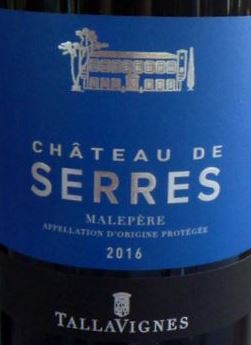
We enjoyed a delicious AOP Malepere red from Chateau de Serres at lunch one day in Carcassonne. It is a blend of Merlot, Cabernet Franc, and Cabernet Sauvignon that displays a Languedoc stereotype myth-busting elegance. Fantastic!

Some producers we spoke with admitted that they tried to downplay their Languedoc roots in order to sidestep the reputation problem in export markets, hoping that the wines will simply speak for themselves.  They hope, too, that younger consumers who have no memory of the old days will have an open mind to trying the wines.

Cheap and Sweet? Not Interested!

The Roussillon producers we spoke with saw old reputation as less of an issue mainly because their region is not so well-known as Languedoc. Roussillon is often lumped in with Languedoc or left out altogether. They see today’s market as an opportunity to build a strong reputation from scratch.

But that doesn’t mean that stereotypes don’t exist in Roussillon. A colleague asked where we were headed one afternoon and when told we were going to Rivesaltes he turned up his nose — “Too bad! I’am not interested in cheap sweet wines.”

romaniWhen we arrived at Domaine de Besombes we met winemakers from the region and shared a delicious Catalan barbecue lunch. And we tasted their delicious stereotype-breaking dry red and white wines, too. Sue was particular fond of the wines made by Laurent Pratx of Serre Romani. The grandson of the man who founded the local cooperative, Pratx returned to Roussillon after working in the Rhone Valley committed to taking his wines in new, independent directions.

We tasted sweet wines at the end of the meal, but these were not the cheap sweet wines of our friend’s memory. They were wonderful, especially the Domaine de Besombes 1949 shown at the top of the page, which has special meaning for us — that’s our vintage, too!

We were fortunate to be invited to a rather special banquet where all the wines were sweet and from this region. I will paste the menu with pairings below. It was a memorable experience. I think my favorite combination was the sea bass with lemon, nuts, and popcorn with the 1990 Maison Cazes Rivesaltes Ambré.

Everyone Loves the Loire

Wine producers in the Loire Valley have a different problem from those in Languedoc. Everyone loves the Loire, which is why it is a hugely popular tourist destination.  The beautiful scenery, historic chateaux, rich food, and fine wines are hard to beat.

But it is not always easy to translate the tourist impression into wine export market sales because the Loire isn’t one thing when it comes to wine, it is many, and it is easy to get lost in this complexity. The Loire is Muscadet, for example, which can be a simple delicious wine and also, as we learned a wine of great character and complexity with extended lees-aging.

The Loire is dry Rosé de Loire and also sweetish Rosé d’Anjou. It is the crisp Sauvignon Blanc from Touraine, Chenin Blanc from Vouvray, Cabernet Franc from Samur, and much more. Altogether the Loire comprises 50 appellations and demarcations, creating a jigsaw puzzle that can be difficult to navigate. Famous appellations stand out, less prominent ones that live in their shadows have trouble getting attention.

One of my favorite discoveries of this trip, for example, were the Sauvignon Blanc wines of Chenonceau, a fairly young appellation in Touraine. Chenoncau is more famous for the chateau of the same name than the wines. Too bad — because the wines can be spectacular. I suspect there is a lot more to discover here among the regions and producers who lack name recognition.

Will these headwinds hold French wine back from advancing in the hyper-competitive U.S. market? The competition is intense, so there are no guarantees, but we found many excellent wines and committed wine makers, too, so a broader French wine boom could be coming.

menu


Unlocking the Market Potential of Languedoc, Roussillon, & the Loire Valley

pink1What do you think of when you think of French wine? If you are like most people, your thoughts probably stray to the iconic regions of Burgundy, Bordeaux, and Champagne. These regions and their wines are fundamental to the way we understand U.S. French wine and wine generally.

The Rhone and Alsace are probably on your radar, too, as they should be given their wonderful wines. Languedoc, Roussillon, and the Loire Valley likely show up further down the list. Important wine regions, but not quite in the same league as the others in terms of reputation and market presence.

But the wines Sue and I found during a recent press tour of these regions are so well matched to current market trends that I think this situation is going to change. No, Languedoc isn’t going to replace Bordeaux in anyone’s wine investment portfolio, but I do think these regions are positioned to gain both respect and market share, especially here in the United States. I will use the next several columns to explain how and why and also to explore some issues we discovered along the way and headwinds that could slow progress.

Growth in the overall U.S. wine market has slowed in the last year, but there are two categories that continue to boom: sparkling wines and Rosé wines. Here’s how the wines of Languedoc, Roussillon, and the Loire fit in.

Blanquette and Cremant

Sparking wine is booming in the U.S. market and while Prosecco is the driving force, wines from other regions are benefiting from the surge. Cava from Spain, for example, is getting more attention in part because of its great affordability. And French sparkling wines from places other than Champagne are in the mix.

The Languedoc’s Blanquette de Limoux is both delicious and historic — it lays claim to being the first sparkling wine made using the classic method. It was Champagne before Champagne. Some say that Dom Perignon, the famous priest given credit for inventing Champagne, actually learned the special method when he worked in Limoux.  Impossible to prove, but fascinating to consider.

The United States in Blanquette de Limoux’s most important export market, accounting for 32% of export sales. No surprise considering the sparkling wine boom and Blanquette’s excellent quality/price offer.

Seven regions of France produce sparkling wines called Cremant, including the Loire Valley and we really enjoyed these wines. One reason might be that Cremant de Loire’s menu of grape variety possibilities include Chenin Blanc, which does so well here and is so delicious in its sparkling form.

The Bubble Boom is much more than Prosecco and Champagne and Languedoc and the Loire are well-positioned to benefit from increased attention to these wines.

pink2

Pretty in Pink

Pink seems to be the new black when it comes to wine sales. Rosè wine sales in the U.S. have increased by more than 66% in the last year according to recent Nielsen figures and the surge isn’t limited to North America. I’ve heard that French supermarkets now sell more pink wines than white wines. Incroyable!

Although many consumers think Provence when they consider French Rosè wines, we tasted delicious versions in the Languedoc and Roussillon. A quick survey of the pink wine section of our local upscale supermarket revealed a good selection of Rosè from these regions at attractive prices. Our standby Gérard Bertrand Languedoc “Cote des Roses” (made from Grenache, Cinsault, and Syrah) was abundantly available at Costco on a recent visit.

In fact Languedoc pink wine exports to the U.S. are booming, up 100% in the last year according to one authority we spoke with. Pink Power! The Paul Mas Prima Perla Crémant de Limoux Brut Rosé shown in Sue’s photo at the top of this column, which we enjoyed at a dinner at Chateau de Pennautier near Carcassone in the Languedoc region, is perhaps the perfect wine for this moment. It is pink and sparkling … and delicious!

The Loire produces fantastic Rosè wines, but it is important to pay attention to appellation. Rosè de Loire is always dry while Rosè d’Anjou is always slightly sweet. These are just two of this region’s noteworthy pink wines.

Beyond Bubble and Pink

Languedoc, Roussillon, and the Loire produce a host of different wines — the list goes far beyond the bubbles and pinks I have referenced here — but these particular wines are key as export emphasis increases to compensate for sagging French domestic wine sales. One reason these wines succeed where other wines from these regions get less attention is that the geography of the typical wine shop display wall favors these wines over the regions’ other products. Here’s why.

If you are looking for red or white wines from these regions, you will probably find them in a “France” section of the wine wall, where they are likely to be tucked away in a corner to make room for wines from better known French regions. Hard to stand out in this crowd, given the importance of reputation in the maketplace. They will be there, but not always in a featured position, and their closest competition will be other, often very different, wines of France, not wines of the same kind from other countries.

Pink and sparkling wines are different. They form their own categories and are increasingly placed altogether in one spot on the wine wall. Rosé wines from around the world sit together on one shelf and bubbles on another, fostering head-to-head comparison and competition that benefits wines from Languedoc, Roussillon, and the Loire and those consumers who are curious enough to try them.

Will success in sparkling and Rosé wines transfer over to the other fine wines that these regions produce? The positive impressions that these wines make on consumers will certainly have benefits. But there are challenges — headwinds, I like to call them — that must be overcome. That’s what I will talk about next week.

>>><<<

Sue and I participated in the media programs of Terroir and Millésimes in Languedoc and in Roussillon from April 15-22 and Val de Loire Millésimes from April 22-25 as guests of the regional producer associations. Thanks very much to the Langedoc, Roussillon, and Loire groups who hosted us and to everyone we met along the way. This is the first of a series of columns examining what we learned at these events.

Wine in America: Surprising Idaho and its Diverse Wine Scene

strangefolkThere is a big world of American wine out there, full of surprises. Wine is made in all 50 states, so “Support your local wine industry” is practical advice. Sometimes this requires you to head off the the vineyards, but sometimes they can come to you. Case in point … the booming Boise, Idaho wine scene.

There is an urban winery trail of sorts developing in Boise and our friend Jim Thomssen spirited us away for a quick survey of the scene between sessions of the Idaho Wine Commission meetings in February. His goal, it developed, was to show the diversity that is driving Idaho wine and, I think it is fair to say, American wine today, too.

One Size Does Not Fit All

One size does not fit all in Idaho wine. Idaho is dominated by Chateau Ste Chapelle and Sawtooth winery, which are part of the Precept wines portfolio that also includes Waterbrook, Canoe Ridge, Sagelands, House Wine, and Gruet among others. Precept owns Idaho’s two largest wineries and a huge proportion of its vineyards, whence many smaller wineries source their grapes. Ste Chapelle makes excellent wines (we tasted a vertical of their Tempranillo with dinner one night) as well as a series of “soft” blends that are Idaho best-sellers.sawtooth

In our previous visits we have focused on wineries in the Sunnyslope region of the Snake River Valley, where grapes are grown and wine is made. Some of our favorites include Bitner Vineyards, Huston Vineyards, Koenig Vineyards, and Fujishin Family Wine Cellars. They set a high standard for quality and their wines are delicious.

Given our tight schedule, Jim scheduled appointments at two wineries just outside the downtown core, Telaya Wine Co. and  Split Rail Winery.  The wineries are about the same size in terms of annual production and source grapes from both Idaho and Washington, but that is where the similarities end.

Precision Winemaking

Earl Sullivan is a scientist by training and a former international pharmaceutical industry executive and Telaya winery reflects the precision and systems thinking that comes with that background, both in terms of the wines, which are balanced and structured, and the winery itself, which was strategically located next door to a destination hotel along Boise’s popular river walk.telaya

Production and hospitality spaces in the two-year old winery were custom designed to facilitate efficient wine-making and to provide visitors a warm welcome. The patio by the river is a popular spot in warm weather.

We especially liked the Turas blend of Syrah, Malbec and Petit Verdot from the Snake River Valley and the elegant single-variety  Petit Verdot, too. Precision wine-making can yield delicious results and Earl Sullivan’s well planned and executed wine business is very successful.

Relentless Experimentation

A short drive away, Split Rail Winery is a very different experience. The brightly-painted winery and tasting room live in a former auto repair shop out on the highway. Jed Glavin’s philosophy is to explore his favorite Rhone varieties (including a tasty SGM  field blend that we sampled) and to provide wine in all imaginable delivery systems including bottle, keg (for the on-trade), cans, and take-out growlers. I have included an image io the Strange Folks line of canned wines. Pull tabs, not corks. Pretty crazy, huh?

sgm

Jed’s intention is to experiment relentlessly and he’s OK with it if he never makes the same wine twice, letting vintage variation and other factors rule. It says something about Jed that he’s willing to take so many risks to see what develops.

And it says something about Idaho in general and the Boise area in particular that he has an enthusiast following that is excited to see what he will come up with next.

A Happening Place

In fact Boise is quite a happening place, with crowded restaurants featuring local ingredients, a bustling craft beer scene, and some interesting cider makers, too. In fact, cider was one of the features of this visit. A Basque friend introduced us to Basque cider during a visit to Spain last year and, knowing that Boise has a large Basque population, we sought out (and found!) several of these very dry ciders, including one on draft at the Basque Market restaurant, just across the street from the iconic Bar Gernika.cider

Jim took us to Meriwether Cider Co. out on the highway near Split Rail where a variety of tasty ciders (very different from the Basque products) are made and a loyal local following has developed. Cider has many advantages over wine — you can make it year around from stored apples, not just once a year when the grapes are ripe. And cider making has a tradition of flavorings and infusions that encourages experimentation. We know some winemakers in Oregon who also make cider and are very successful in both markets.

The Leadbetter family that owns Meriwether Cider will soon open a cider house in downtown Boise to feature both their products and those of other local cider makers. I was pleased to meet Gig Leadbetter at the wine meetings, which included cider industry people in Idaho because of the many synergies and, I suppose, the obvious need for producers in smaller markets to work together when they can.

The Idaho wine industry is anything but cookie-cutter in terms of size, scope, and style — and that’s part of what makes it so interesting. The fact that broad local support has developed for this rainbow of wine is inspiring, both for Idaho and for American wine.


The Changing Face of Wine in America: The Cooper’s Hawk Phenomenon

As I noted last week, wine is everywhere in America, or nearly so, and while it is common knowledge that the U.S. is the world’s largest wine market and that wine is produced in all 50 states, the diversity of the wine experience here sometimes comes as a surprise. Case in point …

What if I told you that one of the largest wineries in the U.S., home to what is probably the largest direct-to-consumer winery club program in the world, is based in Illinois, not California?

Illinois? (I can hear you saying this). No way! You’ve got to be kidding? Well, Cooper’s Hawk winery is no joke and learning about it helps us understand how wine is changing in the U.S. and where it could be going.

Top 50 U.S. Wineries

Wine Business Monthlys February 2018 issue lists the 50 largest wine companies in the U.S., from #1 Gallo (estimated production 70 million cases) to #50 McMannis Family Vineyards (340,000 cases). Most of the wineries are located in California as you would expect with a few exceptions such as Washington-based Ste Michelle Wine Estates (#8), #13 Precept Wine, and #36 Mesa Vineyards of Fort Stockton, Texas (550,000 cases).

Number 34 on the list with 570,000 case annual production and a wine club that is approaching 300,000 members is Cooper’s Hawk Winery and Restaurant of Woodridge, Illinois. All that wine is sold directly to restaurant patrons and wine club members. It is an interesting case study of wine’s growing (and changing) place in American culture.

A Wine-Centered Lifestyle Brand

The first Cooper’s Hawk location opened in 2005 and the chain, which identifies itself as a “lifestyle brand centered around wine” has grown to 30 stores in the  mid-west (Illinois, Indiana, Ohio, Michigan, Missouri, Wisconsin) plus Maryland, Virginia, and Florida. Five new locations are scheduled to open in 2018. A total of 4.4 million guests visited Cooper’s Hawk last year.

A Cooper’s Hawk experience combines several elements. It is a restaurant, of course, with a wide-ranging upscale menu that encourages patrons to think food and wine with a suggested pairing for each dish.  Bin 70 (Cooper’s Hawk Pinot Gris) is the suggested match for pan-roasted Baramundi, for example, and red wine braised short ribs are matched with Bin 04 (the Cooper’s Hawk Red, a Cab-Merlot-Syrah blend).

Ordering wine by the numbers rather than listing the wine names on the food menu is a way to keep things simple, rather like many people order by number from an Asian restaurant menu. You don’t necessarily need to speak wine to enjoy it at Cooper’s Hawk.

Each restaurant features a “Napa-style” wine tasting room and an “artisanal retail market,” where various food and lifestyle items are sold along with the Cooper’s Hawk wines. The idea is to bring the feel of a wine-country tasting room and restaurant to customers who are attracted to wine lifestyle experiences.

47 Varietieslux

A total of 47 different Cooper’s Hawk wines are listed on the online wine menu, divided into several categories, including International, Sparkling, White, Red, Sweet Red, Sangria, Fruit Wine, Dessert, Mulled Wine, Barrel Reserve, and top drawer Lux. As the video above indicates, grapes are trucked to the Illinois winery from California, Washington, Oregon, and other regions and the wines made, aged, bottled and shipped to Cooper’s Hawk stores.

Cooper’s Hawk invites its guests to embrace wine and gives them both broad choice and attractive pricing. Bottles of wine sell for what glasses of wine might go for at other restaurants. Retail shop prices begin at under $15 per bottle and top out at $39.99 for the Lux Pinot Noir. Restaurant prices are a bit higher, as you would expect, but the mark-up is surprisingly small. You can have that $40 retail Lux Pinot for $47.99 in the restaurant.

All 47 wines are available by the glass, with prices starting at less than $7. A glass of Lux Pinot Noir or Lux Meritage will cost you $13. How you view these prices depends on context, I think. If you are used to New York City restaurant prices, these wines are incredibly cheap — so cheap you might hesitate to try them. On the other hand, if lower-shelf supermarket wines are your reference, the prices might seem a bit high. It is clear from Cooper’s Hawk’s success,, however, that there is a sweet spot for an upscale casual dining restaurant wine list and they seem to have found it.

World’s Largest Wine Club?

One of the most interesting elements of the Cooper’s Hawk phenomenon is its wine club, which has nearly 300,000 members and is growing at a 25% per year rate. Guests who join the club are offered special “members only” wines plus invitations to various exclusive programs and events. Although there is an option to have monthly wine allocations shipped to your door, the pricing structure strongly encourages members to pick up their wines at the tasting room, which obviously produces repeated visits to the restaurant and reinforces the lifestyle relationship.

I am kind of fascinated by Cooper’s Hawk, which seems to have struck a chord with many American consumers by making wine the central element of a carefully crafted experience. I am therefore disappointed that I have so far been unable to visit one of the locations. Our travels take us many places, but so far the opportunity to belly up to a Cooper’s Hawk tasting room bar has eluded me.

But I have tasted a couple of the wines. The Cooper’s Hawk Lux Pinot Noir was the featured wine at this year’s Screen Actors Guild awards (Cooper’s Hawk is the official SAG wine partner) and we received samples of this wine plus the Lux Chardonnay, which were served at the event’s gala dinner, as part of the promotion of this partnership.

The details of the wines we received are a bit of a mystery — the Chardonnay and Pinot Noir are American appellation (not California or Oregon as you might expect). The Pinot was medium-bodied with a strong oak presence on the nose and palate that eventually faded to reveal varietal character. Perhaps the wine needed more time in the bottle to pull itself together or perhaps this is a winemaking decision to feature more oak on the premium product. The oak was nicely integrated in the Lux Chardonnay, on the other hand, and the wine was very enjoyable.

No one reads The Wine Economist for tasting notes, of course, and I’ve only sampled a couple of the wines. It is clear that these wines appeal to Cooper’s Hawk customers, who order them with meals and come back for more. Very impressive.

Cooper’s Hawk has achieved amazing success by creating or expanding a market that few of us imagined could be so large. Cooper’s Hawk recently announced and growing list of collaborations with famous wineries (Francis Ford Coppola, Boisset Collection) and celebrity chefs (Tyler Florence among others) that promise to expand the brand’s lifestyle appeal.

Is Cooper’s Hawk the future of American wine? No — wine is too complicated to have a single road ahead. But the Cooper’s Hawk phenomenon does suggest several important trails to explore — direct-to-consumer sales, focus on experience not just product, innovative marketing structures, and broadening the consumer base beyond the Wine Spectator reader “usual suspect” base to explicitly include Food Network viewers and foodies more generally. I think there’s a lot to learn about the market for wine in America from Cooper’s Hawk.

>>><<<

The Wine Economist will pause for a couple weeks while Sue and I are in France to participate in Terroir and Millésimes in Languedoc and Roussillion from April 15-22 and Val de Loire Millésimes from April 22-25. Looking forward to meeting fascinating people, drinking wonderful wines, and learning as much as we can. Full report to follow when we return and have had time to digest our experiences.

Scratching the Surface of Wine in America

wineamericaI was busy this winter speaking at national and regional wine industry gatherings here in the United States: the Unified Wine & Grape Symposium in Sacramento (the western hemisphere’s largest wine industry meeting) and smaller but equally ambitious wine business meetings in Colorado, Idaho, and Washington State.

It’s been inspiring to meet so many hard-working and talented wine people and to talk with them about their challenges and achievements. I’d like to give a sense of what I learned in today’s column but — fair warning — I only have room here to scratch the surface of what I saw and heard and the places I’ve been.

As I said in my “State of the Industry” presentation at the Unified Symposium, wine is bustin’ out all over America. More consumers drank more wine in 2017 from more producers in more places than ever before.  The United States is well on the way to fulfilling Thomas Jefferson’s (and Phillip Wagner‘s) dream of a widespread wine-making and wine drinking nation.

American Wine By the Numbers

Wine America commissioned a study by John Dunham & Associates of the American wine industry’s economic impact  and the 2017 numbers are impressive (here is a pdf summary of the study). The total economic impact of American wine was more $219 billion, when both direct and indirect effects were included, and spread across all 50 states.  Follow this link  if you want to see the numbers for particular sectors or regions.

Wine Business Monthly‘s February 2018 issue surveyed the American wine scene and found nearly 10,000 wineries in the U.S. today (the exact number was 9,654), of which 7,751 were brick-and-mortar bonded wineries and 1903 were “virtual” wineries. California (1241) and Oregon (301) account for most of the virtual wineries. Nearly 40% of Oregon wineries are virtual — brands based upon wine produced under contract by others or sometimes purchased on the bulk wine market.

California makes the most wine, of course, and has the most bonded wineries (3,151) followed by Washington (713), Oregon (473), and New York (365). California was both the most wineries and the largest ones. It is no wonder that the California section of your local shop’s wine wall is so large.

My speaking schedule took me to Washington, Colorado, and Idaho this year. Colorado is 12th on the winery league table (behind Missouri and ahead of Illinois), with 121 bonded and 6 virtual wineries. Idaho sits in 28th place with 47 bonded and 5 virtual wineries. Although the scale is obviously smaller in regions like these, compared with California, that doesn’t mean that potential quality and ambition are any less.

Grappling with Challenges

Sue and I were much impressed by the energy and intensity we saw in the winemakers we met as they grappled with their particular challenges and opportunities. At the Unified Symposium in Sacramento, for example, special seminars inspired by last year’s wildfires were organized around emergency planning, preparedness, and response.

The Colorado program included applied research on Phylloxera, which has now come to parts of the state, and necessary practices to deal with it more effectively and to slow its spread. Paul Hobbs presented a seminar and growing and making Malbec, so put Colorado Malbec on your radar.

Idaho has its own vineyard problems — a killer freeze last year wiped out a lot of the production capacity. Growers are working together to rethink what should be grown, where, and how, treating the problem as an opportunity to improve. I was especially impressed by one conference session that I was not allowed to attend. Each year the Idaho winemakers gather in private to taste and frankly evaluate each other’s wines. The idea is everyone needs to improve quality if the regional industry’s reputation is to grow. No outsiders allowed in these pointed discussions.

To Tip or Not to Tip?

Sometimes regional meetings rely upon outside consultants for imported expertise, but often the biggest gains come from internal discussions like this. I sat in on one session at the Washington Winegrowers meetings, for example, where participants shared their experiences running tasting rooms. With direct-to-consumer sales more important than ever, tasting rooms need to adopt the best practices — but what does that mean in highly localized wine markets? It was fascinating to hear what worked and didn’t and why.

One issue that I did not expect to come up in the tasting room discussion was tipping. Tipping is for restaurants and cruise ships, not for wineries, or so I thought. But once you are using computer-based credit card payment systems, it is a simple task to insert a tip option ranging from zero to ten percent to twenty to whatever you like. Some winery owners were dead set against tipping — we pay our tasting room staff a good wage, no need to tip them to do their jobs. Others reported that customers brought the subject up, asking how they could tip — they appreciated the personal service that much.

One winery owner, who seemed to enjoy stirring things up, said he gave visitors who wanted to tip three options: 10%, 20%, and 200%. That 200% tip possibility usually generated an interesting conversation, he said, and that’s just what he had in mind.

There is a big world of American wine out there beyond California. If you haven’t taken advantage of the opportunities, consider this a wake-up call. The world of local American wineries is not as ubiquitous as craft breweries, which seem to lurk around every corner, but they are widespread and deserve your attention and support.

>>><<<

This is the first of a short series of columns on the changing face of wine in America. Come back next week to learn the surprising story of the world’s largest winery club and the innovative winery project behind it.

Review of “Our Blood is Wine”: A Film about Georgia Qvevri Wine


Our Blood is Wine, directed by Emily Railsback, released by Music Box Films, 2018. Available as video-on-demand via iTunes, Amazon, Google Play, etc.

Our Blood is Wine is a fascinating look at traditional wine-making in Georgia (the republic, not the U.S. state) and how it survived the traumatic Soviet era to be widely celebrated today as a natural wine icon. This documentary has been made with the same restraint and respect for tradition that the Georgians use in making their qvevri wines. The wines let nature tell its story to a greater extent than most wines do. And the film lets Georgia tell its story in a very natural way, avoiding unnecessary intervention.  Highly recommended.

I admit that I was a bit concerned when I learned about Our Blood is Wine. Georgia is unique and I worried that the film would treat it with the generic techniques that are so often found in wine films — sunny vineyard scenes, the changing of the seasons, pick-up trucks with faithful dogs. You know what I mean. These scenes are charming and beautiful, but they are clichés. They could be anywhere, so they end up being nowhere. Wine films are filled with them.

Georgia is different, special, so the film needed to be different, too. Sitting at a key geopolitical crossroads, Georgia has experienced invasion, occupation, and foreign rule repeatedly and yet somehow the people, their culture, Christian religion, unique  language and alphabet, have all survived. Georgians are survivors and the same is true of their wines.

Our Blood is Wine shows the hard work and sacrifice of artisan winemakers in Georgia instead of sunny vineyard scenes. We travel along with Chicago-based sommelier Jeremy Quinn, our inquisitive guide, but he is not the star of this show. He usefully yields the screen to the Georgians who have created these wines, preserved the indigenous grape varieties, and crafted the fantastic qvevri themselves.

One thing that keeps the film moving is the fact that we mainly see people at work and often (as in a scene where several sweating shirtless men carefully move a large, awkward, heavy qvevri into place) the actions speak as loud as any words ever could. The hard work contrasts with the beautiful Georgian music that forms the film’s soundtrack.

The Soviet era, which the film shows through archival footage, was particularly hard on Georgian wine. Georgia-born Joseph Stalin made sure that he had a constant supply of good wine from his home region, but the rest of the country’s wine industry was not so lucky. Private vineyards were seized and industrial wine production replaced private cellars to satisfy undiscriminating palates elsewhere in the Soviet empire.

Traditional wine-making practices survived through home production and even today  most Georgian families make wine for their own consumption, some of it very good. Georgian wine consumption is high by U.S. standards. The rule of thumb for a party is two bottles of wine for each female guest and three bottles for each male. The domestic industry is necessarily focused on export since it is hard to compete with homemade wine for local sales.

There are, as I wrote in 2016, three wine industries in Georgia today. Some large producers focus on sweeter wines (which can be very good) to sell to traditional Russian and former-Soviet markets. Another industry has grown up around exports of clean international-style wines made with indigenous Georgian grapes. And, finally, a relatively small craft industry exists to satisfy the growing global demand for the natural wines made in qvevri — traditional hand-made clay pots that are buried in the earth. These wines and the people who make them and love them are the focus of Our Blood is Wine. 

Sue and I were delighted when, at the end of the film, the art of Georgian wine was driven home through the work of an artist who actually paints with wine and the juice of the grapes instead of oil or watercolor. Saperavi art? Could it be, we wondered? Yes! The artist was our friend Elene Rakviashvili, who helped us to learn about Georgian wine and culture when we visited in 2016.

Our Blood is Wine is worth seeking out for what it teaches about Georgia, history, culture, politics, and of course wine. One of the best wine documentaries of recent years.