 They say that there is strength in numbers, which may explain why wine cooperatives tend to emerge during periods of crisis, when individual winegrowers are practically powerless to defend themselves and only collective action holds hope.
The cooperative in Caramany, the Vignerons de Caramany, was founded in 1924 in response to the Phylloxera crisis. It experienced ups and downs in the century that followed and seems to be thriving today — a good sign for Caramany and for French cooperatives generally.
Strength in Numbers
Caramany is a village of 150 inhabitants in the Pyrénées-Orientales scenic L’Agly valley in Roussillon. It has its own appellation: Côtes du Roussillon Village Caramany. The cooperative has 50 members, some of them quite small holders, growing mainly Carignan, Grenache and Syrah.
We were in Caramany to learn about its cooperative and its wines during our recent press tour to Languedoc, Roussillon, and the Loire Valley. Cooperatives were on our radar because they are very important in all these regions as they are in Europe generally. Cooperatives produce about 70% of all wine in Languedoc, for example, making their success critically important to the wine industry.
You sometimes have to look closely at a wine label to know that a cooperative has made the wine — seeing Caves Coopérative for a French wine or Cantina Sociale Cooperativa for an Italian one is a sure indicator, but sometimes the link isn’t clear, especially if the wine is sold through a negociant or, as is increasingly the case, made for a private label customer such as a supermarket.
Invisible but Important

According to the latest edition of the Oxford Companion to Wine, cooperatives probably account for more than half of all the wine produced in the big three Old World wine countries: France, Italy, and Spain. These “invisible wineries,” as I have called them, are one of the most under-appreciated elements of the global wine market despite the commercial success of some of the wines. One of the top-selling Prosecco wines on today’s market — La Marca — is produced by a second-level cooperative — a cooperative of cooperatives.
Some Italian cooperatives — I am thinking Alto Adige and Piemonte in particular — are know for their high quality. But cooperatives in the south of France have the opposite reputation, which they continue to battle to change. It is easier to produce new, better wines that a new reputation.
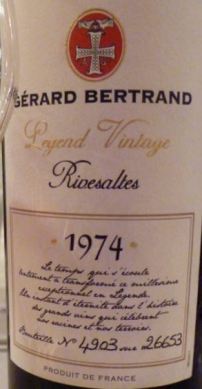
The Vignerons of Caramany impressed us with their commitment to making delicious, market-friendly wines, which we sampled while eating a Catalan barbeque lunch that included snails grilled over live coals, grilled meats (including delicious blood sausage), and a variety of salads. One wine (see top photo) was a tribute to the past, but others looked to the future.
 The Reserve Rouge Carmin, for example, is a blend of Grenache, Syrah, and Carignan (the Carignan was vinified with carbonic maceration while the Grenache and Syrah use conventional methods) that was one of my favorites. Delicious with the food we were served and impressive generally. Its packaging is modern and appealing and it sells for a premium price — about 8 to 10 euro, as I recall, which is impressive for a wine from this region.
There were wines from other cooperatives at the lunch and they were also noteworthy. The Rivesaltes Ambré from the Vignerons de Trémoine is a terrific sweet wine that I could sip all day.
Sleep No More
So what has changed to make these cooperatives (and many others that we learned about) so different from the stereotype of sleepy, inefficient (and sometimes not very clean) cooperative cellars? Well, it isn’t that the cooperatives have simply become stronger — more strength through more numbers — because that’s not the recent trend. Cooperatives seem to be under attack to a certain extent, with the next generation of winegrowers looking beyond old practices to new market opportunities. An association of independent producers has been formed in Languedoc, providing a different sort of strength in numbers through collective marketing not production investment.
Some of the new independent projects are inspired, I was told, by Department 66, a wine project initiated by Dave Phinney and located in the Maury appellation of Roussillon. Its Grenache, Syrah, Carignan blend D66 wine sells for $38, which is a super-premium price for this region. A special old vines Grenache-Syrah blend received a 95-point score from Robert Parker and retails for $175. That would sure get my attention.
More than anything I think it has been competition that has stirred French cooperatives to raise their game — competition in the retail market and also competition between and among the cooperatives for the declining group of potential grower-members. Competition is disruptive but has obviously been a good thing and the results are clear when you consider the achievements of a relatively small cooperative in a tiny appellation such as the Vignerons de Caramany.
If other cooperatives are moving in the same direction as the ones we learned about on this trip. then the future of the “invisible wineries” is bright.
>><<<
Thanks to everyone we met on our trip to France and to the wine regions of Languedoc, Roussillon, and the Loire for hosting us.

 The icons of Italian wine gather in Cortina D’Ampezzo for a few days every other summer to spend some time thinking, talking (and, inevitably, eating and drinking) in contemplation and celebration of their wines. The event,
  Angelo Gaja is famous for the high prices he asked for wines early in his career. People thought he was crazy and some, he told the audience, were even angry with him for asking French prices for his Italian wines. French wines benefited from a reputation for higher quality. Italian wines, even excellent ones like Gaja made, were thought to be in a different, lower class.
 “It’s very popular — one of the varietals is nearly sold out already.” That was my friend Kelly’s response to a question about a new wine at her Trader Joe’s store:
  Shaw Organic is an extension of the Charles Shaw / Two Buck Chuck line that is noteworthy in several respects. First, there is the organic element. Bronco is very careful not to call this an organic wine, noting correctly that it is wine “made with organic grapes.”
 The
The  Aimé Guibert and Robert Skalli — these were the key protagonists in my analysis of globalization and wine in the Languedoc in my 2011 book

 Ambassador Bertrand
 Wine tourism is an increasingly important element of wine marketing and sales as both authenticity and identity grow as ways to differentiate products in today’s incredibly crowded and competitive global market. Nothing like the personal experience that wine visitors often receive to turn customers into ambassadors.
 Chinese visitors are especially important for Australia. Proximity is one factor, of course, but wine market strategy is another. China is now Australia’s #1 wine export market, surpassing both the U.S. and the U.K.
 Sue and I recently returned from a press tour to three French wine regions — Languedoc, Roussillon, and the Loire Valley — that are benefiting from the current surge in demand for French wines in the U.S. market. As I
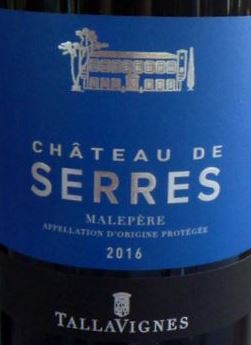 Now I am not going to say that cheap wine production has disappeared, but the momentum has decidedly shifted to better wines made with more marketable grape varieties such as Grenache, Syrah, and Mourverde along with standbys like Carignan.
 When we arrived at
 What do you think of when you think of French wine? If you are like most people, your thoughts probably stray to the iconic regions of Burgundy, Bordeaux, and Champagne. These regions and their wines are fundamental to the way we understand U.S. French wine and wine generally.
 There is a big world of American wine out there, full of surprises. Wine is made in all 50 states, so “Support your local wine industry” is practical advice. Sometimes this requires you to head off the the vineyards, but sometimes they can come to you. Case in point … the booming Boise, Idaho wine scene.


 I was busy this winter speaking at national and regional wine industry gatherings here in the United States: the