Flashback: Spanish Wine Challenges & Opportunities

I am in virtual Madrid today to talk about the changing global wine market on a program that also includes OIV director general Pau Roca and Dorian Tang of ASC Fine Wine in China. Zoom brings the three of us together from across the global wine map to talk with our on-line audience in Spain, Portugal, and many other places.

Preparing for this talk got me thinking about the lessons I took away from a trip to Spain five years ago for an in-person wine industry meeting in Valladolid. I think the message is still relevant, so I reprint it here in a “flashback” column.

>>><<<

Wine Economist (April 25, 2017). Sketches of Spain is the title of the 1960 Miles Davis/Gil Evans album that deftly walks the line between classical and jazz genres, with Davis’s virtuosity shining throughout.

Sue and I have recently returned from a visit to Spain, where I spoke at the General Assembly of the Spanish Wine Federation (Federación Española del Vino or FEV), so Spain and Spanish wine are on my mind and I have been puzzling over how to write about our experiences and all that we learned. Such a big country! So many impressions! The Miles Davis album solved the puzzle.

Davis and Evans gave us a few powerful sketches of Spain and its music, not a detailed musical portrait, which would be impossible in the context of a ’60s-era 33-rpm vinyl recording. A perfect choice! In this and the next several weekly columns I will try to provide sketches of the Spanish wine industry, which I hope you will find useful, leaving a more detailed portrait for another time and place.

Sketch 1: The Spanish Wine Supertanker

They say that it is not easy to turn around a big ship because of all the momentum it has to continue on its path and this might be a good metaphor for Spain. Spain is certainly big when it comes to wine. Spain has the largest area of vineyards of any country in the world and is the third largest wine-producing nation (after Italy and France). Spain produces nearly 70 percent more wine by volume than the United States, which is number four in the global wine table.

The Spanish wine industry has devoted enormous effort to changing wine market direction, investing in more productive vineyards planted to grape varieties like Tempranillo that are more attractive to global wine buyers, and in new or updated production facilities.

The wineries we visited have made the transition and are now sailing in the right direction. As I said to the General Assembly audience, it seems to me that Spain has all the pieces in place to succeed in the new global wine market environment that has emerged, where value matters much more than sheer volume. I am an optimist about Spanish wine. But I am also a realist …

Sketch 2: Breaking the Glass CeilingFEV2

Improving Spanish wine is one thing (a good thing!), but achieving greater success in the global market is another because of reputational momentum.  Spain’s wine reputation has not caught up with its reality in many markets. Citing data from a Nielsen Company survey of U.S. on-premises wine drinkers (thanks to Danny Brager for his help), I noted that Spain was stuck under a “glass ceiling” in terms of consumer perception.

Italy and France — these are the countries that American diners think of first when they consider imported wines. Spain, despite its status as the third largest producer, ranks far below with perception roughly on a par with Australia, Argentina, and Chile and only a bit above tiny New Zealand, which is number 14 on the world wine production table, lodged between Romania and Hungary.

Spanish producers would love to break through the glass ceiling to achieve market status of Italy and France, but — let’s face it — everyone wants to do that.

A more interesting question for Spain, I proposed, is why it does not rank higher above Argentina, Chile, and New Zealand. Do they make more wine than Spain? Better wine? Do they have better generic market promotion programs? The answer is no in each case. What do these much smaller countries have that Spain does not that allows them to punch so far above their weight? This got my audience thinking, which is always my intent.

Sketch 3: Spain at the Crossroads

Hard thinking is necessary because Spain’s wine industry is at a cross roads of sorts. A graph of domestic vs export sales of Spanish wine shows that an important line has been crossed. Domestic wine consumption continues to fall in Spain as in other Old World producer countries. The opponent is not so much France and Italy as spirits and beer and changing consumer habits generally.

Wine exports are rising and now exceed domestic sales. This is important since the industry would be in crisis if exports did not replace lost domestic purchases, but that doesn’t mean that slowly losing your most biggest market is not a cause for concern. It was rare for us to meet a wine producer in Spain who had as much as 50 percent domestic sales.

Global markets are congested and competition for high value sales will only increase when Brexit’s full impacts are finally felt.  Reversing the decline of the domestic wine market is Spain’s next big challenge.

Fortunately, I think there is an realistic opportunity for domestic wine sales growth. Spain was hit very hard by the global financial crisis and the austerity policies that followed in Europe. Only now, ten years after the crisis, is Spain’s gross domestic product approaching its pre-crisis level. A lost decade! No wonder exports have been the focus.

But growth has picked up in the Spanish economy and optimism is in the air, something Sue and I could feel on the streets of big cities and small towns alike. Beer is a tough opponent, but perhaps this is Spanish wine’s moment at home as well as abroad! More to follow in the weeks ahead.

Thank You Notes

Sue and I would like to send out big “thank you” notes to Pau, Susana, José Luis, and Eduardo and everyone else at FEV and to all the people we met at the General Assembly in Valladolid.

FEV organized a series of winery visits for us in the two weeks following the General Assembly (I will report on this fieldwork in future columns) and we would like to thank everyone who took the time to meet with us and share their stories. Here is a list of the wineries we visited:

Wine, Stagflation, and the Strong Dollar Syndrome

The U.S. dollar has surged in value on foreign exchange markets in the last year and especially the last few weeks, as this graph of the dollar versus the euro makes clear. It once took about $1.30 to purchase a euro, but some analysts believe that USD-EUR parity — a dollar per euro — is on the cards for later this year.

The story differs country-by-country, but the overall trend is clear. Just as in the 1980s, when the Federal Reserve tightened monetary policy to fight inflation, the dollar has soared on foreign exchange markets. Exchange rate movements are not generally either good or bad, they create winners and losers like any other change in price. But a sustained spike in the U.S. dollar can be a global problem. The strong dollar of the early 1980s created a global crisis that came to an end through the Plaza Accord, an international agreement to re-align exchange rates.

I don’t think the strong dollar syndrome will go away soon because, as I explain below, it is very useful to U.S. policymakers just now. It is too soon to know how this strong dollar episode will end, but not too soon to think about the implications in light of the 1980s experience, with special emphasis on the wine industry. Herewith three factors to consider.

Trade, the Dollar, and Wine

The conventional wisdom is that a strong currency encourages a country to import and discourages exports because each dollar (in this case) buys more foreign currency, and it takes more euro (for example) to buy a dollar. So it would seem like the super-strong dollar, by encouraging imports and discouraging exports,  would be counter-productive if you are interested in jump-starting growth. But there are other factors to consider (see next point below) and these are unusual circumstances.

International trade is all fouled up with logistics costs and bottlenecks, for one thing, and the pattern of trade in many commodities is distorted by covid closures in China and commodity trading shifts due to the Russia-Ukraine war. In other words, a strong dollar may have less impact on trade today than in other situations.

This is true in the wine trade as well. The strong dollar may push wine import prices down, but logistics issues and the impact of some protectionism policies pushes in the other direct. The exchange rate still matters a lot in the international wine trade, but other factors are more important right now. The dollar’s impact will be felt, however, if the strong dollar can be sustained (as it was in the 1980s).

Inflation, the Dollar, and Wine

The reason why the strong dollar is suddenly a stealth national economic policy is inflation. By making imports cheaper, a strong dollar puts a limit on the ability of domestic firms to raise prices. It is harder to raise the price for generic California wine if the price of imports is stable or declining. This is one factor (not the only one) that has kept U.S. wine prices from rising along with the overall inflation rate.

The strong dollar also makes imported production inputs cheaper for U.S. firms, a significant advantage in the global product chain.

For the Federal Reserve, a strong dollar means that they can be less aggressive in their domestic contractionary policies designed to squeeze inflation out of the economy. The dollar, by putting a limit on price increases through foreign competition, will do some of the dirty work for them.

Unintended Consequences

But not everyone will be happy with this situation. Our trading partners will be justified in their belief that the U.S. is exporting some of its inflation to them though higher prices for imports from the U.S. and other commodities that are priced in dollars rather than local currency. Their domestic firms will find it easier rather than harder to raise prices with the cost of imports rising, too.

There are also international debt issues to consider since many countries borrow (and must repay) in dollars. An increase in the dollar’s value can have more impact on debt servicing costs than a rise in interest rates, for example.

As a result of these unintended consequences there is now talk of a sort of inverted currency war. Usually currencies wars take the form of competitive devaluations, as everyone tries to have the cheapest currency to encourage exports.

Now, however, several factors but especially inflation is causing policy-makers to re-think this strategy and consider a sort of arms race to increase currency values. The instability that results from such a situation can be serious and lead to conflict, which is what produced the Plaza Accord in 1985.

And in the Long Run …

So the direct effects of the strong dollar syndrome are worth your consideration, but the indirect effects — the inflation lid, the international currency war, a potential debt crisis, etc. — are perhaps even more important.

In the long run, however, the impact on the U.S. wine industry is likely to be more severe both through the direct effects on input and domestic labor cost factors and through the classic Econ 101 impacts once the logistics issues have time to settle out.

But there is one more long term factor to take into account. As the Plaza Accord demonstrated, a very strong dollar is not sustainable from a global financial standpoint. When the market turns it is likely to be sudden. A soft landing can change abruptly. Buckle up.

Wine & Stagflation: What Will Happen When Wine Prices Rise?

The conventional wisdom is that we are likely entering the first significant period of stagflation — inflation + stagnant economic growth — in several decades.  We have experienced recessions in the recent past, but not rising inflation, and not the two of them at once.

Inflation is in the headlines every day, but unemployment is very low — so why worry about slow growth or a recession? The answer is that while Federal Reserve policies will try to finesse the situation and bring inflation down to a “soft landing,” most observers think that a sharp contraction will be necessary to bring inflationary expectations down. Growth will fall while inflation still runs high, at least for a while.

So, these are uncharted waters for business and government leaders, especially since it comes on the heels of the covid crisis, which has shaken so many economic and social structures. It is, as I have argued here, uncharted territory for the wine business, too.

So far, as I suggest in last week’s Wine Economist newsletter, wine prices overall have not risen to the degree you might expect given the many cost pressures the industry confronts. Average wine prices seem to have actually fallen in real terms so far according to the data I have surveyed.

It may be premature to begin worrying about how wine consumers will react to higher prices in the stagflation context if and when they arrive.  Or — and this is my point — it might be strategic to consider possible scenarios in order to prepare for the eventuality. Because this is uncharted territory — and because, as Jon Fredrikson says, there are no one-liners in wine — it makes sense to consider the range of consumers responses rather than to look for a single silver bullet answer.

Herewith, therefore, a brief and incomplete list of possible consumer responses to rising wine prices in the context of stagflation.

Econ 101: substitution, income, and wealth effects. 

We begin with Econ 101 basics. An increase in the relative price of wine would create a substitution effect to some extent. It might be to substitute other beverage alcohol products for wine or — the trading down effect — to substitute less expensive types of wine for previous purchases.  How this plays out depends on a number of factors. Younger drinkers, for example, are known to be less loyal to wine and more prone to dividing their purchases among many beverage types, so the substitution effect may be stronger for them than for boomers, for example.

Of these three effects the substitution effect is the most interesting to me because we don’t have much recent experience of supply-driven price increases in wine (versus demand-driven “premiumization”.

The income effect, driven by both higher wine prices and higher prices in general, points towards lower consumption of wine overall. Wine is already more expensive than most beer and spirits on a per-serving basis, and so vulnerable to income-driven consumption adjustments.

There is also likely to be a wealth effect, with wine consumption falling as consumers (mainly but not exclusively boomers) re-assessing buying decisions in light of changing net worth. Rising interest rates implemented to fight the inflation tend to reduce the value of bond holdings directly and equity values indirectly through their impact of the present value of corporate cash flows. Substantial interest rate rises are likely to affect portfolio balances and 401k holdings. If you have been watching the way that equity markets have reacted to the Federal Reserve’s initial 1/2 percent interest rate increase you know what I am talking about.

Stalking the Illusive Wine Bargain

In a perfectly competitive market the “Law of One Price” rules, but the wine market has many quirks and peculiarities, so similar products can sell for very different prices. Rising wine prices are likely to push price-sensitive buyers to even more aggressive bargain hunting efforts. Expect your local Grocery Outlet store to do even more wine business.

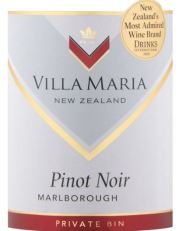
But bargain hunting doesn’t necessarily mean searching for rock bottom prices. We recently received samples of two wines that represent good value in their respective categories. The pitch that came with the wines was that these are inflation-fighters. The first wine was Villa Maria Marlborough Pinot Noir Private Bin, which retails for about $19.00. It is an excellent wine that sells for less that many comparable products from, say, Oregon or France.

The second wine was Le Volte dell’Ornellaia, a “Super-Tuscan” from the Bolgheri region that, at around $29, represents a way for many consumers to raise a glass in high style without breaking the bank. How do you find inflation-fighter wines like these? Start by asking whoever sells you wine to solve a puzzle — I’d like a wine like this, but I want to pay something more like that. A good wine seller will appreciate the challenge.

Risk Management

Buying wine is not easy because it is what economists call an “experience good.” You won’t really know if you will like a particular bottle of wine until you buy it and pour yourself a glass.  Reviews and so forth help, of course, but the taste of wine is ultimately very subjective and the risk of disappointment almost inevitable.

As inflation pushes wine prices higher, the disappointment risk becomes more of an issue. One strategy that consumers are likely to adopt in this circumstance is to concentrate their purchases on a few tried-and-true brands or grape varieties that they trust to consistently please. Trying new wines from different regions and brands made from different grape varieties is great fun, but the high reward when you find an exceptionally pleasing wine comes with high risk of disappointment.

So don’t be surprised if consumers — and the stores and shops who sell them wine — react to wine inflation by doubling down on tried-and-true wines. This reinforces a trend that emerged during the pandemic wine surge.

But don’t forget that all this is predicated on wine prices finally rising as fast or faster than the general inflation rates. This hasn’t happened yet … and it might not happen at all. Stay tuned.

Wine and Inflation: Will the Rising Tide Lift Wine’s Boat?

The U.S. is experiencing the highest inflation rates since the 1980s and cost-of-living increases are on everyone’s mind here and around the world. The Federal Reserve has signaled that it will speed up monetary tightening to try to reverse rising inflationary expectations — too little and too late, according to   the Economist newspaper (The Federal Reserve Has Made a Historic Mistake on Inflation).

I am very concerned about how higher inflation will impact the wine industry, especially when combined with a stagnant overall economy (GDP actually fell in the US in Q1/2022).

The Big Squeeze

Costs are increasing, some dramatically, throughout the wine and grape commodity chains and rising interest rate expenses will add to cost woes. The list of cost factors is long and includes energy, fertilizer, transportation, glass and other inputs, and especially labor, which remains in short supply.

Will growers and wineries be able to hold on to their margins by passing higher costs along to consumers in the form of higher prices? A lot of people I talk to think so. Surveys suggest that many wineries plan to raise prices in 2022 and there is an attitude that consumers might not push back too much, given that the price of everything else is rising, too.

So I am a little bit surprised that some of the data suggests that wine prices have not risen along with the prices of other goods — at least not yet.  Wine Business Monthly, for example, cites NielsenIQ data on average bottle prices. The May 2022 issue reported an average price of $8.52 for the most recent 4 week survey period, up from $8.18 reported in the May 2021 issue — an increase of 4.1  percent. Average domestic bottle price rose  from $8.12 to $8.46 and average import bottle prices rose from $8.35 to $8.69.

The Booze Bust

Prices are rising, according to these figures, but at about half the current rate of overall inflation. NielsenIQ doesn’t measure all sales channels, of course, and there is a lag in the data, so maybe prices are really rising faster than these numbers suggest and wine industry margins will hold.

But the IRI data shown above, taken from a recent Rabobank report about inflation and the beer market suggest that wine in particular and beverage alcohol in general is struggling to increase prices in line with rising costs. Take a close look at the top half of this table, which shows that some non-alcohol beverage categories have been able to boost price much faster than the roughly 8% general inflation rate for the U.S. economy — topped by sports drinks with an incredible 17%+ annual rate price increase. Wow!

Beer, wine, and spirits have all increased average prices, but much less than, say, coffee, and substantially below the overall inflation rates. In other words, the real price of wine, on average, has actually fallen in the last year and the relative price of wine with respect to some other beverage categories has fallen, too. Averages hide a lot, of course, and some strong brands have successfully pushed prices higher while others have not. But beverage alcohol generally, according to the Rabobank figures, has fallen behind in terms of price.

Why haven’t wine prices increases faster.? Here are a few of the many possible explanations.

  1. Radar’s Rule. Wine prices will increase — “wait for it,” as Radar used to say on M.A.S.H. — it just takes time for price changes to work their way through the system.  It is hard to refute this because it is impossible to know the future. Maybe there is something about wine’s annual production cycle that causes price changes to come more slowly. But then why do beer and spirits, which are in continuous production, also lag behind the inflation rankings?
  2. The Wall. Consumer pushback is too strong in the wine category for large price increases to take hold. Yes, I agree that wine buyers are very price sensitive, but prices do rise when they are driven by short supply. And of course there is the whole premiumization phenomenon, where consumers pay more for what they see as better products while resisting price rises on products they already buy.
  3. The Hidden Price Increase Trick. Candy bar makers sometimes try to disguise price increases by simply shrinking the size of the product. Wine makers can do something a bit like that by shifting grape sources from coastal to inland vineyards and in some cases by blending in wines from earlier vintages. Consumers may not notice (just as they might not immediately realize their candy snack has shrunk a little).  Wineries can also increase their average revenue by reducing production of lower-tier wines, shifting the grapes up the ladder.
  4. Three-tier Blues. It’s the three-tier system, where producers sell to distributors who sell to retailers who sell to consumers. On one hand this system means that there are three margins at stake and to each tier has an interest in raising the price at which it sells wine. But each tier also has an incentive to resist increases in its cost of goods. So distributors push back on producers who want to raise price, retailers push back on distributors, and consumers push back on retailers.  The three-tier effect may explain why the lowest average price increases in the Rabobank table above are for beer, wine, and spirits.

More Questions Than Answers

There are other theories and explanations about inflation and the wine category, but perhaps the most important thing to say is that, with the most recently experience of significant U.S. inflation so far back int he rearview mirror, we are left with more questions than answers.

All the basics — the who, what, when, where, how, and why of the wine market have changed very dramatically since the 1970s and 1980s.

Will wine prices rise in line with inflation? If so, when? And how will consumers react? Come back next week for more analysis.

>>><<<

Thanks to Steve Fredricks at Turrentine Brokerage for stimulating my thinking on this topic.

Countdown to Wine Wars II

Here at Wine Economist World Headquarters we have started counting down the days until the release of Wine Wars II: The Global Battle for the Soul of Wine.  The book’s official release date is July 1, 2022, but it is not too soon to put in your pre-order at Amazon.com or Rowman & Littlefield. Wine Wars II will be available in paperback, e-book format, and (eventually) audio-book, too.

Wine Wars II is a major revision of my best-selling 2011 book Wine Wars. I’ll be honest — I wasn’t really planning to revise Wine Wars, but I couldn’t help myself. I re-read the book last year on its 10th birthday and there were some parts that really made me smile — they held up very well over the decade since release.

But there were other parts that made me shake my head. I wouldn’t write that today, I thought, either because so much has changed in the global wine industry or because I have changed — learned so much from all the people we’ve met on our global travels.

So there was nothing to do but write a revised book, which went into Rowman & Littlefield’s production pipeline last year and will come out in a few weeks.

I asked a few colleagues to read the book and write “blurbs” to help promote it. Here’s what they have to say.

Judy Chan, CEO of Grace Vineyard China:

10 years ago, when I first read Wine Wars, I was excited to see finally someone wrote about the business aspect of wine. As a wine producer in China who was new to the industry (and the industry was also very new in China), the book gave me a global perspective to look at my local market. With the updated information in this edition, it would be refreshing for someone who wants to see how the industry has and has not changed.

Elin McCoy, author of The Emperor of Wine, global wine critic for Bloomberg News and U.S. Editor of The Wine Conversation podcast

No one makes the powerful economic forces behind a bottle of wine more fascinating than Mike Veseth. Yet his easy-going, down-to-earth approach to these complex topics also brims with entertaining stories and humor – who else would analyze the appeal of wine brands named Secret Squirrel or Tussock Jumper? This new, 10-years-later, version two of his classic Wine Wars is filled with pithy insights about the world of vino today, such as ‘identity trumps authenticity.’

If you want to understand the future of wine, this book is a must read. It will convince you that climate change, economic risk, and stronger-than-ever global wine brands threaten the soul of wine itself. Are we headed for a dark age? Spoiler alert: Wine Wars II ends on a slightly optimistic note, in Portugal.

Andrea Robinson, Master Sommelier and author, Great Wine Made Simple

What a timely book for business leaders and their advisers! While the book’s context is the wine and wine grape growing industries, the challenges and opportunities pinpointed and deftly parsed easily apply to so many industries and brands. Globalization, climate change, the economic challenges of labor, supply chain, brand-building and brand equity preservation in a digital world—Mike Veseth’s synthesis of their present-day coalescence, and the ‘so what’ of that, seems almost clairvoyant. Wine Wars II is also a fun, punchy read, ripe with storytelling, along with some cool comparative wine tastings to illustrate the points. As an economics and finance-trained banker-turned-sommelier, I found this book to be invaluable for my work with clients and wine industry stakeholders of all sizes and stripes, as well as a delight to read.

Alessandro Torcoli, Director, Civiltà del bere

I’ve always been amazed by Mike’s ability to clearly describe wine dynamics in a global perspective with a deep understanding of local forces. Wine Wars II is a must-read book to anyone who want to feel like a real expert on our marvelous, but a bit tricky world of wine.