What’s Ahead for Wine Tourism in Mendoza? Lessons from a Rock Opera

monteviejoThe United Nations World Tourism Organization’s global wine tourism conference in Mendoza, Argentina was full of contrasts as you might expect in a high desert region that is punctuated by isolated vine-filled green oases.  The morning sessions featured conventional conference formats — speakers, panels, Powerpoint slides, dark rooms, coffee breaks (and really good simultaneous translation — thanks for that!). And then …

Hardly Working?

The afternoon and evening session moved out of the conference center and into the wineries, so that international participants could take in the landscape, marvel at the wonderful winery architecture,  appreciate the warm hospitality, sample the many winery experiences, and of course enjoy food and wine as any wine tourist would.

Does this sound like hard work? Very few of our friends feel sorry for us when we post about these experiences on Facebook, but it really is work because Sue and I are always observing and analyzing both what the wineries do (and how they do it) and the reaction from their guests.

moonshot2This was particularly interesting at the UNWTO conference because our fellow delegates were mainly tourism people who see opportunities in wine whereas Sue and I come at this more from the wine side, where tourism is one important element. The organized winery visits were interesting to us because they highlighted the tourism offerings rather than the wines themselves.

A reception at Bodega Séptima, for example, showed off its striking architecture and invited guests out to the big patio to stare at the moon and stars through telescopes while sipping wine. Wine tourism and astrological tourism combined.

A visit to Bodega Norton featured an opportunity to ride bicycles through the vineyards followed by a late lunch and then a chance to paint with wine (I saw a rabbit in the vineyard, so that was my artistic contribution). Norton’s program stresses active involvement, which is always more engaging than passive participation.

asadoThe historic buildings and ancient vines were a highlight of our asado lunch at Bodega Nieto Senetiner, where we were treated to a sensory experience organized around a Torrontes perfume and a Malbec cologne. This was interesting even though it violated the first rule of a wine tasting — don’t introduce any scents that might mask the wines’ aromas. It worked as a tourist experience, but would turn off any serious wine lover.

The Missing Link?

Sue and I enjoyed these experiences, but we noticed that something was often missing. The wineries worked very hard to show off their delightful wine tourist offerings, but they missed many opportunities to tell their stories and reinforce their brands. Perhaps this was by design because of the special character of the UNWTO audience, but it seems to me that it is always important to tell your story and build your brand.

Two of the most effective wine tourism programs we have experienced are Larkmead Vineyards in Napa Valley and Sandeman in Porto. The two wineries differ in almost every way but this: there is a clear story, which is told in several ways, and everyone you meet tells the same essential story, reinforcing the message.

A goal might be for each winery visitor to encounter the defining story three times in three different ways during a visit and to be able to share it with friends. You might call it the “Tommy” tactic (after the rock opera composed by The Who). See me, feel me, touch me, heal me. Stimulate all the visitors’ senses and touch them in a way they won’t soon forget.

The Next Step?

Perhaps this is the next step that Gabriel Fidel hinted at in his conference presentation, which encouraged the Mendoza wine tourist industry as well as the rest of  us to think beyond the current focus on creating experiences.  The facilities in Mendoza are world class and the experiences, including food pairing sessions, vineyard walks and rides (on both bikes and horses), and so forth are great, too.

All the pieces are here in Mendoza. Now the wineries and local wine tourism officials need to steal a tune from Tommy so that they all come together with the defining stories of the wineries and the region to create an total experience that resonates with visitors from around the world.
amdes

Four Takeaways from the Global Wine Tourism Conference in Mendoza

ucoSue and I are back from the second United Nations World Tourism Organization global wine tourism conference in Mendoza, Argentina. It was an intense and interesting few days in a welcoming and dynamic part of the wine world. Here are a few things we think we learned at the conference. More to follow.

You’ve Come a Long Way, Baby

Mendoza has come a long way as a wine tourist destination and they are justifiably proud of their accomplishments. Unlike Napa Valley, which is next door to cosmopolitan San Francisco and fast-paced Silicon Valley, Mendoza takes a bit of effort to visit, so its emergence as a tourist hub, is noteworthy. We were impressed with the renovated airport, which features more flights to more places more often and will surely help boost wine tourism in the future.

When Sue and I visited Mendoza a few years ago we noted that it wasn’t very easy for an independent traveler to visit many of the wineries and this problem has been addressed in several ways. Some wineries have opened tasting rooms in the city, effectively bringing the vineyard to the tourist. Among the other efforts is a special hop-on hop-off bus that visits select wineries. How convenient! We also saw many tour operators who put together custom tours of wineries as well as the many other visitors options in region.

Mendoza has a lot to be proud of when it comes to wine tourism, but the many Argentine officials and local dignitaries who spoke at the conference’s first session perhaps could have shown greater restraint. Bad news: the talking went on so long that lunch, which was scheduled for around 2 pm, was actually served closer to 6 pm. Good news: our lunch began with deep-fried empanadas served hot and fresh outdoors in the Bodega Norton vineyard. Incredible.lunch2

Don’t Look Back

Gabriel Fidel is a sort of Renaissance man. Scholar, business leader, public servant, politician — he wears many hats in Mendoza and he has been influential in the rise of the wine and wine tourist sectors.  His talk charted the evolution of wine tourism in this region and included a warning not to be too proud of the past, because the future holds more challenges.

Twenty years ago, Fidel explained. The challenge was to get wineries to accept visitors at all. They just get in the way! Okay, then once wineries got the messages about the importance of visitors there was a need for facilities, then services and trained staff, and then finally some attention to creating experiences beyond the typical tasting room offer. Wine tourism does not take place in a vacuum, so wineries need to match the programs in other wine regions and take into account the level of service that tourist expect in non-wine settings, too.

Now the challenge, Fidel said, is to move ahead again rather than just taking satisfaction in past achievements. Don’t look back, Satchel Paige said, something might be gaining on you. And in this competitive environment, it is gaining fast.

Wine Tourism and Sustainable Development

My contribution to the conference was a short speech on how wine tourism can be a tool for sustainable regional development. Done right, I argued, wine tourism can benefit people, planet and profit. Done wrong … well, there can be real problems. I cited specific success stories as well as critical issues, highlighting the strategies needed to anticipate and address problems.

One journalist who attended the conference wrote to me to say that she hadn’t really thought much about the impact that tourism can have on local people and the  world they live in and now she could appreciate its importance. I guess my message got through.

We visited one winery where our guide quite unintentionally revealed how wine tourism transforms local communities.  His father was in the construction business and, were it not for winery development, that’s what he would be doing, too.

But now the opportunities are in wine tourism and hospitality more than traditional occupations such as construction.  His family struggles a bit to understand the changing local labor scene (and the changing nature of work itself) and how exactly he can earn a living drinking wine, as they see it, and talking to strangers like us all day rather than working hard to make, build, or grow things.

Mendoza to Moldova

The transformative impact of wine tourism will be tested in Moldova, which was named as the host nation of the 2018 UNWTO global wine tourism conference. Moldova is probably the most wine-dependent country on the planet. Wine is the largest export category and the country is working very hard to open up markets in the west and in Asia and to reduce its long-standing dependence on the unreliable Russian market for wine sales.

Selling more wine at higher prices would be great for Moldova, but wine tourism is perhaps strategically more important because of its ability to increase rural incomes outside of wine production and sales. Wine tourism done right stimulates the hospitality industry with potential impacts on crafts and other local industries. Wine tourism has great potential to draw visitors to Moldova and stimulate rural development.

Hosting an international conference like this is a big, expensive job. Good luck to our Moldovan friends as they plan next year’s events.

>>><<<

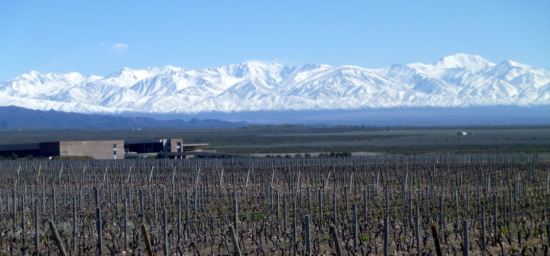
Sue took the photos above — the view from Bodega Moneviejo in the Uco valley and the delicious late-lunch empanadas at Bodega Norton.

Wine Tourism in Mendoza: Rethinking Best-Practices with the UNWTO

unwto

The Wine Economist will take a break for the next two weeks while Sue and I travel to Mendoza, Argentina for the second Global Wine Tourism conference organized by the United Nations World Tourism Organization and hosted by the Argentina Ministry of Tourism. It will be great to return to Mendoza and to have a chance to discuss wine tourism strategies with both old friends and new ones.

Asking Questions, Rethinking Answers

Good conferences succeed because they work on several levels at once. Keynote speakers, for example, are most useful if they stimulate discussion among conference participants to allow them to shape and share their own thinking.

My keynote is about “Wine Tourism for Sustainable Development: Opportunities, Strategies, Pitfalls” and my goal is not to tell people what to think and do but instead challenge them ask new questions and rethink the answers to old ones.

The UNWTO welcomes this kind of thinking and rethinking. The organization recently adopted the UNWTO Framework Convention on Tourism Ethics, for example., reflecting the fact that global tourism is now big business and its significant economic, social and cultural impacts must be fully considered.

Thinking and then acting — that’s what it’s about. Other speakers will share their experiences from around the world, giving us all a lot to think about!

The UNWTO has developed a wine tourism framework or prototype. Yolanda Perdomo, Director of the UNWTO Affiliate Members Program, will present the prototype and Gabriela Testa, President of Ente Mendoza Turismo, will discuss how it is being implemented in the Mendoza region.

Mendoza has enormous potential for wine tourism as I explained in my 2013 book Extreme Wine. I highlighted two very different wineries for their tourist experience: Tempus Alba and Salentein.

Situated close to Mendoza city, Tempus Alba hosts many young wine tourists who visit on bicycle. They enjoy the wines and food at the restaurant, of course, and receive an education about Malbec and the vineyard.  The vibe is casual and fun, but the approach is seriously thoughtful. I’m a big fan of what Aldo Biondolillo and his family are doing at Tempus Alba.

11120_killkaBodegas Salentein is located high in the Uco Valley and I don’t think many people bike there from Mendoza. It was the first destination winery in this now-booming wine region and features an art gallery, a stunning barrel room dubbed the “wine cathedral” and fine dining, too. As is the case of many Mendoza wineries, the architecture rivals and reinforces the dramatic Andes mountain scenery. Fantastic.

Theory and Practice

The UNWTO conference balances the theory and practice by including a number of local wine tourist experiences in the afternoon sessions. These winery visits will be a lot of fun, of course, but they will be most useful if participants give serious and critical consideration to what works (and why) and what could work better (and how can this be achieved). And then the trick is try to apply those sharpened critical skills to wine tourism offerings, strategies, and policies back home.

I will paste below the tentative list of wineries and experiences that will be available to the UNWTO conference participants and, by the way, to adventurous wine tourists generally when they visit Mendoza. The list gives a concrete sense of the diversity of wine tourism offerings available in this beautiful part of the world.

Come back in two weeks for more Wine Economist! Cheers (and adios!).

>><<<

  • Bodega Norton: Restaurant La Vid, Chef Patricia Suárez Roggerone Experience: Winery bicycle tour
  • Bodega Renacer: Restaurant Renacer, Chef Sebastian Weingand Experience: Virtual reality and winery visit by an oenologist, The Appassimento
  • Susana Balbo Wines: Restaurant Osadía de Crear, Chef Marianela Pizzonia Experience: Blending competitions
  • Bodega Terraza de los Andes: Restaurant Residencia Terrazas de los Andes, Chef Noelia Scquizziatto Experience: Tasting from barrels and cooking class, deserts
  • Bodega Lagarde: Restaurant El Fogón, Chef Lucas Olcese Experience: Historic winery tour, which is DOC MALBEC certified and was the first denomination controlled by
    America
  • Entrecielos Luxury Wines & Spa: Restaurant Katharina, Chef Federico Castro Experience: Limited Edition Vineyard Loft & Spa Hammam, traditional Turkish relaxation and leansing methods
  • Bodega Trivento: Restaurant Espacio de Arte, Chef Sebastián Flores Experience: Art & Wine; Delhez family wine exposition; Bicycle tasting tour in Finca Los Vientos through its sustainable irrigation system
  • Bodega Trapiche Restaurant Espacio Trapiche, Chef Lucas Busto Historic winery and the arrival of the railway. Re-creation of two programs that are part of the Wine Tourism Events Calendar: “Wine and Cinema” and “Tango in the Vineyards”
  • Casa Vigil: Restaurant Casa Vigil, Chefs Santiago Maestre and Federico Petit Experience: Dante Alighieri’s The Divine Comedy in the heart of Chachingo, The Inferno, The Purgatorio, and The Paradiso from Alejandro Vigil’s point of view
  • Bodega Vistalba: Restaurant Vistalba, Chef Jesus Cahiza Experience: Royal Staircase to Calicata and tasting of exotic varieties
  • Bodega A16: Restaurant Finca Papa Francisco, Chef Felipe Bakos Experience: Art exposition at Plaza de Esculturas, “Augure Stone” by local artist Alfredo Ceverino and Cooking Class, Regional Argentinian Cuisine
  • Bodega Chandon: Bistró Chandon, Chef Maitas Gil Experience: Travel through the paths of Chandon, the first subsidiary of Moet Chandon outside of France
  • Bodega Ruca Malen: Restaurant Ruca Malen, Chef Juan Garcia Ventureyra Experience: Brush & Bottle, Wine Cathedral
  • Bodega Nieto Senetiner: Restaurant Nieto Senetiner, Chefs Daiana Farías, Jorge Cardozo and Gabriela Barrientos Experience: Wine scents experience
  • Bodega Tierras Altas: Restaurant Juana María, Chefs Blanca Espinosa and Lucca Evangelista Experience: Malbec blind tasting
  • Bodega Los Toneles, an urban heritage winery.
  • Bodega Monteviejo: Restaurant Monteviejo, Chef Nadia Haron
  • Bodega Solo Contigo: Wine village, visit Solo Contigo WTC
  • Bodega Corazón del Sol: Wine village, visit ¨Tasting the Willows¨, wines of the Revana family
  • Salentein: Restaurant Killka, the Wine Cathedral
  • Bodega Andeluna: Restaurant Andeluna, High altitude wines from Valle de Uco
  • Bodega Piedra Infinita: Restaurant Piedra Infinita

Beyond Malbec: Looking for Signs of an Argentina Wine Export Revival

catenaAbout this time last year I wrote a pair of columns about prospects for a revival of growth in Argentina wine exports to the United States. Argentina was once the fastest growing imported red wine source (New Zealand has that distinction for white wines), but sales plateaued for a variety of reasons that I analyzed.

Feelin’ Groovy?

Can Argentina get its groove back? My 2016 columns were optimistic, focusing on changing politics and economics in Argentina, but, I warned, the U.S. market has changed, too, and Argentina will need to bring different products and strategies to the game to be successful.

Argentina cannot hope to simply ride the inexpensive Malbec “signature varietal” horse to renewed export success. The U.S. market is now filled with easy-drinking  “Red Blend” wines that compete in the space that Malbec once dominated.

Argentina needs to think of itself “like a normal country,” I said, which in this case means emphasizing  wines at higher price points where the market growth is today, focusing on terroir and other elements of product differentiation and moving beyond Malbec without in any way abandoning that grape variety.

Early Evidence?

The December 2016 issue of Market Watch magazine includes an article by Angel Antin titled “Argentina Comes of Age” that provides a cautiously optimistic update analysis. No significant change in direction is shown in the data for 2010 – 2015, but lots of anecdotal evidence of new ideas and new directions is presented.

Data for Argentina’s wine exports in the first nine months of 2016 provided by Wine by Numbers shows stable total exports over this period, with lower U.S. and Canada shipments offset by rising sales to the U.K. market.

The recent success in the U.K. market is obviously welcome for Argentina wine producers, but there is great uncertainly about the future due to Brexit. It would be better to see a broader pattern of export growth. On the whole, it is still too soon to draw any firm conclusions  about the impact of the Macri policies on wine exports. Stay tuned.

Redefining Argentina Wine

A personal note: my optimism was encouraged recently when I surveyed the “South America” shelf of the neighborhood Metropolitan Market and found just the sort of wine that I called for in my analysis last year. It was a Catena Appellation San Carlos Cabernet Franc 2014 selling in the $20-$25 price range.

This wine is an example of how Argentina can add layers to its identity to expand market appeal. It is Cabernet France not Malbec and the packaging stresses terroir. The wine is from a single high-mountain vineyard (El Cepillo is at 3900 feet) in the San Carlos region. The regional element is highlighted by the label’s antique map (although the image is of Argentina generally and not the specific San Juan area).

The idea is clearly to differentiate this wine in ways that appeal to wine drinkers who are seeking both authenticity and a different experience. The Cab Franc is part of an appellation series of Catena wines that also features two region-specific Malbecs, a Cabernet Sauvignon and a Chardonnay.

Catena is certainly not alone in thinking about their wines and marketing them in this way. (We recently enjoyed a less expensive but well made and nicely packaged Santa Julia Reserva “Mountain Blend” Malbec-Cab Franc from the Uco Valley.) That’s a good thing because no single wine or producer is going to redefine and expand the market. The potential is certainly there. Hopefully we will see positive results in the data before too long.

Flashback Friday: Malbec & Maradona

51gap2blvbgl-_sx332_bo1204203200_Here is another Flashback Friday column in honor of Malbec World Day, which Wines of Argentina has set for Sunday, April 17. This is a book review from 2012 that links Malbec, Argentina’s signature grape variety, with Diego Maradona, one of that country’s legendary soccer stars.

>>><<<

Ian Mount, The Vineyard at the End of the World: Maverick Winemakers and the Rebirth of Malbec. Norton: 2011.

Malbec and Maradona

One of the most stunningly creative student papers I’ve received in more than 30 years as a college professor was written by a first year student enrolled in my introductory International Political Economy class. We were studying Argentina’s latest financial crisis and she analyzed the situation not just through facts and figures but rather by telling the story of Diego Maradona, the legendary soccer player who achieved great success on the global stage but succumbed to the pressures, stresses and temptations that came with it.

Maradona is always measured against Pele, the Brazilian star who is often proclaimed the greatest soccer player in history, and every talented young Argentinean forward is compared to  him (Messi is only the latest “next Maradona”). But an air of tragedy is unmistakable despite Maradona’s heroic achievements. This same air, my student wrote, hangs over Argentina’s politics and economy, and then she proceeded to analyze Argentina’s political economy history in detail in  terms of the Maradona story. It was, in both conception and execution, a brilliant analysis.

Ian Mount’s new book on Argentinean wine, The Vineyard at the End of the World, is also brilliant and in much the same way. Like my student’s paper, it can be read at several levels. It is, first and foremost, a history of the Argentinean wine industry from its roots with the Spanish explorers to its current spectacular flowering.

Although Argentina has been a major wine producer for literally centuries, it has only arrived on the global stage in the last ten years. Within Argentina its long history is heavy baggage that sometimes weighs it down. For the rest of the world, however, Argentina is a new discovery and the lack of prior experience of and attitudes toward its wines has arguably been an advantage.

Mount fills us in on the history and serious readers will appreciate the added depth this gives to the appreciation of the wines themselves. It also provides an interesting contrast to neighboring Chile and its wines, whose history is perhaps better known. But that’s only the beginning.ce1509cd596b49b050639487b3d03dcc

 Lucky Survivors

Malbec is a second theme, which is understandable because Malbec is king in Argentina right now. Malbec from Argentina has been one of the hottest product categories in the U.S. wine market is the past few years. But today’s Malbec (like Maradona) is a lucky survivor of Argentina’s booms and busts – a lot of Malbec was grubbed up during the market swings and swirls. It makes me appreciate wines (like one of our favorites, Mendel Malbec) that are made from the surviving old vine blocks.

More than anything, however, this is a history of Argentina itself told through wine, making this a book that deserves a very broad readership. Based on my previous research, I knew that Argentina’s politics and economics were reflected in the wine industry, but I didn’t know how much. Come for the Malbec, stay for the politics, economics and personal stories of those who succeeded or failed (or did both) and try to understand the country and people of Argentina.

Significantly, the book ends with a sort of Maradona moment. In terms of wine, Argentina has won the World Cup with Malbec, although the country must share the glory with international consultants (like Paul Hobbs and Michel Rolland) and foreign investors and partners (too numerous to mention). But for all its strengths the industry is still somewhat fragile, struggling to overcome the problems of the domestic wine market that it still depends upon and the domestic economy in which it is embedded.

After decades of “crisis and glory,” Mount sees a  bright future for both Malbec and Argentina. Let’s hope he’s right and the Maradona moment passes.e91c4e409ca6d78d656bc85a82fa6422

Ian Mount’s new book is a valuable addition to any wine enthusiast’s library. Mount provides a strong sense of the land and people of Argentina and the flow of history that connects them. Argentina is unique, as Mount notes early on, in that it is an Old World wine country (in terms of the nature of its wine culture) set in the New World, so that its history is broadly relevant and deeply interesting.

I studied the Argentina industry before going there last year, but Mount taught me things I didn’t know in every chapter. I love Laura Catena’s Vino Argentino for its account of the history of wine in Argentina told through the Catena family story and now I’m glad to also have The Vineyard at the End of the World for its broad sweep and detailed analysis. They are must reading for anyone with an interest in Argentina and its wines.

>><<<

Editor’s note: The way this 2012 book review ends with the reference to a “Maradona moment” is timely because of the recent election of the Macri government. I wrote two columns on Argentina wine’s prospects for revival back in January 2016. Click here and here to read them.

Here’s a short video about Maradona.

Flashback Friday: Malbec World Day

Wines of Argentina has designated Sunday April 17 Malbec World Day 2016. That’s only a week away, so you had better get started thinking about how you will celebrate this holiday. Please use the comments section below to share your Malbec World Day plans.

Malbec World Day is a good excuse for a Flashback Friday column since Malbec has appeared frequently in these pages in the context of the Argentinean wine industry. Malbec was, for example, the subject of an award-winning  documentary called “Boom Varietal: the Rise of Argentine Malbec”  (see video trailer above) that provided my first (and so far only) opportunity to be a supporting character in a film.

Here is a column from back in 2011 that honors all Malbec producers by revisiting Mendel Wines (a bottle of Mendel Malbec is on the short list of possibilities for our Malbec World Day celebration along with a “flashback” tribute Malbec from Colomé called Auténtico).

>>><<<

Balance is the key to great wine (and profitable wine business, too). I was reminded of this truth many times during our visit to Mendoza, where wine makers are trying to chart a course between and among several extremes:

  • Competitive export sales versus the challenging domestic market;
  • Reliable value wine sales versus potentially more profitable premium products;
  • Popular and successful Malbec versus TNBT — The (speculative and uncertain) Next Big Thing.

The key to long term success involves finding the right balance in this complex economic environment.

I want to use this post to consider three types of balance that I think are particularly interesting in Mendoza – the balance between crisis and opportunity,  local and international winemaking influences and the simple tension between the old and the new.  We learned about all three dimensions during our brief visit to Mendel Wines in Lujan de Cuyo.

Crisis and Opportunity

Mendel is both very old and quite new.  The vineyards are old, planted in 1928. Somehow these Malbec vines survived the ups and downs of the Argentinean economy. The winery is almost as old and has a certain decaying charm. It stands in stark contrast to Salentein, O. Fournier, the Catena Zapata pyramid and the many other starkly modernist structures that have sprung up in this part of the world.

The winery project is quite new. Mendel is a partnership between Anabelle Sielecki and Roberto de la Mota and is the result of a balance between crisis and opportunity. When economic crisis struck Argentina ten years ago, opportunities were created for those with vision and entrepreneurial spirit. Anabelle and Roberto seized the moment and purchased these old vines and well-worn structures for their new super premium winery project.

That their impulse was timely and wise may not have been obvious at the time (crises are like that), but it is perfectly clear now. Wine Advocate named Mendel one of nine “Best of the Best” Argentinean wineries in a recent issue.[1]

Old and New

The winemaking that goes on in Mendel is also a combination of old and new. The technology is modern, of course, with stainless steel and French oak very visible. The setting, however, constantly reminds you of the past and the vineyard’s and winery’s history. Walking through the winery, for example, I was struck by the big original concrete fermenting tanks – a blast from the past for sure.

No, we don’t use them to ferment the wines anymore, Cecilia Albino told us, but we put them to good use. Peek inside. Sure enough, the tanks were filled with oak barrels full of wine aging quietly in the cool environment.

Mendel also illustrates the balance between local and global that characterizes wine in Argentina, where much of the capital and many of the winemakers come from abroad.  Roberto de la Mota, partner and chief winemaker at Mendel, personifies this balance. Roberto is the son of  Raúl de la Mota, who is sometimes said to be Argentina’s “winemaker of the [20th] century” so important was his work in developing quality wine in this country.

Roberto naturally grew up in the wine business both here and in France, where he sought advanced training on the advice of Emile Peynaud. He was the winemaker at Terrazas, Chandon’s still wine project in Mendoza, and then at Cheval des Andes, a winery with connections to Château Cheval Blanc. I think it is fair to say that Roberto’s resume represents a balance between local and global, between deep understanding of Mendoza terroir and knowledge that perhaps only international influences can provide.

Local and Global

I asked Roberto if it was important that Mendel is an Argentinean project and not owned by a foreign multinational. Yes of course, he said, but he hesitated a bit and I think I see why. Many of the influences and markets are international, but people, vines and inspiration are  purely local. Not one or another, but intertwined, balanced.

And this thirst for a complex balance defines the future. Talking with Anabelle over coffee in Buenos Aires, she was ambitious to break into new markets – Hong Kong, China, and so forth. Anabelle is an architect — another field where global and local intersect.

Meeting with Roberto at the winery in Mendoza, he was interested in learning even more about his vines and terroir so as to better develop their potential. And to bring more of the classic Bordeaux grape varieties (like Petit Verdot) into the mix.

Mendel has charted its balanced course quickly, purposefully and well.  It is a perfect illustration of both the tensions that define wine in Argentina and the potential for success if a clear but balanced path is boldly taken.


[1] The other “Best of the Best” wineries in Wine Advocate issue 192 are Achaval Ferrer, Alta Vista, Catena Zapata, Viña Cobos, Colomé Reserva, Luca, Tikal and Yacochuya.

Will Argentina Wine Export Growth Return in 2016?


Last week’s column analyzed the reasons Argentina’s wine boom fizzled out. Wine exports to the U.S market have more or less plateaued since 2010 after a decade of rapid growth. Part of the problem, I wrote, is increased competition in the wine market, particularly from the so-called Red Blends that seem to have taken some of the momentum from Argentinian Malbec.

But the biggest factor has been Argentina’s domestic economic policies, which made it very difficult to do business and squeezed the margins of export industries, including wine. The squeeze has been particularly severe in the value wine categories, where the margins are so tight (or even negative) that Argentinian producers have been squeezed out.

Yes / No / Maybe?

Will Argentina wine growth in the U.S market return in 2016? Maybe is the answer, although 2017 looks like a better bet than 2016. The main reason for optimism is the change in government that took place in December 2015 when Mauricio Macri became President of Argentina, promising an end to the policies that crippled the economy, especially export industries like wine, and pushed inflation skyward.

The Economist magazine reports that Macri is “off to a fast start,” removing export taxes and allowing the peso to fall from its artificially high level. These actions will benefit exporters, but also send a shock to the domestic economy through higher interest rates and a short-term boost in the inflation rate due to rising import costs.

Argentina’s wine industry it likely to be twisted in 2016, with falling domestic economic activity offset by the exchange rate’s boost for exports. Growth in both domestic and export markets will have to wait until 2017 and beyond.  Good news under the circumstances even if it is far short of an instant cure for the ailing industry.

Like a Normal Country

But some of my friends in Argentina tell me that they are not expecting a miracle. They just want Argentina to be “like a normal country,” as they put it, in terms of its politics and economics and perhaps that’s what they will get.

If “normalization” works, will Argentina’s wine boom return to the U.S market? Perhaps, but things have changed and adjusting the macroeconomic levers won’t turn back the clock entirely. Argentina will come back, that’s for sure, although it will take a while for the foreign exchange and other factors to be fully felt  But don’t expect a return of the boom.

The best that Argentina should hope for — and it is actually a good thing — is to be like a “normal country” when it comes to the U.S. wine market. By this I mean that its exports are driven by the normal factors and not subject to booms or crises. Being a normal country in this context suggests a focus on the $10 and above price points, because that is where market grown and margin opportunities are.

A recent Rabobank report on Argentina’s wine sector notes that the reforms will allow more competitive pricing for Argentine wine exporters, but cautions against a rush into the value wine segment where Argentina used to be strong. “There are now opportunities to be more flexible with pricing,” Rabobank’s Stephen Rannekleiv notes, “but these need to be managed carefully in order to avoid undermining the long-term premium positioning of the brand and the overall category. … Excessive pricing moves may allow for windfall profits today, but could create headaches in the long run.”

And being a normaql country also means resisting the temptation to define Argentina as Malbec-ville. I know the temptation to adopt a particular grape as a region’s “signature variety” is strong, but I don’t see it as the best path for the industry.

Three-Dimensional Argentina

Argentina has Malbec, and that’s a good thing. But before the growth slowed smart Argentinean producers were already trying to add dimensions to their market space. Terroir is an obvious dimension that is even more important in signalling quality and  authenticity than it was a few years ago. I think many consumers now look for region — Uco Valley? Salta? — and especially elevation (Malbec develops differently in Argentina depending on the vineyards’ altitude) as quality indicators.

Another way to add dimensions is to exploit grape varieties beyond Malbec. There are so many wines that do well in Argentina besides Malbec and Torrontes, the two “designated” signature grapes. I love Mendel’s old vine Semillion, for example, And we recently surprised a Syrah-loving friend at a local Argentinean restaurant by ordering a higher elevation Syrah from the Uco Valley. He loved it, but would never have thought of  ordering an Argentine Syrah. Time to get that thinking started.

The options are nearly endless, as we learned a few years ago when we visited Buenos Aires and had lunch with sommelier Andrés Rosberg (you can read about the lunch here).  Andrés knew that we would taste many Malbecs during our visit and he wanted to be sure that we understand that Malbec was only the most visible part of the story — not the whole story and maybe not even the best story.

No Sure Things

So he served us a line-up of wines that featured everything except Malbec and it was great. Lesson learned and it was reinforced as we met with winemakers and tasted distinctive Chardonnay, Cabernet Sauvignon, Cabernet Franc and even Bonarda. Malbec? Yes and that’s a good thing. But a lot more, too.

This is an age of discovery for wine and Argentina has much to discover, both within the Malbec terroirs and beyond Malbec. That’s the sort of strategy that “normal countries” are embracing in the U.S. wine market today.

Argentina has little experience as a normal country, making its way without crisis or drama. The success of Macri’s economic policies is not a sure thing since they depend on short-term sacrifice for long-term gains in an uncertain and even unstable global economic environment. It won’t be easy to become normal, but it is an important step.

Sometimes, as Argentina’s national soccer team has demonstrated, great players and great ideas can come to a disappointing end. I am optimistic, however, and hopeful that the wine sector gain will regain momentum while avoiding the boom-bust cycles of the past.

Whatever Happened to Argentina’s Wine Boom?

Whatever happened to Argentina’s wine boom (and can that country’s wine industry recover the momentum it has lost)?

Argentina is an important player in world wine. Recent OIV statistics (click here to download the pdf) tell us that Argentina is the fifth largest wine producer in the world (behind the USA and ahead of Australia) and the eighth largest consumer country. Just a few years ago it seemed like Argentina was poised to become the next New Zealand in terms of its export growth, especially here in the U.S.

Anatomy of the Malbec Boom

New Zealand somehow manages  to sell more Sauvignon Blanc each year and it seemed like Argentina might find a way to do the same with its signature Malbec wines. In fact, the boom was so strong that it made some people nervous, as the award-winning 2011 documentary Boom Varietal revealed. Maybe it was too good to be true? Maybe the world would suddenly get tired of Malbec and move on to something else? What then? Bust?

The boom had many causes. Perhaps the most important was the Argentine Peso Crisis of the early 2000s. The collapse of the peso and the opening of the economy to foreign investment was a painful transition for the people of Argentina, but it restored international competitiveness and encouraged foreign investment, both critical to the industry’s rise.

Shift to US Exports

Like many European countries, wine consumption in Argentina is in long-term decline and the economic crisis made things worse for the domestic market, where inexpensive jug wines dominate. As explained in Laura Catena’s book Vino Argentino and Ian Mount’s The Vineyard at the End of the World, Argentine producers found themselves with no choice but to focus on export markets for growth and that meant major investments to improve quality. The U.S. market was the prime target, a different strategy than Chile, which developed more diversified export opportunities.

The US-led export push was effective for several reasons. First the wines presented good value and rapidly improving quality. The U.S. wine market was growing and consumers were turning away from Merlot and later Syrah/Shiraz, opening the door for easy to drink and understand Malbec.

Some of the most important brands established effective distribution partnerships, which enabled them to lead Argentina into the market and firmly establish the category. Catena partnered with Gallo, for example, to make Alamos the market leader No wonder Argentina’s wine exports boomed year after year.

The only questions, it seemed at the time, were would demand continue to rise and, if it did, could Argentina produce enough Malbec to satisfy thirsty buyers?

Argentina

The End of the Boom

And then? Well, the boom didn’t turn to bust as many feared, but Argentina’s export growth has skidded to a stop. As Kim Marcus reports in his recent Wine Spectator article, exports to the U.S. have plateaued at about 13.2 million cases overall. Recent Nielsen data for off-premises sale as reported in Wine Business Monthly paint only a slightly more optimistic picture, with a meager 0.3% growth rate over the previous 52 week and a 2.5% fall in sales revenues over the most recent four weeks.

The Wine By Numbers figures for January through September 2015 shown above (click on the table to enlarge it) tell the story in detail. Export volume is up overall, but revenues are down because of falling unit price. Good success in bottled wine sales in some markets (UK, Germany and China, for example), is offset by declines elsewhere, including Sweden and Denmark. Note the huge rise in UK bulk sales. But the US market is still #1 for Argentina and it remains flat.

An article by Angel Antin in the current issue of Market Watch adds more detail about the U.S. market situation. Impact Databank statistics show that Argentina wine shipments to the US market peaked in 2010-11 in terms of volume after a decade of rapid growth. 2014 volume was modestly down from that peak, but lower than any year since 2009. The boom seems to have faded.

The situation for individual brands depends very much on price point and margin. Constellation’s Marcus James was the market leader in 2009 with 425 thousand  cases in the U.S. market compared with Alamos with 75 thousand cases. But the situation has changed. Alamos, which sells at a premium price point, has plateaued at 900 thousand cases in 2014. Marcus James, selling at a much lower price point, has slumped to just 180 thousand cases.

The Red {Blend} Menace

What accounts for this situation? The U.S. market has indeed shifted. “Red Blends” are now the fastest growing red wine category, rising to #2  after Cabernet Sauvignon and ahead of Merlot and Pinot Noir. I suspect that some of the Red Blend growth is coming at the expense of Malbec sales.

The Red Blend category is very diverse, encompassing all sorts of blends (even some that include Malbec). I like to joke that the key to Red Blend success is that many of the products are blends of two wines that consumers say they hate but secretly love: Merlot and Shiraz. Whether this is really true or not, Red Blend is a convenient category for producers with stocks of red wines and an inconvenient truth for Argentina producers.

But Red Blends are far from the most important problem. It seems to me that the most severe constraint on Argentina exports in recent years has been supply not demand. Not so much difficulty growing grapes and making wine as navigating the harsh economics of the situation.

Economic Policy Squeeze

The economic policies of the government of President Cristina Fernández de Kirchner pushed up inflation rates, which pushed up wage rates, which increased the cost of producing wine. At the same time, the exchange rate was frozen at an artificially high rate, which squeezed margins. Capital controls added to the problem by making it difficult for Argentina to import technology and winemaking supplies from abroad.

The inflation/exchange rate squeeze was particularly hard on the value wine exports that were the initial key to Argentina’s success. It is nearly impossible to profit from exports of Argentinian Malbec with a retail price below about $10, so many of these wines have simply disappeared from the market (a few brave firms are absorbing short-term losses to maintain their market positions for the future).

The good news is that the $10+ part of the U.S. market is growing, and so the Argentinian wines that remain are in a good place. The bad news is that this market segment has become intensely competitive, so it will not be easy to survive and thrive. And of course the Red Blend trend continues.

I’ll end on a positive note. Economic policies are changing in Argentina, which gives hope for the wine industry there for 2016 or perhaps 2017. I’ll analyze the changing market environment in next week’s column.

>><<<

Here’s a good soundtrack for any discussion of a boom. Enjoy.

Celebrating Malbec World Day 2015


April 17, 2015 is Malbec World Day — a great opportunity to pull the cork on a bottle of Malbec wine and to appreciate how quickly this grape variety has come to be an important part of the U.S. and global wine scene.

I have a warm spot in my heart for Malbec because it reminds me of all the nice people and great wines Sue and I encountered during our visit to Argentina a few years ago.  So many interesting experiences learning about old vine Malbec from Roberto De La Mota at Mendel winery, about Malbec -Cabernet blends at Catena and that Argentina is much more than Malbec at a special tasting arranged by Andrés Rosberg.

My appreciation of Malbec deepened when I was asked to take part in the award-winning 2011 documentary Boom Varietal: The Rise of Argentine Malbec produced by Kirk Ermish and directed by Sky Pinnick.  The economics of the Malbec story came to play a surprisingly large part in the film and so I had more screen time than I would ever have expected.

Malbec’s story is inevitably associated with Argentina, but it has become a world-wide phenomenon, breathing life into the Malbec industry back home in its native France (where it is often called Côt) and opening doors to wine-growers around the world (perhaps especially here in the Pacific Northwest).

I’ll be toasting the rise of Malbec with a glass of … what else? … Argentinean Malbec on April 17. Please join me. Cheers!

Argentinean Wine & Restaurants: Reflections on a Catena Asado

Sue and I and our friends Ron and Mary recently attended a sold-out Bodega Catena Zapata wine dinner at Asado Cucina Argentina in Tacoma.  Some people came for the wine, which Daniel McKeown of Catena importer Winebow carefully explained to each table of guests. Others came for the music and dancing, which was simply spectacular. Everyone enjoyed the wonderful food — the menu is shown at the bottom of this post.

Most of the guests were already familiar with Argentinean wine, but I think some were surprised by the range of wines we sampled, including sparking pink  Malbec (the only non-Catena product), Chardonnay, a Malbec from Vista Flores, a gutsy Malbec blended with a bit of Petit Verdot, and a Cabernet Sauvignon that was served with the chocolate course.

Although Argentina is known for Malbec, its signature grape variety, it is not and should not be defined by it. When we visited Argentina a few years ago our friend Andrés Rosberg made a point of showing us just how much the country has to offer beyond Malbec. You can read about our experience here.

The diners clearly enjoyed themselves and I think we all learned a lot. Hopefully this event and others like it will help interest in and sales of Argentinean wine to continue to grow.

The Gaucho Effect: How Malbec Conquered Britain

Restaurants are an important wine sales vector, of course, particularly for wines that need to be hand sold because consumers are not familiar with them. When diners try and enjoy a new wine at the sommelier’s suggestion they may become both continuing customers and also brand ambassadors. That’s why there is so much competition to get on a popular restaurant’s wine list.

But sometimes restaurants can have an even bigger impact. Some say that the rising British interest in Argentinean wines in general and Malbec in particular is due to the efforts of a single restaurant group. For the English to embrace the wines of Argentina is a remarkable event given the turbulent history of relations between the countries in the last century, including the Falklands / Malvinas War and the 1986 “Hand of God” World Cup soccer match.

So I think it was quite a bold move to open an Argentinean steak house in London, but that’s what Gaucho did and now they have 14 restaurants in Britain, have invested in Sucre, a popular eatery in Buenos Aires and opened a Gaucho outpost in Dubai. The Gaucho wine list includes more than 200 different wines from Argentina and is said to be the largest such collection outside of that country.

I haven’t dined at a Gaucho restaurant yet, but I hope to remedy that when I’m in London in November. Gaucho seems to succeed by embracing the whole Argentinean experience — the food, wine, people, culture, history — drawing British diners into the story. Irresistible! And great for Argentina’s wine industry.

But wait — there’s more. They have also opened a specialist wine shop in London, Cavas de Gaucho, to promote the wines of Argentina. They purchased a small vineyard with 80-year old vines in Lunlunta, Mendoza and started their own winery, Viña Patricia, which supplies the restaurant group.  Gaucho also sponsors a widely publicized winemaker award in association with Wines of Argentina.

The total “Gaucho Effect” is very important — it shows the story-telling (and selling!) power of restaurants that bring together wine, food and culture in a way that captures consumer imagination.

Argentina’s Upbeat Future

I used the occasion of the Catena wine dinner to contact Laura Catena, who was just back from Florence and shared a nice story, which was appropriately set in a restaurant. She was dining with some members of the Italian wine industry, enjoying fine Italian food and wine, when she brought out a bottle of Nicolas Catena Zapata 2002 — her winery’s flagship Cabernet – Malbec blend. The Italians were blown away by the wine, she wrote — completely unprepared for the idea that a wine of such elegance could come from far-away Argentina.

I asked Laura about the state of the Argentinean wine industry and she was very upbeat. There are problems, of course, especially with domestic politics and the economy, but all of the elements are there for success, especially in export markets now that the Peso has weakened a bit. Former Central Bank chief Alfonso Prat Gay recently proposed that Argentina would rapidly emerge from its malaise once a new government is elected in October 2015. “Short pain, long gain,” he said, which would be good news for Argentinean wine.

I hope that Laura Catena and  Alfonso Prat Gay are right — Argentina could certainly use some good economic news. Once the country’s political and economic policies are on track, the wine industry seems poised to advance.  Argentina has distinctive terroirs, which many wineries including especially Catena are now highlighting in their wines. And as Laura said,  Malbec continues to be hugely popular because it tastes so good. And then there is diversity …

There are many other varietals that do well in Argentina – chardonnay (we recently received 96 points from Parker for our white Stones Catena Zapata chardonnay), syrah, red blends, torrontes, bonarda, cabernet sauvignon +++ (many Argentines prefer cab to malbec or the blend) and the future holds all these new varieties as well as consumers discovering the high end, the ageability, collectibility (our Estiba Reservada Catena Zapata was recently ranked by wine searcher as one of the 50 most expensive wines in the world.)

Sustaining the Boom

I love Malbec and I am one of those who thinks that Cabernet and Cab-Malbec blends (and Syrah, too) have great potential in Argentina. Argentina remains a hot wine category in the United States (along with New Zealand).

How do you sustain such a boom? Obviously quality and value must be present in each glass, but you must also tell the right stories in the right ways to engage consumers and renew their interest.  Wine dinners like the one we attended at Asado (and Laura’s dinner in Florence and the Gaucho Effect in Britain) are an important part of this process.

asado