Wine Economist in Wonderland

Alice entered Wonderland by jumping down a rabbit hole. I got there by walking through this doorway.

It happened 30 years ago and inside the door I met a famous winemaker who was as interested in economics was I was in wine. The result of our chance conversation was my fascination with wine economics and, ultimately, this blog.

Through the Oak Door

This is not an ordinary door. It is made from the planks of a huge oak cask. I rediscovered it a few days ago when I visited Napa Valley to attend the annual Stags Leap District Winegrowers Vineyard to Vintner (V2V) seminar, tasting and celebration.

The Stags Leap AVA can understandably be viewed as Wonderland by wine lovers. It is famous for its distinctive Cabernet Sauvignon wines, including some of the ones that did so well in the famous 1976 Judgment of Paris commemorated in George Taber’s excellent book of that name and the more recent somewhat dubious but nearly always entertaining film, Bottle Shock.

I was in Stags Leap at the invitation of the growers association to attend the events and to consider how wine has changed in 30 years, using the terroir of this region as my test bed.

One Side Makes You Grow Larger …

It was hard to know how Stags Leap and its wines would develop when I first opened the door thirty years ago.  There were a lot of indications that the area might turn into what some critics say the whole of Napa Valley has become — the over-commercialized Disneyland of wine.

Although it was only really “discovered” as a winegrowing area in the early 1970s, a lot of money was already focused on Stags Leap when I made my first visit. Clos du Val (first vintage in 1972) was the result of a collaboration between American businessman and wine industry investor John Goelet and Bordeaux winemaker Bernard Porter. It was just the sort of thing that gives Mondovino fans screaming nightmares.

Chimney Rock Winery (1980) looks like a South African Cape Dutch estate because its founder Sheldon “Hack” Wilson made his money selling Pepsi Cola in South Africa. He was the largest volume Pepsi bottler in the world at one point, according to my copy of James Halliday’s Wine Atlas of California.

Silverado Vineyards (1981) — a beautiful winery with a beautiful view — unintentionally reinforces the Disneyland theme because the family of Walt Disney built it, starting with a vineyard purchase in 1976 and continuing today.

It was easy to imagine in 1980 that this trend would continue — and the wines would suffer — as more money flooded into the tiny Stags Leap area.

… And the Other Makes You Grow Smaller

But capital is not always blind (to paraphrase Walter Bagehot). Some of the early Stags Leap investors were the sort of people I have labeled terroirists who value wine for its somewhereness.

I suppose that Dick Steltzner would fit into this group. An experienced viticulturalist, he planted what might have been the first vineyard at the base of the Stags Leap palisade in 1965, finally making his own wine at Steltzner Vineyards in 1977.

Warren Winiarski, the guy who won the red wine competition in the 1976 Paris tasting with his Stag’s Leap Wine Cellars Cabernet Sauvignon, strikes me as a terroirist, too, although perhaps he was just a stubborn, philosophical wine perfectionist. So all the pieces were in place for a battle for the soul of Stags Leap wine.

And Now Which is Which?

Looking back to 1980, it seems like it could have gone either way. Globalization money and media creating Coca Cola wine … or the revenge of the terroirists, preserving the distinctive quality of Stags Leap.

How did the story turn out? Check back in a few days to find out what I think I learned from my fieldwork.

Curse of the Blue Nun

Writing about Riesling got me to thinking about great  German Rieslings and, because I am a Dismal Scientist after all,  I also started thinking about the not-so-great German wines that define that country for wine drinkers of a certain age.  And so, inevitably, my thoughts strayed to memories of Blue Nun.

I haven’t thought of Blue Nun wine in years. I remember it from the 1970s as an unsophisticated Liebfraumilch wine in a tall thin blue bottle with a blue and white-clad nun on the label. She reminded me a bit of the “Flying Nun” television show (starring Sally Fields) that ran from 1967 to 1970. The wine was about as serious as the TV series, but apparently it sold hundreds of thousands of cases to aspiring wine drinkers like me.

I didn’t know that it was still around until I spotted it on a BBC television show about wine. It was a miniseries featuring Oz Clarke, notable British wine guru, and James May, co-host of the popular automobile series “Top Gear.” Oz and James were touring California with wine expert Oz trying to teach neophyte James a bit about wine. James resisted, put off by wine’s snobbish elitist ways.

Terrible. Disgusting. Must be European.

Blue Nun appeared in a sequence where James bet Oz $100 that he couldn’t identify an ordinary everyday wine in a blind tasting (from a plastic beer cup, as it turned out). Oz sniffed and swirled and made a bad face. Terrible, he said. Disgusting. So bad that it couldn’t be from America – market-savvy Americans would never make a wine this bad. This could only come from the Old World.

“Blue Nun!” he shouted, winning the bet, although I suspect that colored bottle gave him an unfair clue. Here is a taste of the show. The Blue Nun episode is not available online, but this will give you a good sense of what the show is like.

I’m not sure that Blue Nun is really that bad, but Oz Clarke’s revolting reaction is telling.  Blue Nun and brands like it established Germany’s place on the lower tier of the World Wine Wall in the 1970s. The wines may not have been as cheap and nasty as memory suggests, but they were not expensive and sophisticated, either. They were the face of German wine abroad and that face, like the Blue Nun herself, was more or less a colorful cartoon version of the great wines of Germany.

The First Global Wine Brand

Blue Nun was by some accounts the first truly global mass market wine brand, an unexpected distinction for a German wine. Its story therefore has some bearing on the globalization of wine. Blue Nun’s roots go back to 1857 when Hermann Sichel started a wine business in Mainz. I know little about the early days of Sichel’s firm except that it managed to survive the political and economic chaos of the ensuing years, which in retrospect seems like a considerable achievement.

The real story begins with the 1921 vintage, said to be one of the best. Sichel sought to export these wines, especially to Great Britain, and the Blue Nun label was invented to facilitate sales abroad. One source holds that the nun on the label was originally clad in standard issue brown robes, but a printer’s error turned them blue and thus a brand was born.

The brand and the famous vintage it represented found a market in England, selling more than 1000 cases a year in the 1930s (quite a lot for a single brand of wine at that time) according to the official company history.  The volumes increased after World War II, rising to 3.5 million bottles a year in the UK in the 1970s before sales collapse back to 800,000 in the 1980s.  The quantity quality trade-off finally came back to haunt Blue Nun, it seems, and the fashion for red wine started by the famous French Paradox discovery did not help either.

Blue Nun, it seems was the original victim of the Curse of the Blue Nun: the simple, sweetish wines that make you will also break you. As tastes changed and wine drinkers sought to move up-market, Blue Nun wine petered out (although 800,000 bottles is hardly a trickle). Passé to some, a joke (as with Oz and James) to others, that was and to some extent is Blue Nun.

It is an over generalization to say that the whole of German wine suffered the Curse of the Blue Nun, but there is some truth in it. Great wines continued to be produced, of course, and snatched up by the educated wine elites (although not at the high prices they once earned), but Brand Germany was Blue Nun, Black Tower and their Liebfraumilch shelfmates. German wine hit its lowest point.

Blue Nun and the New Globalization

I am an optimist about globalization and wine (that’s why next book is called Grape Expectations) and this attitude extends to German wine. The bad news of the crisis of quality is matched by the good news that German wines have changed, even the big brands. Black Tower has moved upmarket into affordable quality wines, not just Liebfraumilch and not just white wines, either. It is the top German brand today.

Sichel sold the Blue Nun brand to Langguth, another German maker, who also upgraded the wines. Blue Nun is once again a major brand, selling 5 million bottles in Britain alone in 2005. It is a German brand but, significantly, reflecting the current wave of globalization, not just a German wine.

Popular wines from around the world are imported to Germany where they are bottled under the Blue Nun label. There are Languedoc Merlot and Cabernet Sauvignon, California Zinfandel, Australian Shiraz, Chardonnay from Chile, and a Rosé from Spain, for example. There’s even a Pinot Grigio from Germany, although its unlikely origin is not easy to learn from the front label.[i]

Blue Nun Light is low alcohol (0,5%), low calorie (27 calories per 100 ml glass). Tastes great, less filling.

My personal favorite (perhaps because I’ve never tried it) is Blue Nun Sparkling Gold Edition shown here. It’s a light fizzy wine infused with flakes of 22 carat gold leaf that glitter in the glass.

Young women seem to be Blue Nun’s target market according to both published sources and the look of the advertising copy. Women buy more wine than men, so this is not a crazy strategy, and young women are the market of the future, although the assumption that they are especially attracted to shiny floaty things like these gold flakes is sad if true. The idea that the attractive female image of the Blue Nun might particularly appeal to women never occurred to me … until now.

German wine is back, but it has changed. Quality has improved – even the mass market brands offer some good wines – but the reputation lingers, the legacy of the Curse of the Blue Nun.


[i] The ad copy says it is from the “sunny Palantine region,” which sounds Italian but isn’t. The geographical designation is Pfalz, Germany. I’m sure it is quite good as Pinot Grigio goes.

Riesling: How Sweet It Is?

There is no doubt about it: Riesling is one of the world’s great wines. I think my students were slightly stunned by the eight Riesling wines (ranging from very dry to an ice wine) that they sampled at a recent tasting I organized for them.

Riesling drinkers know “how sweet it is!” (to borrow Jackie Gleason’s signature phrase). The wines are good and good value, too. Some of the best American Rieslings (wines like Poet’s Leap or Chateau Ste Michelle’s Eroica) sell for  only about $20. What a deal!

But the reason these great wines are great bargains is that the demand for them, while on the rise, is really not so great. Consumers by and large are afraid to buy Riesling. They don’t know how sweet they will taste or if they will like them. The “how sweet is it?” question and the “how sweet it is” exclamation (of those who know the answer) are thus  inextricably linked.

Asymmetric Information Strikes Back

Students of economics will recognize this as a problem of asymmetric information.  The people who make wine know its flavor profile and the people who buy it presumably know what they like (although winemakers tell me that people tend to say they like dry Riesling, but end up buying sweeter products). But they don’t know what’s in the bottle and can only find out by trying it.

Experimentation typically leads to confusion and disappointment as bottles that say “Riesling” produce glasses with much different taste. At some point, for many buyers, the disappointment factor is just too big. Lots of other wines out there. Why beat your head against the wall?  Riesling sits on the shelf.

One answer to the asymmetric information trap is signaling: tell the buyers what they need to know to make a purchase with confidence. It sounds pretty simple, but Riesling makers have until recently resisted it.

Of the seven Riesling table wines at my tasting, only two of them used the front label to signal something about the relative sweetness of the wine. The Pewsey Vale was labeled a “Dry Riesling” (and it was pretty dry, too) while the Pacific Rim bottling billed itself as a “Sweet Riesling” and was medium sweet and very tasty.

Some of the other wines offered descriptors on the back label, but I think it’s fair to say that a typical buyer would have been in the dark trying to figure out how sweet or dry most of them  were. The Pacific Rim wine was interesting because it was the first one I’ve seen that uses the International Riesling Foundation‘s new Riesling Tasting Profile Scale.  About a million cases of Riesling will be released this year by U.S. wineries that are participating in this program. Pacific Rim, a Washington Riesling specialist, has used the scale since 2008, according to a recent article on Decanter.com

How Dry Am I?

I first learned about this initiative at the 2008 Riesling Rendezvous conference, sponsored by Chateau Ste Michelle (Washington State) and Dr. Loosen (Mosel, Germany). An international group of Riesling producers decided to confront the asymmetric information problem head on by developing a simple way to communicate useful information about their wines.

Here is an example of the scale they have come up with taken from a limited edition Chateau Ste Michelle product. As you can see, it is pretty simple — just four descriptors ranging from Dry, Medium Dry, Medium Sweet to Sweet with +/- variation. This wine is “Dry +” — between Dry and Medium Dry.

This would seem like a very small step were it not for the fact that the current state of bottle information is so very limited and uneven. I suspect that this small step will help a lot of wine drinkers take a positive step towards enjoying Riesling.

Simplicity Is Complicated

As is often the case, getting something simple like this tasting scale is a very complicated process. As you may imagine, not all producers see the situation in the same light (there is much more to wine, even Riesling, than sweetness — a valid point). And tastes differ, of course, so what is medium dry to you might be medium sweet to me. (Some of my students thought the Pewsey Vale Riesling was quite sweet, for example.)

How do you define  sweetness in wine? Well, of course, it is a matter of balance between sugar and acid — with the right balance even a dessert wine with a high residual sugar level can avoid having a sticky sweet taste. Translating the chemistry into a taste profile, however, is a complicated matter.

Here is how the IRF handled the problem. As you can see, the standard begins with a simple sugar to acid ratio test (a relative calculation of grams per liter of acid and sugar). It then takes into account the absolute pH, which can push the rating up or down one level of perceived sweetness. Click on the table to enlarge it and see a more detailed explanation of the methodology.

I am going to have to pull a few corks (or twist some ‘caps) to see if I agree with the scale and if there really is the desired consistency across makers. But I am optimistic that this is a step forward. If it works, how sweet it will be!

Note: I am looking forward to attending the 2010 Riesling Rendezvous and getting an update on progress on this and other Riesling industry issues.

>>><<<

Update 2/17/2010

My friend David Rosenthal, a winemaker at Chateau Ste Michelle, provides this useful news:

I wanted to let you know that all of the 2009 Rieslings from CSM will have the IRF scale on the back.  That includes:

Columbia Valley Riesling
Dry Riesling
Waussie Riesling
Harvest Select Riesling
Cold Creek Vineyard Riesling

We are jumping in with both feet on this one to try and educate people as much as possible at the point of sale.

What [Wine] Women Want

I’m always interested in the questions my students ask about wine and so I look forward to their final papers, where they have pretty much free rein to pick the questions and search for answers. My Fall 2008 class seemed to be particularly concerned about what I think of as ethical questions – wine and the environment, for example, and fair trade wine. I wrote about their papers here.

My Fall 2009 group was very different in terms of their interests and “wine personalities” — and they were disproportionately female — and their choice of paper topics reflected these facts.

All in the Family

Three questions attracted more than one student’s interest and so are worth noting here. Marc and Isabelle both wrote on the future of family wineries. They are both business majors and interested in the fact that an unusual number of wineries, including very large ones like Gallo, Boisset and Yellow Tail, are family firms not private partnerships (The Wine Group) or public corporations (Constellation Brands).

Their papers examined the problems and limitations of family-owned businesses and what industry-specific advantages might account for the success of family wineries.

Wine, Women and their Health

Two students, Kelly and Libbie, decided to use their backgrounds in science to probe questions about wine and health in more detail than is typically seen. Kelly wrote on the chemistry of the “red wine paradox” while Libbie examined the question of whether pregnant women should drink wine. The conventional wisdom, of course, is that moderate wine consumption (2-3 glasses per day, especially red wine and especially with meals) provides positive health benefits except for pregnant women, who are specifically told to avoid any alcohol on government-mandated warning labels.

The research papers showed that the health issue is more complex than is generally appreciated and provided a surprising answer to the question, should expectant mothers drink wine? Although there are obvious problems with excessive alcohol consumption, research studies indicate that very modest wine consumption (in the range of one glass a couple of times a week, as I recall) can provide health benefits to both mother and baby.

It is obviously a delicate balance, however, and the fact of rising alcohol levels in wine (which I wrote about here) makes getting the balance right increasingly problematic.

What Do [Young] Women Really Want?

Two of my favorite papers were written by young women who wanted to know more about how wine companies tailor their marketing to their particular demographic. Elyse examined marketing to the so-called Millennial generation and Anna focused on wine brands designed to appeal to young women like herself. Women purchase more wine than men and young women are the key wine buyers of the future, so it makes sense that wine companies would try to target and develop this market.

Anna identified the wine brand pictured above as an example of marketing to young women. She noted that brand name, the choice of colors and several other factors made Bitch wine particularly attractive to young women wine buyers, especially those who are new to wine. Take a close look at the label and I think you’ll see what Anna is talking about. Pink label, sewing (female stereotype) imagery, Bitch rhymes with stitch, even the little hearts and crosses that suggest needlepoint.

Bitch Bitch Bitch

She called particular attention to the back label. Some wines use the back label to provide production details or tasting notes. Bitch wine, however, just says “Bitch bitch bitch bitch …” and so on.

Would Anna buy Bitch wine? Probably not. She found the packaging appealing, but the lack of more detailed information about the wine itself was a real negative. She might have tried it a few months ago, she said, but after taking our class she knew too much about wine (and asked too many questions) to respond positively to this marketing scheme even though the imagery attracted her.

Bitch seems to be wine for women who are beginners in wine, she said,  and Anna isn’t a beginner any more.

Beaujolais Nouveau: A Black Friday Wine

I’m putting together wine recommendations for the upcoming Thanksgiving holiday feast. Bubbles (for celebration), Riesling and Pinot Gris (great food wines), Zinfandel (the most American of wines) and Pinot Noir (just because).
Missing from my list is perhaps the most appropriate wine of all: Beaujolais Nouveau. Here’s why.

A Wine for Today’s Thanksgiving?

Although the United States is not the only country to set aside a day for giving thanks, we like to think of Thanksgiving as our distinctive holiday. It was conceived as a day for deep reflection, but Thanksgiving has evolved into a long weekend of over-consumption and discount shopping. Some of my friends really prefer to celebrate Black Friday, the day after Thanksgiving, when the holiday shopping season formally begins and retailers find out if they will be “in the black” for the year based upon early sales data.

If you plan an Old Time giving-thanks Thanksgiving, then Nouveau is not for you. It is not an especially thoughtful wine. It is a sorta soda pop wine; if wine were literature, my friend Patrick points out, Nouveau would be the  trashy paperback novel you read at the beach. Nothing wrong in that — everyone needs an escape once in a while.

The grapes for Nouveau are picked in late September or thereabouts and the only thing that prevents instant sale is the necessity of fermentation and the mechanics of distribution.  It’s still a bit sweet when it’s bottled and sometimes a bit fizzy, too, when it arrives with great fanfare on the third Thursday in November (a week before Turkey Day). Best served cold (like revenge!) it is the ultimate cash flow wine.

Black Friday Wine?

Nouveau is not very sophisticated, so why do the French, who otherwise are known to guard their terroirist image, bother with it? The Beaujolias producers make very nice ordinary (non-nouveau) wines; character complexity, you can have it all and for a surprisingly low price.

Ah, but that’s the problem. Sitting close to prestigious Burgundy, the Beaujolais cannot command high prices for their wines, good as they are, so they must try to make money through turnover more than markup. They churn out millions of bottles of Nouveau to pay the bills.

At the peak of the bubble in 1992 about half of all wines made in Beaujolais were Nouveau. The proportion remains high even today. Ironically, Nouveau often sells at prices as high as Beaujolais’ more serious wines because it is marketed so well. So it is hard to see why you’d want to buy it instead of the region’s other wines. It’s easy, on the other hand, to see why you’d want to sell it.

Beaujolais Nouveau, it seems, is France’s Black Friday wine! If the makers can sell their Nouveau, then maybe the bottom line for the year will be in the black. If the Nouveau market fails, well that red stain on the floor won’t be just spilled wine.

More than the Usual Urgency

Nouveau is therefore generally marketed around the world with more than the usual urgency (just as those Black Friday sales seem a little desperate at times) — and not just because young wines hit their “best by” date pretty quickly. This year things are even more stressful than usual, as you might imagine, with the economic crisis still on everyone’s minds and 10+ percent unemployment here in the United States.

I saw Georges Duboeuf Beaujolais Nouveau selling for $8.99 a bottle on Saturday, about $4 less than last year. Given typical retail margins and the high cost of shipping this product by air, it is hard to see much profit. It will be a Red Thursday this year, I think, not a Black Friday, for Beaujolais.

Nouveau is usually distributed around the world via expensive air freight rather than more economic sea transport in part because the short time between harvest and final sale makes speed a factor. This year Nouveau was bottled in plastic for the Japanese market in part to lower shipping cost — a controversial move that may not be repeated because of its negative product image potential.

Intentionally choosing to adopt a more casual image (see photo), Boisset put all its US-bound Nouveau in screw-cap PET bottles, with a resulting 40% reduction in shipping cost.

An American Wine?

Sweet, fizzy and packed in PET bottles — Beaujolais Nouveau sounds like the perfect wine for the American consumers brought up on 2-liter jugs of fizzy-sweet Mountain Dew and Diet Coke. If you were kinda cynical, you would think Nouveau was an American wine … made in USA.

And it is, in a way. Although the wine obviously comes from France (and there is actually a long tradition of simply and fun early-release new wines in France and elsewhere), I think it is fair to say that the Nouveau phenomenon is an American invention.

W.J. Deutsch & Sons, the American distributors, really put Beaujolias in general and Nouveau in particular on the U.S. wine market map when they became exclusive distributors for Georges Duboeuf some years ago. They took this simple wine and made it a marketing event. To paraphrase an old Vulcan proverb, only Nixon could go to China and only the brilliant Deutsch family could sell Nouveau!

In fact they were so successful that they partnered with another family firm — the Casella family from Australia — and created a second wine phenomenon tailored to American tastes: Yellow Tail!

So although Nouveau is an American wine of sorts and might be perfectly crafted for this American holiday as we actually celebrate it on Friday, I’m going to pass this year (on Thursday, at least) and see if I can nurse some thoughtful reflection from my holiday glass instead. Cheers, everyone! And thanks.

Bottoms Up: Extreme Value Wine Demand

“Life is too short to drink cheap wine,” but either life is getting longer or the definition of cheap is changing, because cheap wine (or extreme value wine, as I called it in my last blog post) is a booming market category.

The US off-premises wine market grew by 3.7 percent dollar value in the last year, according to Nielsen Scantrak results reported in Wine Business Monthly, but sales of wine under $3 per bottle equivalent rose by more than 5 percent and sales of $3-$5 increased by 9.4 percent. This gives the old toast “bottoms up” a new meaning. The bottom of the wine wall is currently leading the way.

Bottoms Up!

Since I’m an economist I tend to approach market problems from the perspective of supply and demand. It is easy to understand where the supply of extreme value wine is coming from. The global wine surplus combined with structural falling demand in the Old World and recession-induced slow growth in the New World means that there is a lot of wine out there searching for a home. Some of it ends up being deeply discounted or dumped in stores like the Grocery Outlet chain.

A lot of it goes into own-brand wines at mainstream stores. Safeway has introduced its Quail Oak brand and 7-Eleven just announced a line of $3.99 wines called Yosemite Road.  Both wines (and many other own-brands) are made by The Wine Group, the giant privately held California winemaker that, like Fred Franzia’s Bronco Wines, seems to specialize in making wines to hit particular price points.

Demand Side Puzzle

Although it just seems wrong, let me assure you that supplying wine to sell at $5, $4, $3 or even two bucks per bottle is not that difficult once you set out to do it. Cheap surplus grapes, cheap surplus wines, low-cost winemaking processes and economies of scale all contribute to extreme value supply. Nope, supply is easy. The challenge, until recently at least, has been selling the stuff.

Studies have repeatedly shown that wine drinkers are influenced by price – but not in the way you learned in Econ 101.  A lower price does not always produce more sales because insecure buyers infer quality from price. They assume that higher price means better wine. In a blind tasting of two identical wines, buyers will often rate one above the other if they are told it costs more.

So why are many wine drinkers now stooping down and buying cheaper (sometimes very cheap) wines – and shopping at stores like Grocery Outlet — when in the past they have been programmed to consider these products inferior? I think there are three forces at work.

Two Buck Chuck Effect

The first factor is what you might call the Two Buck Chuck effect. Trader Joe’s stores have led the way in introducing American wine drinkers to inexpensive own-brand wines. Because shopping at Trader Joe’s is cool, trying Trader Joe’s discount wines is cool, too (or at least not as un-cool as buying Carlo Rossi at Kroger would be).

You might ask “How good can a $3 wine  be?” elsewhere, but at Trade Joe’s it’s “How bad can it be?” TJ’s lends its reputation to the wine, which is the key to all own-brands. It is clear that Safeway, 7-Eleven, Target, Wal-Mart and many other chains that have introduced own-brand wines believe that they can do the same.

Costco Effect

Costco, the big box store chain, is the largest retailer of wine in the United States. Although their selection of wines is surprisingly limited (fewer than 150 different wines in each store compared with 1000-2000 or more at a typical upscale supermarket), it draws people in with low prices, made possible in part by the fact that buyers pay annual membership fees for the right to shop. The maximum markup on Costco wines is 15 percent above wholesale, which is hard to beat if you want to buy what they want to sell.

Costco has trained its upscale clientele to look for low price, but that’s not the Costco Effect I’m talking about here. Costco doesn’t sell extreme value wines – it leaves the bottom-feeding market to others.

The Costco Effect refers to the fact that shopping for wine at Costco is a lot like a treasure hunt. The wine selection changes all the time and so you need to come back often. Costco makes a point of stocking limited production wines, which run out. So if you see something you like, you better buy it now. I have friends who have scored one or two spectacularly good buys on impossible to find iconic wines at Costco and who are now completely addicted – they stop by as often as they can just to see what might be in the bin today.

Costco’s success with its treasure hunt strategy has generated a group of upscale customers (including perhaps my friend Jerry who was featured in the last blog post) who find the hunt almost as pleasant as the wine they buy. It’s a big a step but not an impossible one to go from Costco to Grocery Outlet since both position themselves as happy hunting grounds.

Trading Down Effect

The final piece of the demand puzzle is the recession, which made most of us stop and think about what we are paying and what we are getting. The data indicate that trading down (lower price), trading over (adopting a more casual and lower cost wine lifestyle) and drinking up (drinking from the cellar rather than buying expensive wines) are significant effects. Paying less for wine doesn’t carry the social stigma it might have in the boom-boom days and it doesn’t dent your personal wine identity as deeply either.

When you combine these three effects you get a market where extreme value wines can enter the mainstream. The demand for these wines is increasing, with different wine buyers responding to different motivations. It will be interesting to see if the market shift is permanent or if wine buyers will go back to their old habits.

Good, Bad or Ugly?

It is easy to conclude that the extreme value trend is a bad thing for the wine industry. People are paying less for wine, buying more generic wine and less of the quality product. I don’t see this as a completely negative trend, however. At least they are buying wine and not switching to other beverages. That would be ugly. This is part of the story of the collapse of wine demand in Europe. Wine became just another beverage and faded away as a quotidian pleasure. That hasn’t happened here, at least not yet.

I am actually hopeful that the extreme value trend will ultimately benefit the wine world, although I admit that my viewpoint is backed up by anecdotes more than hard data. I spoke with a young couple at the local Grocery Outlet who seem to me to be an optimistic future of wine in America. They had parked their shopping cart (with two small kids) in the wine corner and were busy picking out three or four bottles of wine from the huge selection of inexpensive bottles.

Do you buy wine here often? Yes, every week. We try different wines, which is fun. Some of them are disappointing, but it doesn’t cost very much to try them and we can also buy something different the next time. It’s been a long time since we found something that made us want to come back and buy a case, but that’s OK – it’s still fun.

Serious Business

What I like about this couple is that they use the extreme value store as an opportunity to experiment and they have the confidence to trust their own taste rather than some wine critics ratings. If they keep this up I think they will work their way out of the bargain bin. But I hope they never lose their sense of fun and willingness to take a chance on something different.

Wine is a serious business, but it is a mistake to take it too seriously. Wine can be intimidating, that’s for sure, especially the high-stakes wine game. It might be a healthier business in the long run if more people learn to love its treasure hunt side. If mainstreaming extreme value wine helps accomplish that, I think it is a positive development.

Wine’s Future: It’s in the Bag (in the Box)

One of my favorite globalization books is The Box: How the Shipping Container Made the World Smaller and the World Economy Bigger by Marc Levinson. It is the story of how the invention of the standard shipping container (those 20-foot steel boxes you see on ships, rail cars and truck beds) made international trade much cheaper, more efficient and more secure. Now it looks like another kind of box is about to shake up the wine world.

Cheap and Nasty

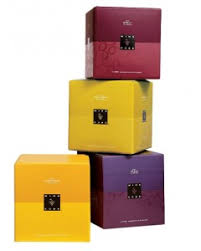
I’m talking about box wines or bag-in-box (BIB) wines (the Australians call them cask wines) that feature an airtight wine-filled plastic bladder inside a cardboard box. You use a built-in spigot to get to the wine. They can be found on the bottom shelf of the wine wall and behind the bar and out of sight at your local restaurant. They come in several sizes — 3 liter and 5 liter containers are the most common.

Box wines have a bad reputation. They first appeared in the 1970s and were filled with generic bulk wines.  They were one step down from the popular 1.5 liter “magnum” bottles of  “Burgundy,” “Chabils” and the notorious “Rhine” wine. Box wine was cheap, nasty stuff that acquired a frequently deserved bad reputation.

[Re]-Thinking Inside the Box

It’s time to reconsider box wine. Screw caps had a bad reputation, too, until quite recently. We associated them with low grade swill until fine wines appeared under screw cap (the New Zealand producers were in the vanguard) and we began to appreciate that that screw caps have many advantages. Now screw caps are actually associated with quality for some types of wine, especially youthful whites, and no one expects to pay less or get less because of the screw-top closure.

The technology of box wine is very solid. The airtight bladder is a neutral container that is well suited to holding wine for relatively short periods of time. (Don’t cellar box wine — consume within a year of production — check out the “drink by” date on the box.) The bladder and spigot do in fact protect the wine from oxygen in the short run, so it will last longer once opened (especially if the box is stored in the fridge) than similar leftover wine in bottles.

Bladders are so good at the particular thing that they do that they have become an industry standard technology for bulk  imported wines, which are shipped in huge bladders inside steel shipping containers (big bag in big box) and then bottled in the import market. So you may already be drinking box wine and not know it.
The Box Also Rises

The most recent Nielsen retail wine sales figures (reported in the October 2009 issues of Wine Business Monthly) suggest that box wine sales are growing. Wine sold in 3, 4 and 5 liter containers (most of it is box wine, I think) accounts for just under 10 percent of US supermarket wine sales, according to the Nielsen data (compared to 65% for standard bottles with the remainder in 1.5 liter and other formats). Sales are rising in this category, with 3 liter packages up 8.7% in the last year on a dollar basis, for example, and 5 liter packages are up 9.3% by value.

The total market for box wines rises if we include on-premises sales. Recent data (see previous posts) indicate that box wines (served to customers in carafes and by the glass) are strong sellers in casual dining establishments.

The rise of box wine is part of the trading down effect, clearly, since most box wines fall into the two price categories that are experiencing the highest growth. Sales of wines that are less than $3 per 750ml bottle equivalent have risen 7.1 percent according to Nielsen and by 10% for wines between $3 and  $5.99. Supermarket sales of $20+ wines, on the other hand, have fallen by 3.4%.

Nasty, Brutish and Short?

Does this mean that Americans have traded down all the way to the bottom, back to the nasty box wines of the 1970s? The answer, incredibly, is no. Or at least not necessarily, according to the October 15 issue of Wine Spectator.  You can’t miss this issue on the newsstand — it features a cover story on “500 Values for $20 or Less” and includes a set of box wine reviews that make interesting reading.

Wine Spectator purchased 39 box wines in packages that ranged from 1 liter to 5 liters. Twenty seven wines were rated as “good” (a score of 80-84) and ten “very good” (85-89). The names of the 2 wines that scored below 80 were not reported.

The top box wine, going by the rating numbers, is a white: Wine Cube California Chardonnay, which sells in Target Stores for $17 per 3 liter box, which is $4.25 per standard bottle equivalent. It earned a very respectable 88 points. Wine Cube is a partnership between Target and Trinchero, the maker of a wide range of wines including Sutter Home.

The best red wine (at 87 points) is the Black Box Cabernet Sauvignon Paso Robles 2006, which costs $20 for 3 liters or $5 per standard bottle equivalent. Black Box is a widely distributed Constellation Brands product.

Good and Cheap?

Some box wine, apparently, is both pretty good and pretty cheap. Perhaps just to show that they really do rate wines blind, Wine Spectator gave a pretty good 84-point score to a non-vintage Carlo Rossi Cabernet Sauvignon California “Reserve” wine. Five liters for $13, in case you are interested,  That’s $1.97 per standard bottle equivalent.

How can decent wine be this cheap? One answer, of course, is that you can choose to make the wine itself less expensive by economizing in the cellar in many ways (less oak or none at all for red wines, for example). But to a considerable degree the box itself is responsible for the savings.

The bag in box container costs less than $1, according to the Wine Spectator article, which automatically saves $4 to $8 compared with a similar quantity of wine in standard glass bottles and the box they come in. Shipping costs are also less since the boxes weigh much less than glass bottles for the same quantity of wine and are less likely to be damaged in transit.  There are environmental benefits too, especially in areas where glass bottle recycling is problematic because the sour economy has undermined the market for recycled glass.

Is box wine the future of wine? No. The wine market is too complex to be dominated by any single trend. But with better wine in better boxes (and with consumers embracing a more relaxed idea of wine) box wine deserves to play a bigger role in the future of wine. Another triumph for The Box!

>>><<<

November 1, 2009: I was recently interviewed about box wines by Simon Morton of Radio New Zealand’s  This Way Up . Click on the link to listen to the interview.

Book Review: Doubts about Bordeaux

Benjamin Lewin MW, What Price Bordeaux? Vendage Press (an imprint of the Wine Appreciation Guild), 2009.

Wine is bottled poetry, I have read, and bottled geography, too. It is also liquid doubt.

Uncertainty is a key obstacle to the purchase of wine because it is so difficult to know what’s really in the bottle at time of purchase (and, of course,  if you will like it) . There are thousands of different wines from different places made in a myriad of styles. The uncertainty is magnified by the fact that wine changes with each vintage, each vintage changes as it ages, and we all have different tastes. Add to this the fact that some wines are frauds – not what they seem to be  — and others are “lemons” with bad corks or random flows. It’s surprising, when you think about it, that anyone buys wine at all.

Diluting the Brand

Doubt is one of the biggest obstacles to the successful intersection of demand and supply for wine and much effort is expended in making consumers more confident in their purchases. Brands are one solution. A brand that has established a reputation for quality and consistency is a valuable thing in the wine market. This applies to both private brands like Robert Mondavi  and to communal brands, like Champagne.

Champagne was the first wine appellation – a geographic designation meant to deter fraud and encourage confident consumption. It is probably the most valuable “brand” in all wine.

If Champagne is the top wine brand then Bordeaux must come a close second. Bordeaux wines are possibly the best, arguable the most famous and certainly the most expensive in the world. Or at least some of them are, because Bordeaux’s production includes much that is common, foul or unsellable at any price.

The paradoxes of Bordeaux and its famous brand are the subject of Benjamin Lewin’s new book, What Price Bordeaux? Although Dr. Lewin might disagree, I would say that one theme of his book is that the Bordeaux brand is a bit of a fraud. Bordeaux’s reputation is rooted in history, for example, as is the case of much Old World wine, but we learn that the Bordeaux wines of today bear little resemblance to wines of the past.

This is a good thing, in some respects. The Bordeaux wines of history were thin products, “corrected” to meet market demand by the addition of darker wines from Spain and the South of France. Bordeaux wines today are more like their arch rivals from the Napa Valley, both by choice and as a  consequence of global warming, which has nearly eliminated the climate differences between the two regions.

Wine Mythbusters

The top brands in Bordeaux were established by the Classification of 1855, which grouped the chateaux into a rigid quality hierarchy based upon market prices at that time. This, Dr. Lewin’s analysis suggests, was a bit of a fraud as well, and not a very reliable guide to wine choices today.

My favorite chapter examines the “second wine” phenomenon. Many Bordeaux producers (and almost all of the top chateaux) produce a second wine (selling at a lower price) in addition to the flagship bottling. The second wine is marketed to people like me, who probably can’t afford to buy the top wine but want an idea of what it might taste like. We buy the cheaper product and imagine the taste of the grand vin.

The problem, Dr. Lewin tells us, is that there is no fixed idea of what a second wine should be and no certain relationship between the greater and lesser products. Indeed, he says, many second wines are poor values – over-priced because they benefit from the borrowed reputation of the top wine. Better off with a better wine at lower cost from a lower-tier producer, he suggests. Good advice for people who taste what’s in the bottle, not what they imagine to be there based upon the label.

Dr. Lewin’s book is unusually full of data for a wine publication – wine writers are better with stories than bar graphs – but it fits perfectly his myth-buster approach. The maps and figures are colorful and engaging – or at least they engaged the wine geek in me. Each chapter examines some particular aspect of the Bordeaux brand and reveals the reality behind the curtain. I admire both the book and Dr. Lewin’s research and expertise, although I would have appreciated a stronger central argument.

It is pretty clear that this exposé is a labor of love not malice – Dr. Lewin is convinced that the wines and the Bordeaux brand could both be much better. The first step is to acknowledge the facts and that’s where this book comes in. Dr. Lewin has done a service to the Bordeaux producers in this regard. Now it is up to them.

Chateau Cash Flow: The Rise of House Brand Wine

Decanter.com reports that house brand wine sales are rising in Great Britain even as the overall market slumps.

Retailers are reporting impressive growth of own-label wines as cash-strapped customers look to rein in their spending.

A Datamonitor survey reports 41% of all grocery sales in the UK are now own-label, up from 38.2% in 2008, and wine sales are following the upward trend.

Supermarket retailer Sainsbury’s told decanter.com its own-label wines had grown at double the rate of its wine range this year. A spokeswoman said: ‘Last year we revamped our own-label packaging and we have put a lot of effort behind the range in store and in the media.’

House brands aren’t so important in the U.S. wine market [yet] but they may well be in the future. The best known U.S. house brand wines are Charles Shaw (a.k.a. Two Buck Chuck) at Trader Joe’s and Kirkland Signature at Costco. Big Box retailers Target and Wal-Mart have launched their own house brands in recent months and other retailer’s have commissioned discount brands (not yet closely associated with their names) in an attempt to get a grip on the trading-down market. Look for this trend to continue, especially if the economic downturn persists.

Chateau Cash Flow

House brands are a solution to several problems, which is why they are likely to increase in importance. On the consumer side, they provide buyers with reputational assurances. You might wonder if a $3 wine can be any good, but you are more likely to try it if Trader Joe’s or Wal-Mart stands behind it. As I have written before, a $3 unknown wine at Safeway makes you think “how can it be any good?” while a $3 wine with the Trader Joe’s imprimatur makes you think “how bad can it be?” You might buy the latter but not the former.

The British have years of experience with house brands — it is why they are [for now] the world’s most important wine market and why Britain’s supermarkets are arguably the most sophisticated wine distribution machines on earth. The U.S. is catching up, but Britain still leads.

Reputation is especially important when consumers are trading down, moving into unfamiliar territory on the lower shelves. Decanter reports that while some British consumers are trading down to house brands, building that market, existing customers are trading up within the house brand portfolio! If this trend continues it will be hard to resist the house brand strategy.

Supply Side Wine

House brands have big advantages on the supply-side, too. Producers with surplus wine are often happy to sell it off through house brand bopttlings because it generates cash flow without directly undercutting their own brands and market. In my international economics class we call this “dumping.” You sell off unintended surpluses (of which there are plenty just now) through retailers in a different market segment, allowing you to maintain reputation and price points in the home market. If you start discounting wine to sell it, we have learned, it is sometimes difficult to regain the ground you have lost.

Some British retailers have moved aggressively into the supply chain, buying up grapes and surplus wines and acting as full-fledged negociants, but it isn’t really necessary to make such a large commitment to get into the house brand wine business. There are plenty of regional and national firms who can quickly respond to demand. No large investment is required, cost is low.

House brands can also have a somewhat fluid identity (not tied tightly to a particular region or style), which allows them to benefit from global opportunities, sourcing Sauvignon Blanc from Chile, for example, and Pinot Noir from Northern Italy or the South of France.

The main problem is to be sure that quality is good enough. Otherwise you have put your own brand in jeopardy.

Three Way Battle

The world’s wine markets are a battleground for three models of wine sales. The German model is based upon low cost (one euro per liter) and hard discount sellers like Aldi. The American model is all about corporate brands like Gallo and Constellation Brands. The British model is built upon upscale supermarkets and the house brands they sell.

Recent news suggests that the British model is gaining ground, both in the UK and here in America, where it is the model that drives Costco sales (Trader Joe, on the other hand, uses a version of the German system). It will be interesting to see if this trend persists once the recession eases up.

Wines from Spain: Challenges and Opportunities

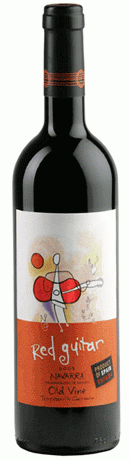
You know that a market niche is expanding when Constellation Brands decides to move into it, as it  has done with Red Guitar, an old vines Tempranillo-Granacha blend from Spain’s Navarra DO that sells for about ten bucks.

Red Guitar is marketed as “a rich, smooth and stylish celebration of the Spanish lifestyle” — a wine for the times, I guess, when consumers are looking for products that let them trade down in terms of price while trading up to a fun, more casual way of living.

Don’t Know Much

I didn’t know very much about the wines of Spain and the Spanish wine industry, so I went back to the classroom this week to try to catch up at a three day seminar on Spain’s wines organized by The Wine Academy of Spain and taught by Esteban Cabezas. My fellow students came mainly from within the wine industry — sommeliers, distributors and retailers. I learned a lot and sampled dozens of great wines. We didn’t taste Red Guitar, but we did survey the market from $5 bottles on up to the highest levels, including table wines, Sherry and sparkling Cavas. Yes, I know. Tough work …

Education is important to the future of the wines of Spain.  As I have written before, the number of unfamiliar regions and grape varieties is a challenge that must be addressed if wines from Spain are to achieve their obvious market potential. Constellation Brands’ decision to market Red Guitar as a “lifestyle” brand probably reflects the difficulty of selling wine from unfamiliar places made with unfamiliar grapes in a market where the international  varietals and styles are the lingua franca. Spanish winemakers need to get the word out — to educate consumers and sellers. Classes like the one I attended are a good step in this direction.

Uncorking the Potential of Wines from Spain

It’s useful to think about Spain’s wine industry using a basic SWOT (Strengths-Weaknesses-Opportunities-Threats) framework. Wines from Spain have many strengths that go beyond their obvious quality in the glass. Spanish food and culture are hot and Spain is a popular tourist destination, factors that can be leveraged in the marketplace. Intangible cultural factors have always helped sell Italian wines, so it is not unreasonable to think that Spain will benefit from them as well. Red Guitar’s marketing strategy is an obvious attempt to do just this.

There are weaknesses, too, of course. While the sparkling Cavas are very popular, offering Champagne quality at beer prices in some cases, other segments of the Spanish industry suffer from consumer ignorance or indifference. Sherry wines from Andalusia, for example, suffer the same challenge as Riesling wines. Consumers think they know what they are (simple, sweet stuff) but they are wrong. The diversity of styles and complexity of the best wines gets lost. For those who know them Sherry wines are the great bargains of the wine world. But most consumers never find out what they are missing. That needs to change.

The amazing diversity of Spain’s table wines is a strength in this market, where consumers are unusually willing to try new products if they perceive good value. But diversity is also a weakness to the extent that it confuses consumers (especially American consumers)  who are looking for a “brand” identity and can’t find it. Spain doesn’t have  a distinct regional identity that would draw in consumers initially and then encourage further experimentation as some other wine producing areas do.

In Search of “Brand Spain”

New Zealand has “brand” Marlborough Sauvignon Blanc, for example, which put that country on the wine map and gave millions of wine drinkers an excuse to try NZ wines. Oregon has its Pinot Noir, which has helped make it a wine region of international note despite its surprisingly small total production. Spain (like Washington State wine in this regard) produces so many different types and styles of wine that no one of them defines it. The regional identity is unclear. This is a barrier when trying to break into new markets, but a strength once a market beachhead has been established.

Although my terrioriste friends cringe when they hear me say this, I think it would be great if Spain had a Mondavi or Antinori who could define a “brand Spain”  in the global market. I think that a number of quality producers are trying to achieve this, but the industry is still pretty fragmented. Perhaps the consolidation that is sure to accompany the current economic downturn will move this process along.

The continuing economic crisis  is a great opportunity for Spain to expand export market share, especially in the United States where the market for wine is till growing in the mid-market segments. Spain, like Argentina, has a reputation for good value and distinctive wines and this is very useful right now.

Catch-22

It is important, however, to avoid being defined by low price alone. Spain’s first and fourth largest export markets (Germany and France) buy mainly low cost wines to stock the shelves of Aldi and similar discount sellers. Spain needs to focus on the UK and US (numbers two and three on their export table) where higher prices and margins are possible.

Another threat to Spain’s success in the international market is the temptation to conform too closely to the international market style (Pancho Campo, Spain’s leading wine authority, called this “the Australian style” in a Skype-dialogue with my class). Wines that are all alike become commodities at some point and it seems to me that Spain, with its already huge lake of surplus wines, wants to get out of that part of the market.

But there’s a Catch-22. It is easier, perhaps, to break into the market with a good value me-too wine. But it is hard to build upon that foundation (hence Australia’s current wine slump). Better to be yourself, distinctive, even quirky, it you can get consumers to give you a try.

As you can see, the prospects for Spain are as complex and multi-dimensional as the wines themselves.  I am optimistic that Spain’s wine industry will navigate this complicated passage successfully. Look for more on this topic in future posts.

Note: I would like to thank the Wine Academy of Spain and Catavino for allowing me to participate in the seminar on wines of Spain. Special thanks to my professor, Estaban Cabezas, and to Simone Spinner.

Tasting Note 8/11/2009: We tried the Red Guitar with dinner tonight and it was completely lacking in distinguishing qualities. It is hard to imagine that anyone who was introduced to the wines of Spain by Red Guitar would try another Spanish wine. Last night, however, we had the Borsao Tres Pichos, an Old Vines Granacha that sells for only a few dollars more, which was completely enchanting. You need to try Spain’s wines to know if you like them, but quality varies (and not just with price), so choose with care.