
I’m busy getting ready for the Unified Wine & Grape Symposium, which takes place in Sacramento later this month. It is the biggest wine industry meeting and trade show in North America, with over 14,000 attendees expected for the event’s three-day run from January 23 to 25.
Sacramento Dreaming
There’s a lot to see and do at the Unified. The trade show itself is fantastic, with the full range of wine industry goods and services — from tractors to raptors to bottles and corks to finance and insurance — on display. The seminars are especially interesting this year. Gina Gallo will kick off the program with a much-anticipated keynote address at the luncheon on Tuesday.
Other sessions will look closely at wine-growing and wine-making issues, including a special program on Cabernet Sauvignon, which is the hottest thing there is in California wine these days. There are several parallel programs in English and Spanish, A very timely addition to the program this year is a series of seminars on preparing for and dealing with emergency conditions. Lots to see, hear, and learn.
I will be speaking at and moderating the “State of the Industry” general session on Wednesday morning. This will be a very intense session, featuring analysis by Danny Brager (The Nielsen Company), Steve Fredricks (Turrentine Brokerage), merger and acquisition expert Mario Zepponi (Zepponi & Company), and Allied Grape Growers’ Jeff Bitter. You really don’t want to miss this session — or any of the others.
Mother Nature Strikes Back
What’s ahead for the U.S. and global wine industries in 2018? Looking back at my notes from previous “State of the Industry” sessions, I see that in 2016 I suggested that the wine market looked very good … if the economic clouds on the horizon stayed away. They did and it was a good year for wine. In 2017 I proposed that the issue was more political than economic – lots of political uncertainty with the Brexit vote, Donald Trump’s new administration, and upcoming elections in France, Germany and elsewhere. If the political system can hold together, I speculated, it could be a good year for wine.
I might have been right at the time to focus on politics, but in retrospect it is clear that the real threat to the wine industry wasn’t economic or political … it was Mother Nature herself. 2017 (now extending into the 2018 harvest in the Southern Hemisphere) will be the smallest global wine grape harvest in a generation and, in some areas, the smallest since at least 1945.
Wildfires, both in California and in Portugal and Spain, are the iconic image of the year, but they are not the only or even the principal cause of the global grape squeeze. 2017 produced a perfect storm of different challenges in different places. Heat here, drought there, frost, freeze, hail. Sometimes it seemed like everything that could go wrong did. The impact on the global market will be significant. In fact, as I will explain next week, it could be game-changing.
Winegrowers are no strangers to bad weather or unfavorable conditions. What makes 2017 different is the fact that so many regions were affected during the same growing season – that’s what is causing the Big Squeeze. Typically small harvests in one region of the world are offset at least to some extent by abundant harvests elsewhere. This time was different – most of the world’s important wine growing regions were hit at once, albeit by different factors.
The Biggest Losers
The biggest wine producers were also the biggest losers. OIV harvest estimates released on October showed a global reduction in wine production of about 8 percent compared with 2016 (see pdf here). Italy, France, and Spain – the three largest producers accounting for about half of global wine production – were down 23 percent, 19 percent, and 15 percent respectively.
There were only a few bright notes among major producers. Argentina’s 2017 harvest, for example, was 25 percent greater than in 2016. But the 2016 harvest, while good in terms of quality, was very small and not a really good point of comparison. In fact, Argentina’s 2017 crop was much lower than harvests in 2013, 2014, and 2015.
South Africa’s 2017 harvest was relatively good, up 2 percent from 2016, putting South Africa just ahead of Chile and behind Australia and China in the OIV wine league table. But the good news has not lasted. The 2018 harvest that will begin in just a few weeks looks to be the smallest in years due to very dry conditions through the growing cycle.
If you add the small 2018 southern hemisphere harvest to the northern hemisphere’s weak 2017, you get a dramatic shock to the global wine market environment – a sharp decline of 10 percent or more in global wine grape production.
What are the implications of this Big Squeeze? Your Econ 101 professor taught you that shortages cause prices to rise and that certainly in in the cards. But the wine economy is complicated, so it should be no surprise that the Big Squeeze will have complicated impacts. Come back next week for analysis.
 Happy New Year to all. The Wine Economist

 Winemaker Dina Louis showed us around the facility and helped us taste through the wines. The barrel room was again the center of the visit, but this time it wasn’t the heat that got our attention but the age and condition of the barrels themselves. Both firms employ teams of coopers not to build barrels, as you would expect in a winery somewhere else in the world, but to keep ancient barrels in use, lending distinct character to wines. Madiera wineries scour the world looking for really old barrels in which to age their wines.
 Herewith brief reviews of a series of regional wine guides by Benjamin Lewin MW and the newest volume in Caro Feely’s series on her family’s wine and vineyard experiences in France.
 Caro Feely,
 The United Nations World Tourism Organization’s
  This was particularly interesting at the UNWTO conference because our fellow delegates were mainly tourism people who see opportunities in wine whereas Sue and I come at this more from the wine side, where tourism is one important element. The organized winery visits were interesting to us because they highlighted the tourism offerings rather than the wines themselves.
 The historic buildings and ancient vines were a highlight of our asado lunch at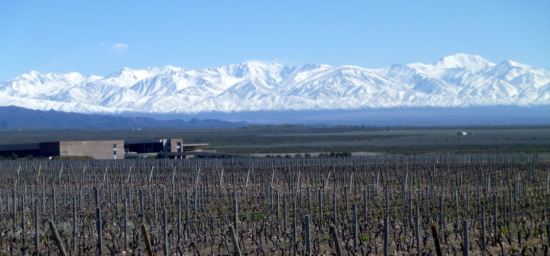
 Sue and I are back from the second
 Cracking Croatian Wine
 The real value is for the visitor to Croatia. Those who are visiting Croatia for beaches or historical cities and just want to enjoy a regional wine with a meal will find several options. Those who want to dive in deeply into Croatian wine will find plenty of opportunities to explore. The lists of wineries, wine bars, and wine shops offer good starting points.
