 The Association of Port Wine Companies roadshow passed through Seattle recently and Sue and I were fortunate to be invited to attend the Porto and Douro Wines Tasting, a ceremony initiating several local wine trade representatives into the Confraria do Vinho do Porto, and a festive dinner hosted by the winemakers.
The events, which involved wines and representatives from eleven Port houses, had two main purposes. The first and most obvious was to introduce or re-introduce local restaurant and trade people to the Porto and Douro wines and to establish or renew relationships. In other words, this was a sales call and I will talk about this aspect next week. But first I want to discuss a secondary purpose: economic diplomacy.
Protecting the Brand
Champagne and Porto have two of the world’s most valuable regional wine “brands.” Sparkling wines are made all over the world, but Champagne can only comes from the Champagne region of France. Ditto Port wine and the Porto region.
When producers in other regions use these terms generically, they potentially dilute or devalue the brand. It is easy to see why this might be a problem. Trade treaties have enabled Champagne and Porto to assert their intellectual property rights here in the U.S., but with pre-existing commercial use “grandfathered” in. Thus Gallo legally sells inexpensive Andre’s California Champagne and Fairbanks Port.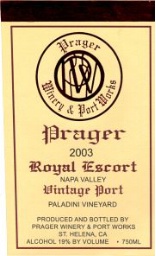
Not all of the grandfathered brands are high volume value wines. Prager Royal Escort Port, made from Napa Valley Petite Sirah grapes, sells for $90 per bottle for the current 2009 vintage release. It may not be real Porto Port, but it is a wonderful wine.
Champagne, Port and the other key regions would obviously like to see there brand rights more strictly enforced and they hoped to accomplish this as part of the big Transatlantic Trade and Investment Partnership Agreement (T-TIP) that has been in negotiation between the U.S. and the European Union for some time.
Shifting Political Winds
But the political winds have changed directions (in case you haven’t noticed) and big trade agreements are now pretty much off the table. The incoming Trump administration seems more likely to dismantle existing trade deals than to encourage new ones. The political environment in Europe is no sunnier.
Even a fairly straightforward trade treaty with Canada nearly collapsed at the last minute when officials in the parliament of the Belgian region of Wallonia raised objections. Reminds me of The Mouse that Roared.
Facing this political roadblock, the Porto producers have turned to the art of persuasion — diplomacy. Thus the photo above, which shows George Sandeman at the October 27 Confraria induction ceremony in San Francisco where Boyd Family Vineyards, Freemark Abbey, Jessup Cellars and Schweiger Vineyards were welcomed into the Brotherhood of Port to honor their commitment to respect the traditional use of the Porto brand.
The Napa-Porto Connection
Napa Valley Vintners was also recognized for their work to protect place names. Napa has particular interest in this issue because the Napa brand itself is very valuable and, like Champagne and Port, is at risk of being diluted in various ways. It is no accident, therefore that the Joint Declaration to Protect Wine Place Names and Origins, which an increasing number of regions are embracing, is also called The Napa Declaration on Place. Porto and Napa were founding members of this initiative.
I asked George Sandeman (the handsome fellow in full Confraria regalia in the photo above) about the situation and he noted that “Napa producers switched away from Champagne on a voluntary basis long ago. Now nobody in Napa Valley produces Champagne, even though they legally may do so according to US law (those grandfathered in the 2006 Wine Accords). The producers in Napa have made that change as a show of respect to the Champagne region.”
“There has been discussion for several years of doing the same for Port,” he continued, “and now the first handful of Napa producers voluntarily made a switch away from the term “port” to something else, even though they weren’t legally compelled to do so. It was a sign of respect to Porto and the Port producers, but also an acknowledgment that it is important to “walk the talk” when it comes to respecting and protecting winegrowing place names.”
Not Port: The Name Game
One problem that the makers of Port-style wines face is “the name game” — how to describe their products and market them without using the forbidden terms. It is a tricky business. Poking around our little cellar, for example, I found two examples of winemakers who make interesting wines and work hard to stay inside the lines.
Hedges Family Estate, for example, makes very small quantities of wine from traditional Port grapes (plus a little Cabernet Sauvignon in the example we have). The back label clearly identifies itself as “Fortified Wine,” which accurately describes the process and is one possible generic descriptor of these wines. Unfortunately, the terminology also emphasizes alcoholic strength and not everyone will see that as a positive.
Mosquito Fleet Winery makes a fortified wine called Griffersen Reserve from Touriga Nacional grapes . As with Hedges, the term “Port” is carefully avoided on the package. Small print on the back label describes the product as “dessert wine,” emphasizing sweetness and the after-dinner occasion instead of alcoholic content or production process. This is accurate (at the winery you are served a taste in a small dark chocolate cup– yum!), but is obviously also vague and somewhat limiting as a category.
If you called either of these wines Port they would be easy for consumers to understand. The diplomatic initiative to protect the Port producers’ brand would be more effective if someone could find a generic term that works as well for these wines as “sparkling wine” does for wines made in the Champagne style and method. The lack of such a term means that honest efforts to respect Porto’s rights in theory frequently fail in practice. While Hedges and Mosquito Fleet won’t call their wines “Port” nearly everyone else does when they refer to them.
What’s the best way to honor and protect the Port brand while also allowing U.S. producers to identify and successfully market their own fine wines? The name game continues.
>>><<<
Seems like Shirley Ellis could solve the Porto name game dilemma.


 Kevin Zraly Windows on the World Complete Wine Course (revised & updated edition). New York: Sterling Epicure, 2016.
 Rod Phillips,
  “Don’t look back,” Satchel Paige said, “something might be gaining on you.” That’s probably good advice in most circumstances, but sometimes it pays to glance over your shoulder to get some perspective on the present and inspiration for what’s ahead.