Wine Economist Milestones

Most Lucky Fellow

“Everybody should be so lucky as Mike Veseth — his lifelong intellectual passion is also his job, ” according to a recently published interview with Seattle Times book editor Mary Ann Gwinn that was highlighted by this front page “teaser” (see above). ” Lit Life” is a reference to Mary Ann’s regular book column — not to my wine consumption as some mischievous friends have suggested.

I can’t really argue with the “lucky” tag. I especially appreciate all of you who have read Wine Wars and follow the Wine Economist — I’m lucky that you’ve decided to come along for the ride!

Milestones Along the Way

The Wine Economist passed a couple of milestones when I wasn’t looking.

  • Number of posts: now more than 300 or roughly the equivalent of three 80,000-word books.
  • Number of visits: now more than a half million in total according to the click counters at WordPress, the company that hosts my blog.
  • Number of subscribers/followers: now more than 900 followers of the blog plus almost 350 more on The Wine Economist’s Facebook page.

New Books in the Pipeline

Finally, I want to mention two new projects. I’m putting the finishing touches on some additional material that will appear in the forthcoming paperback version of Wine Wars, which is set for November 2012 release.

And I’ve started work on the sequel to Wine Wars, which is called Extreme Wines. I’ll provide more information about this soon.

Now back to work!

Tight, Fat, and Uncorked: Three Wine Scenarios

This is the final post in my series on Tight, Fat and Uncorked, the three trends I see shaping the wine industry. This week I want to think about how the future of wine might unfold depending upon which of these three forces is most powerful.

Wine markets are getting “tight” as demand for many grape and wine types outstrips supply, “fat” because of the growing demand for middle class, middle market, middlebrow wines and “uncorked” as more and more international wine trade shifts from bottle to bulk. Each of these forces is important, but it will untimately be the ways they interact that will determine the path of wine’s future development.

For your consideration, here are three possible histories of the future of wine. As always, I invite readers to share their own scenarios in the Comments section below.

Scenario 1: Wine as a Global Commodity

The first scenario sees the three forces fitting together neatly in a way that leads to the increasing commodification of wine.  Tight markets force wine producers to scour the world for juice to maintain their “fat” market wine brands. Bulk wine shipments help solve this problem in a cost-effective way but sacrifice regional identity and local “terroir” to a certain degree.

This scenario is so neat and clean that it is tempting to stop right here. But that’s a mistake because this “future” is really more about the present  and or recent past misses some of the more interesting dynamic elements. Things change when we tweak this scenario a little.
Scenario 2: The Center Does Not Hold

The second scenario looks more closely at the implications of tight markets. Grape and bulk wine prices are already rising (alarmingly so, in a few specific cases) and this trend is likely to persist for several years.

Many have observed that the demand for wine has become more “elastic” or price sensitive. The recession is one cause: consumers have learned to trade down. Many new “fat” wine buyers think of wine as just one of many possible beverage choices and are more willing to substitute beer, spirits, juice, soda,  and even water as relative prices change. Not all wine drinkers are equally sensitive to price, of course.

So what will happen as wine drinkers are faced with higher prices? One possibility is that the “fat” wine segment will be particularly affected as competition focuses on this price-sensitive market. It isn’t hard to imagine that margins could shrink or disappear as price-sensitive demand meets rising costs. Maybe today’s “fat” market will go on a diet, as grapes and wine are pushed upmarket in search of higher margins and consumers go down market in search of cheaper (or different) ways to fill their glass.

Scenario 3: The Center Shifts [on the margin]

The final scenario focuses on income and demand. The middle class, middle market, middle-brow “fat” wine demand is thought to have a high income elasticity — it is relatively sensitive to changing income. A 10% increase/decrease in income produces more than a 10% rise/fall in wine demand. This property is important as the wine market demand expands (the rising global middle class) in a multi-speed world.

If Europe’s recession continues and even deepens (as seems likely) and the U.S. recover slows or even stalls (as seems possible), then the center of gravity in the wine world will necessarily a bit shift towards those areas where middle class incomes are growing, including parts of Asia, South America and even Africa.

Is this a serious concern? Well, don’t forget that the United States is now the world’s largest wine market and this didn’t happen over night but it did occur because of just the sort of persistent marginal movements I’m talking about here. Certainly all eyes are on Brazil right now because it seems like a country where a substantial “fat” wine market might develop if solid economic growth can be sustained.

Not Nairobi [yet]

I’m not saying that suddenly Nairobi (or Säo Paulo or Shanghai) is going to be the center of the wine world, but supply tends to follow demand and, with markets tight and bulk wine shipments increasingly efficient, new directions are very possible, particularly if margins in these new middle markets are attractive.

Some of these scenarios are more likely than others, but all three embody valid points. So the future of wine (as shaped by these trends) is likely to encompass all three factors plus some unexpected “wild cards.” It is going to be interesting to see how this complex interaction plays out.

>>><<<

Wine Uncorked: The Rise of Big [Really Big] Box Wine

This is the fourth in a series of articles on Tight, Fat and Uncorked, the three trends I see shaping the wine industry. This week’s topic is how wine is becoming increasing “uncorked” and what this implies.

If you take the “uncorked” metaphor and add it to the “box wine” reference in the title, you might reasonably assume that I’m going to talk about alternative wine packaging — boxes, bags, 1-liter tetrapak containers and so on. That would sure make sense.

But you’re wrong. The box I’m talking about is big [really big] as in 20 foot ocean shipping containers holding maybe 25,000 liters of bulk wine in a “flexitank” bag.

Welcome to the New World of international wine trade — the ultimate ‘uncorked’ experience!

The Incredible Bulk

I’ve known about Big Box wine for a while — my 2009 post on “Wine’s Future: It’s in the Bag [in the Box]” is one of the most-read articles in Wine Economist history. But I didn’t realize how big the big box wine trade had become until I received a Rabobank  report titled “The Incredible Bulk: The Rise in Global Bulk Wine Trade” earlier this year.

Rabobank’s report focuses on New World wine trade since 2001 and the change in the composition of wine shipments (in terms of bottled versus bulk) is dramatic. Bulk wine (the big box stuff) accounted for about 22% of New World wine exports in 2001 (the remaining 78% was shipped in bottle). By 2010 the bulk share increased to over 40% while the bottle share fell to less than 60%. That’s a near doubling of the bulk wine share of New World wine trade in less than a decade, an amazing shift that is all but invisible to consumers.

Big Green Wine

What drives the shift from bottle to bulk in New World wine trade? The short answer is Big Green, but green in two ways. Green, first, in the environmental sense. Bottled wine is both heavier and bulkier than bulk wine (glass accounts for more than 40% of a standard bottle’s total filled  weight). All else being equal (a big assumption in wine economics) shipping wine in bulk and bottling closer to the final consumer should lower the wine’s carbon footprint.

Tesco, the world’s largest wine retailer,  is reported to be particularly aggressive on this front with bulk wine imports being bottled in screw cap-topped lightweight glass for its high volume private label brands. (Click here to read about their very green “furnace glass” wine bottles!)

Cost is another green (as in greenback) factor and there are savings here as well. Rabobank estimates that bulk shipping yields an average cost savings of $2.25 per standard 9-liter case (they estimate total annual savings of $142,300,000 in 2010 compared with the 2001 level of bulk shipments).  This is a very substantial saving for commodity wines of the type that often appear in private label brand portfolios.

The movement towards increased bulk wine exports started in the Age of Abundance, when surplus wine flooded the markets and it was important to move it as cheaply and efficiently as possible. Those days are now in the past; rising costs and tight margins are likely to make that $2.25 per case saving even more attractive to producers now, especially as they scour the world for supplies of wine (did someone say “Moscato?”) to supplement scarce domestic juice.

Subtracting Value Added

For vertically integrated international wine producers, the decision to ship in bulk and bottle in the domestic market is mainly about these cost savings.  They pay less to ship the wine and pay lower import excise, too, since the wine enters the country at the lower bulk value rather than a higher bottled value.

But more is at stake, as the Rabobank report notes, for wine makers who sell to third party importers. In this case bulk shipping results in a new division of value added in the supply chain, with less in the producing country and more further down the line. The impact is thus complicated: bulk wine shipment subtracts some value added in the producing country, although the lower overall cost encourages exports.

There are also relative price effects to consider. Bulk shipping increases the relative price of traditional bottled wine imports relative to bulk products, a difference that may be magnified as wholesale costs differentials are passed along through the supply chain.

Economic Impact: The Box

The standard 20-foot shipping container (a.k.a. “The Box”) revolutionized international trade when it became widely adopted. It changed everything (OK, maybe not everything) because it was so much more secure and efficient than the previuosly standard “break bulk” shipping system. One of the things it changed was the scale of international transactions because the greatest economies were realized by those who could reliably fill ocean containers.

I don’t think the rise of “uncorked” big box bulk wine shipments is going to change everything in the same way the ocean container did, but I do think the effects will be significant. I’ll talk about this more in my next post where I consider how the world of tight, fat and uncoked wine is likely to unfold.

Fat Wine: Middle Class, Middle Market, Middlebrow

The world is becoming Hot, Flat, and Crowded according to New York Times columnist Thomas Friedman’s bestselling 2008 book. Hot and crowded are easy to understand, but flat?

Yes, Friedman, said, flat as  “a metaphor for the rise of middle-class citizens, from China to India to Brazil to Russia to Eastern Europe, who are beginning to consume like Americans. That’s a blessing in so many ways–it’s a blessing for global stability and for global growth. But it has enormous resource complications ….”

Fat Not Flat

Friedman is counting on the world’s growing middle class to shake things up and he is probably right. Here in Wine World, however, I think the trend is fat more than flat, although it might amount to the same thing in the end.

“Flat” suggests to me that the gap between the top and bottom — 1% elites and 99% masses — is closing. Wine certainly isn’t getting flat in this sense, although the recent softness of Bordeaux en primeur prices argues against this a bit.

No, the floor and the ceiling aren’t getting any closer when it comes to wine — so  I think the best way to describe this trend is Fat — fat in the sense of “thick in the middle:” middle class, middle market, middlebrow.

Thick in the Middle
Wine’s recently-concluded long slack cycle (see previous post) flooded many  markets with good, reasonably priced wine. The impact of the economic crisis encouraged consumers to trade down (to cheaper wines), to trade over (to different types of wines), and trained wine drinkers to look for bargains. Many new consumers entered the wine market at the same time, bringing with them new tastes, new attitudes, and a refreshing willingness to experiment.

There are several key indicators of the degree to which wine markets have been open to new ideas. The great success of New Zealand and Argentina as wine exporters reflects both the quality and value of the products from these countries but also, I believe, their good fortune in entering the global market at this time.

Marlborough Sauvignon Blanc and Argentinean Malbec are easy to understand, easy to drink and even easy to pronounce. They are the hottest import categories in the U.S. market. Significantly, neither of these wines is especially cheap. They are generally priced in the middle market, well above Two Buck Chuck and even higher than popular brands like Barefoot. They fit my “thick in the middle” model to a “T.”

The Moscato boom is another indicator, although I won’t press this too far since there is not yet a consensus about where it came from, what it means or how long it will last (readers should feel free to correct me about this in the comments section — I’d really like to know the answers).  Moscato/Muscat sales have surged in the U.S. — up by 65% in the last year alone according to Nielsen data published in this month’s Wine Business Monthly. Moscato wines had higher dollar sales than Riesling, Syrah/Shiraz, Zinfandel or Malbec in the last year in the retail vectors that Nielsen monitors . Wow!

Now For Something Completely Different

The one thing I am sure about is that Moscato’s unexpected popularity indicates that consumers are willing to try something new. And while they look for bargains and value, they don’t seem to be focusing on the bottom shelf.  Nielsen reports that sales of wines below $6 have been essentially flat in the past year in revenue terms and spending on wines in the $6 to $8.99 range declined. Spending on wines in the $9.00 to $11.99 range, however, has actually increased by about 10%.

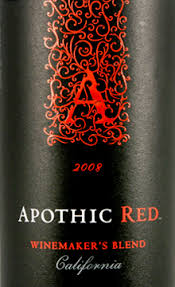
We’ve also seen the emergence of hot new brands in this middle market middlebrow segment. The rapid rise of brands like Gallo’s Apothic Red Blend and Ste Michelle Wine Estate’s 14 Hands suggests that consumers are focusing on this market category.

It’s not quite true that these particular wines came out of nowhere to achieve great success in the off-premises trade, but it’s not entirely wrong either. They are another sign of the thickening of the middle segment of the wine market of consumers ready and willing to try new things and not entirely constrained by old attitudes and allegiances.

The Supply Side of the Story

So far I’ve focused on the demand side of the story but supply plays an important role, too. As grape and bulk wine markets tighten up (see previous post) it is only natural that scarce wine resources will go where the margins are and where substitution is easiest. The “middle” wines I’ve just discussed are often priced at the “fat” part of the market where better margins may be found. (I say “may” because this market segment is quite competitive and competition has a way of squeezing margins.)

Some of these “middle” wines are blends, not single varietal wines, and come from broad appellations (Washington State, California). A few are non-vintage. These properties allow winemakers to more easily substitute among supplies of grapes and bulk wines to make or complete their products — the ability to substitute is important when supplies are tight and costs are rising.

Middle market wine for middle class, middlebrow consumers — is this a good thing? I guess it depends upon whether you are a Martian or a Wagnerian. I’m a Wagnerian myself, so I see this as a healthy development, even if wine loses a little of its mystery and becomes just a bit more like other everyday products. Making wine a part of everyday life is a worthy goal here in the U.S. and I don’t think the 1% wines (or even the 25% wines) have much to fear.

>>><<<

There’s one more trend on the horizon that completes this theme. Come back next week to learn about how wine has become even more “uncorked.” And I’m not just talking about screw caps!

[This is the third in a series of articles on Tight, Fat and Uncorked, the three trends I see shaping the wine industry in the near future.]

Wine’s Future: Tighten Up

“Tighten Up” was a big hit for a Archie Bell and the Drells back in 1968. If you aren’t familiar with this R&B tune and its trademark dance you might want to take a moment to learn it because Tighten Up is where the U.S. wine market is headed.

[This is the second in a series of articles on Tight, Fat and Uncorked, the three trends I see shaping the wine industry in the near future.]

Up and Down Economics

There is nothing new about tight wine markets (where shortages pull prices higher) or slack markets either. Wine is an agricultural product subject to the sort of persistent cycles that economists have long studied. Today’s high price encourages farmers to plant more even as it discourages growth in demand. Result: future surplus and falling price when the new crops hit the market. Low prices discourage production but encourage consumption growth, resulting in shortages and future price hikes.

Up and down — that’s happens in wine markets. The Turrentine Brokerage’s “Wine Business Wheel of Fortune” illustrates the U.S. wine cycle — click here to view a detailed pdf version that will be helpful in understanding what follows.

This Time Really Is Different

If tight and slack wine markets are not uncommon, what’s the big deal? The answer is that we are coming off an unusually long period of low prices and most likely headed into a long period of tight supply. It is the length of the cycle, not the fact of it, that is striking and important.

The current Turrentine Wine Wheel shows the most recent cycles. The figure shows that prices started falling in 1982, for example, hitting bottom in 1986. By 1989 prices were at their peak again, setting up the next cycle, which ran from 1990 until 1999.  It took seven years for the first cycle to work itself out and nine years for the second cycle.

Now let’s look at the current wine cycle, which Turrentine says began in 2000 and that they project will last an incredible 18 years!  The slack side of the cycle was exceptionally long — 2000 to 2011 — because it combined several factors. First was the typical domestic surplus that results as vineyards planted at the previous cycle’s peak begin to bear fruit. The second factor was increased global wine production, which served to keep prices low even as some domestic producers cut back. This extended the period of falling price.

The Great Recession is the final factor, depressing prices and further extending the slack side of the cycle past 2010. As you can see from the figure, Turrentine originally expected the down side to last only through 2006, but a “perfect storm” kept prices low through 2010 as demand and supply slowly moved into balance.

Ebb Tide

Now we have finally entered the tight market phase where demand exceeds available supply at the current price  and this part of the cycle is likely to be extended as well.  Vineyard capacity did not expand sufficiently during the long down cycle and in fact it contracted dramatically in particular places. The EU wine market reforms removed some capacity in Europe and the collapse of part of the Australian industry has done the same there. In the U.S. some Central Valley producers, tired of low or negative margins, switched from wine grapes to more consistently profitable crops like tree nuts.

In theory it should take only a few years to rebuild vineyard capacity but in practice it will take longer for several reasons. First, the length and severity of the slack part of the cycle will naturally make some who have left the market in the U.S. and elsewhere hesitate to reenter it. The supply response in the U.S. will be delayed for this reason and also because of what I am told is a shortage of nursery stock needed to establish new vineyards and renew old ones.  It will take a few years to rebuild stocks needed to rebuild vineyard capacity.

Prices for grape contracts and bulk wine have already risen (dramatically in some specific cases) as they must do to eventually bring the market back into balance, but this will be a slow adjustment process. Domestic wines must compete with imports, which act to limit price increases in some segments of the market. And of course consumers have become accustomed to lower prices and are not generally expected to “trade up” (except in response to bargain pricing) as much as they may have previously traded down.

Hysteresis: Winding and Unwinding

Rising grape costs are good news for growers, who have borne the brunt of adjustment costs during the long slack cycle. Now the big squeeze will move up the supply chain in the form of tighter margins and the effects are expected to be substantial precisely because the length of the tight market cycle will be so long.

What will the wine industry look like when we get back to the top of the cycle? One thing we can be sure about is that it won’t look the same as it did back in 2000. Economic adjustments are not necessarily symmetrical — they don’t wind up the way they unwound. (Economists have a name for this property: hysteresis.) The history that unfolds in the intervening years matters a lot and there has been a lot of time for things to change since the last market cycle began.

In particular, the long slack tide brought new products, new consumers and new consumer behavior into the market. This doesn’t change everything, but it changes a lot — as I’ll explain in next week’s post.

Wine’s Future: Tight, Fat, and Uncorked

Hot, Flat, and Crowded was the title of New York Times columnist Thomas Friedman’s bestselling 2008 book about the future of globalization (Friedman released an upgraded 2.0 version of the book in 2009 — times change, I guess).

Global climate change, the rising global middle class and population growth were the three key issues that he identified in the book, which advocated a “green revolution” that would renew America.

In an interview with Fareed Zakaria (excerpted on the book’s Amazon.com home page), Friedman exlains that

There is a convergence of basically three large forces: one is global warming, which has been going on at a very slow pace since the industrial revolution; the second–what I call the flattening of the world–is a metaphor for the rise of middle-class citizens, from China to India to Brazil to Russia to Eastern Europe, who are beginning to consume like Americans. That’s a blessing in so many ways–it’s a blessing for global stability and for global growth. But it has enormous resource complications …

And lastly, global population growth simply refers to the steady growth of population in general, but at the same time the growth of more and more people able to live this middle-class lifestyle. Between now and 2020, the world’s going to add another billion people. And their resource demands–at every level–are going to be enormous. I tell the story in the book how, if we give each one of the next billion people on the planet just one sixty-watt incandescent light bulb, what it will mean: the answer is that it will require about 20 new 500-megawatt coal-burning power plants. That’s so they can each turn on just one light bulb!

Recently I’ve been thinking about the “big picture forces” that are shaping the future of wine and Friedman’s unholy trinity keeps coming to mind. If the world is becoming hot, flat and crowded, then obviously these forces will affect the world of wine, too. But what other forces are involved? What are the key wine-specific factors that should be considered when looking to the future?

After giving this question some thought, I’ve settled on a trio of trends that are inspired by Friedman’s book and in fact overlap with his list just a bit. Over the next few weeks I’ll explore the the implications of a wine world that is Tight, Fat, and Uncorked. Here is a brief introduction.

Tight [Markets]

Wine markets go through the sorts of cycles that are so common with agricultural products. The Turrentine wine brokerage firm has formalized wine’s particular cycle in its famous “Wine Business Wheel of Fortune.”

The period of low and falling wine prices, which brought so many consumers into the wine market (and pushed some growers and makers out of it) has come to an end here in the U.S. and prices are on the way up. Markets have already started to tighten up and some are close to seizing up. The low price part of the cycle was unusually long (for reasons I’ll discuss in my next post) and the cycle’s tight turn may be long, too.

Tight markets will affect the whole wine supply chain and impact different parts of the market differently. We haven’t seen wine markets this tight in a while and it’s going to be interesting to see what happens.

Thick Around the Middle

The World is Flat is the title of another Thomas Friedman book and when it came out I boldly declared it Globaloney (which is the title of one of my earlier books).

Friedman’s “flat” back then referred to global competition and the mythical “level playing field” where everyone competes with everyone else. Geography didn’t matter any more, Friedman seemed to suggest, because some smart guy in Bangalore could take your job in an instant by offering to do it better or cheaper or while you are asleep. The book was really a call for America to invest in itself — in education and technology — and the flatland analogy was supposed to motivate politicians and policymakers to take action.

When Friedman says the world is flat today, he means it in the sense of flat organizations. He specifically argues that the rising middle class around the world is a powerful force for change and this I believe is not globaloney, although I wonder if he would say exactly the same thing today, with the “occupy” movement still active and the gap between the 1% and the 99% so prominent in the public mind.

The world wine market isn’t getting flat so much as fat.  Even though the prices of some “1%” wines have fallen, there is still a gap big enough for the 99% to want to “occupy.” The impact of the growing global middle class will be very important in the long run. The wine market is becoming “fat” in the sense of being “thick around the middle” — middle class, middle market, middlebrow. That’s global trend #2.

Now Lose the Cork

The cork in question is a symbol of the practices and traditions associated with an aristocratic view of wine that will not be swept away but that will be joined by many other, more “democratic” practices as the era of tight and fat unfolds.

Generational transition, the adoption of wine by new global middle class consumers, the lingering impact of the economic crisis and America’s continuing recover from its Prohibition hangover will all play a part in this story.

Tight, Fat and Uncorked: if this sounds terrible for the future of wine, please relax. It’s not all bad (or good either), it won’t all happen at once or in the same way and it it’s not [just] about the wine.

I invite you to read along over the next few weeks as I try to work out these ideas in Friedman-esque style. I hope to benefit as I usually do from the comments, critiques and creative ideas of my readers.

The Real Dirt on the Parker Theory and Chateau Al Gore

The new issue of the Journal of Wine Economics (JWE) leads off with a fascinating article by Julian M. Alston, Kate B. Fuller, James T. Lapsley and George Soleas titled “Too Much of a Good Thing? Causes and Consequences of Increases in Sugar Content of California Wine Grapes.”  It’s the kind of wine economics research that makes me smile: rigorous, clever, relevant — and it even includes a poem! What could be better!

Demand-Side Explanations: The Parker Theory

The puzzle that the article examines is why sugar levels (measured in degrees Brix) have risen in California, taking wine alcohol levels with them. Sugar levels in white grapes grown in California increased 12% from 1980-84 to 2005-08, for example, with the average degree Brix rising from 20.7 to 23.2. Average Brix for red grape varieties increased from 22.2 degrees Brix to 24.3. Sugar levels in Cabernet Sauvignon grapes increased from 22.8 to 25.0 degrees Brix at harvest.  Higher sugar levels mean higher alcohol levels, all else being equal.

Two simple explanations are usually cited to explain the rising sugar/alcohol trend. The first is based on changes in demand. Robert Parker (and some other powerful wine critics) are said to prefer a certain style of wine that is riper. Sugar and alcohol levels have increased as wine growers have worked to produce the grapes that make the wines that most please the Golden Palate of Robert P. (or that otherwise appeal to changing consumer preferences).

Supply-Side Explanations: Chateau Al Gore

I call the second theory the “Chateau Al Gore” hypothesis because Al Gore is associated in popular culture with global climate change and that’s what this theory is about. Rising temperatures, according to this line of reasoning, produce riper grapes pushing up sugar levels, boosting alcohol.

It is pretty easy to line up facts to make a persuasive case for Chateau Al Gore. Temperatures as measured by a heat index have been rising in California, according to the article’s authors. Sugar and alcohol levels have increased, too. Although additional sugar may be welcome (the Parker principle), there are indications that producers would prefer lower levels. A good deal of wine in California is partially de-alcoholized, for example. Alcohol is removed from a portion of the vintage (using reverse osmosis or the spinning cone method I am told) and then the treated wine is blended back, reducing overall alcohol levels and allowing winemakers the opportunity to find the “sweet spot” alcohol level for their wines.

Some of the de-alcoholization may be motivated by federal taxes, which increase substantially on a per-gallon basis for wines that rise above the 14% ABV level. The extra 50 cents tax per gallon may not concern the makers of expensive wines like Screaming Eagle, but it can be a significant cost factor for bulk producters and thus worth the expense of alcohol reduction. In any case, the authors find that lower-priced grapes tend to have lower average Brix readings, which is consistent with the tax hypothesis but doesn’t prove it.

If alcohol levels of wine have increased even after partial dealcoholization, this suggests that rising sugar levels must be unwanted and this notion is at least partially confirmed by preliminary data reported here that many wineries under-estimate alcohol levels on product labels. The authors have obtained access to data from the Liquor Control Board of Ontario (one of the largest wine merchants in the world), which show that the average stated alcohol level of California wine exported to Ontario was 12.63 percent in the sample period while the actual level was 13.35 percent. The gap is clear, but the authors suggest that more work is needed to fully understand it. I’ll be interested to read their final report.

Ceteris Paribus

The Chateau Al Gore theory seems pretty persuasive. Ceteris paribus (holding everything else constant) it makes sense that sugar and alcohol levels would rise with average vineyard temperature. The fact that winemakers work to offset the alcohol boost and maybe fudge it a bit (within legal limits)  on the label suggests that this is a climate change event that they struggle to contain.

But ceteris is seldom really paribus in wine. Employing multi-factor regression analysis, the authors find that the rising heat index is responsible for some of the increase in sugar levels, but not all of it. Put another way, climate factors alone are not sufficient to explain the total increase in sugar and alcohol. Other factors must also be at work.

Which pushes us back to the demand-side Parker Theory, but in a  usefully complicated way. It is important to understand how much the California wine industry has changed in the last 30 years. The type of wine produced has changed, for example, with varietal wine (Chardonnay, Cabernet Sauvignon) increasing faster than production of generic wine (“Chablis,” “Burgundy”). Varietal wines accounted for 71% of California production in 2000, according to the authors, compared to just 19% in 1985.

The move upmarket required different grape varieties of higher quality from different production zones. Thus while total California wine grape production rose by 60% in the survey period, the biggest increase (+185%) was in the Delta region (including the Lodi AVA) with the North Coast (including Napa and Sonoma Valleys) increasing by 128%.  Wine grape production in the San Joaquin Valley rose but by a much smaller amount. The southern San Joaquin valley accounted for just 30% of California vineyard acreage in 2008 (down from 50% in 1981), although it still produced more than 60% of wine grape tonnage because of higher yields.

So wine grape production has increased and also shifted in terms of desired quality, price per ton, grape variety and growing location. It is perhaps not surprising that average sugar levels would change too. Much of the growth in the California wine industry has thus been associated with the demand shift towards premium and ultra-premium wines and the rising sugar levels are to some extent associated with this “grape transformation” of the American palate. Robert Parker is part of this movement although I think it would be unfair to give him all the credit or blame for the changes noted here.

Getting to the Root of the Problem

So the JWE article finds evidence for both the demand-side and supply-side theories of rising sugar levels. But wait, there is more, including rootstocks (this is the “real dirt” in the title of this post).

Phylloxera struck California starting in the mid-1980s when the supposedly Phylloxera resistant AxR#1 rootstock was found to be susceptible to this root-sucking parasite. Eventually nearly all the vines affected were grubbed up and replaced with vines grafted to different (and hopefully more resistant) rootstocks. Several winemakers have suggested to me that the new rootstocks and associated changes in viticultural practices affect grape ripening — sugar levels peak before the desired flavor profile (phenolic ripeness) has been achieved. Longer hang times are needed to get the flavors right,  leaving wine growers with the problem of too much sugar and so forth.

The rootstock hypothesis is beyond the scope of the JWE study, but it indicates how complicated it can be to explain seemingly simple questions in wine economics and how much wine remains an agricultural product after all.

>>><<<

I don’t think I’ve done justice to this research so I hope you will click on the link in the first paragraph above and read the study yourself.

Wine Wars Update: University of Pinot

The Wine Wars “world tour” is still rolling along; I thought you might like to see the current schedule of events (see list at the end of the post).

More Homework!

I’m particularly pleased to announce that I will be teaching in the “University of Pinot” that is being organized as part of the annual International Pinot Noir Celebration on the campus of Linfield College in McMinnville, Oregon at the end of July. The IPNC is the premier event for Pinot Noir lovers, drawing winemakers (and drinkers) from all over the Pinot world. It will be fun to mix and mingle with them and talk about the state of wine on Planet Pinot.

There will be courses on geography, geology, climatology, and applied cultural studies (flying winemakers) taught by a cast of wine experts and celebrities.  Allen “Burghound” Meadows is teaching the “study abroad” course, although I think Burgundy will come to Oregon, not the other way around.

Several courses include wine tastings led by the winemakers themselves. Sounds great, doesn’t it. I expect the students to demand more homework! (No problem: the wine really flows at IPNC.)

I’m honored to be on the UP faculty and to be able to bring a global wine economics perspective to the curriculum. Here’s the catalog description of my course:

GLOBALIZATION 201: THE REVENGE OF THE TERROIRISTS

Globalization cuts both ways. It brings us a world of exciting wine experiences, but it also unleashes market forces that threaten to overwhelm the soul of wine. This dilemma affects all wine but the stakes are highest for real terroir wines such as Pinot noir. Drawing on the lessons of his 2011 book Wine Wars, Mike Veseth will investigate the global forces shaping wine and explain why he has “grape expectations” that Pinot terroirists will prevail.

My only regret is that Benjamin Lewin MW, the author of In Search of Pinot Noir, is not also on the program. But I understand that he will be in Bordeaux in July … in search of Cabernet Sauvignon (for his next book). Happy hunting!

Wine Wars World Tour Update

Here are the upcoming stops on the Wine Wars tour. Click here for the latest updated information.
.
April 2012
May 2012
  • Eastside Business Roundtable breakfast talk, Thursday May 3. Overlake Golf and Country Club (private event).
  • University of Puget Sound Olympia area alumni event, Thursday May 3. Details here.
June 2012
  • University of Puget Sound Alumni College. June 8-9. Details here. I’ll be talking about “Robert Mondavi and the ‘Grape Transformation’ of American wine.
July 2012
August 2012
  • American Wine Bloggers Conference, Portland, Oregon. August 17-19, 2012. I’ll be moderating one of the break-out sessions.

Big Apple Report: Where’s Washington [Wine]?

Waldo is easier to find than Washington wine in NYC.

Lettie Teague wrote a Wall Street Journal column back in 2010 called “Stalking the Wines of Washington.” In it she complained about her difficulty finding Washington wines in the New York City area. There’s just no demand, she was told, so wine shops don’t bother with Washington wines.

The Incredible Story

That’s incredible, I thought as I read Lettie’s story, since so many Washington wines are both very good (served at White House dinners, we are told) and very good values, too. Hard to believe that smart New Yorkers aren’t interested in these wines! So I decided to do a little fieldwork on the question during my recent East Coast speaking tour to see if the situation has changed.

OK, am I the only one who thinks visiting out-of-town wine shops is a fun way to spend the day? In this case I headed for the Morrell & Co store in Rockefeller Center and the Sherry Lehmann shop a few blocks away. Two wine shops is a very small sample size, so this study isn’t statistically significant, but these are the flagships of the region’s wine fleet, so surely they reveal something. Here’s what I found.

Both stores were smaller than I expected given their fame  — I guess I didn’t factor in Manhattan retail floor space costs when I imagined what they would look like. But the number of bottles isn’t as important as the quality of the selection (that’s the key to Costco’s wine selling success).

New York State of Wine

My attempt to find Washington red wines in these stores was not very successful. I managed to locate a wine from Betz Family Winery at Morrell and a modestly priced red blend from Claar Cellars at Sherry Lehmann. And that was it for Washington reds. I might have missed a bottle or two (I blame my bifocals), but even if I did the selection was pretty limited. I didn’t check the white wines — maybe there were more over there.

There were plenty of French and Italian wines. Sherry Lehmann’s Burgundy selection made my mouth water and my credit card cry. Lots of great wines from Bordeaux, too. But where was the Washington wine section? Nowhere. No California wine territory, either. They were all grouped together as “American wines,” suggesting that Sherry Lehmann’s customers might be more interested in the fine points of French geography than domestic wine terroir.  And apparently almost completely uninterested in Washington. Why?

Supply Side Theory

I talked a bit with a friend who knows New York wine business pretty well and we came up with a couple of theories. Maybe it is a supply-side problem — distribution?

Yes, I suppose that could be the case. Distribution inefficiencies usually affect the “middle market” the most. Iconic wines (and I’d put the Betz wine in this category) get distribution and so do larger volume wines (Chateau Ste Michelle, Columbia Crest, etc), but in-between producers (like Claar Cellars) get squeezed out.

As you can see, my “small n” obversations aren’t completely consistent with a supply-side explanation, although you cannot rule it out, either. So what about demand?

Demand Side Theory

Maybe the demand just isn’t there as the shop owners told Lettie Teague. So why not? Well, here’s where a second set of observations is useful. While I was looking for Washington wines I also kept an eye out for Oregon Pinot Noir. And, while the Washington wines were all but invisible, I discovered a handful of interesting Oregon Pinots in each store.

So now the question gets more interesting. Why is Oregon part of the New York state of wine but not Washington? Here my NYC friend (who is a Washington wine fan) offered another theory: Oregon stands for something concrete in the crowded New York market, but Washington doesn’t.

When you think of Oregon wine you think of Pinot Noir because that’s its signature wine variety and demand-side market focus. But what do you think of when you think of Washington? Well, that’s the problem because Washington makes so many great wines but lacks a signature variety or style. I’ve written about this situation before and I don’t want to beat a dead horse here, but you can see how it can be a demand side problem.

Every NYC customer who asks for Oregon wine is probably thinking Pinot, but if ten customers ask for Washington wine they are unlikely to request the same wines or types of wines or grape varieties. It’s easy to see how a critical customer mass for Oregon Pinot Noir might appear but not for any particular Washington wine.

The Gravity Theory

A final theory comes from the economics literature — you might call it the “home court advantage” theory but technically it is based on the “gravity model” that is used to analyze international trade patterns. The gravity model holds that geographical proximity is a strong predictor of trade patterns — the closer countries are to one another the stronger the force of  “economic gravity” that pulls their economies together.

I see the home court advantage at work here within Washington State and it is widely observed that while the wine industry is global, wine consumption has a strong local bias. If this theory applies to the New York case, then it suggest that Europe is New York’s home court and that the pull of French gravity is especially strong. Given the many different languages that fill conversations on cosmopolitan New York City streets, this doesn’t seem like a crazy theory at all.

Convergence Zone

A quick analysis of the Morrell and Sherry-Lehmann websites reinforces my on-the-scene observations and adds more data since the warehouse selection is so much bigger than the Manhattan stores.

I found more Washington wines in the online stores, but I was still surprised by the relatively  limited selection. And I was surprised as well that Washington and Oregon had about the same number of wines on the sales lists despite Washington’s vastly greater number of wineries and total production. Burgundy (1122 wines on the Sherry-Lehmann site) has many more wines than California (612), Oregon (31) or Washington (30).

The particular wines listed on the Sherry Lehmann site suggest that the distribution theory is part of the explanation. More high volume Chateau Ste Michelle and Columbia Crest wines and some famous name icons, but a thinner middle market selection. It looks to me like all three forces are at work here, making this a particularly complex and difficult situation.

>>><<<

Readers: use the comments section below to provide your own observations and theories.

No One-Liners in Wine

King of One-Liners: Take my wine ... please!

Jon Fredrikson likes to say that there are no one-liners in wine. He isn’t saying that there aren’t any one-line jokes (take my White Zinfandel … please!) but rather that nothing in wine is cut and dry. Wine is always complicated — always this and that, too —  so generalizing is a dangerous practice.

I was reminded of this twice during our recent California expedition. The first time was by Jon Fredrickson himself, who stated the case very well in his talk at the Unified Wine and Grape Symposium in Sacramento (North America’s largest wine industry trade show and seminar series).  His dynamic analysis of how the wine market is evolving was widely reported in the press.

Winery of the Year

At the end of Jon’s report he always names a “winery of the year” and for 2011 it was DFV Wines of Manteca, California. DFV (for Delicato Family Vineyards) has its roots in the decision of Italian immigrant grape grower Gasparé Indelicato to try his hand at winemaking in early post-Prohibition California. His grandson, Chris Indelicato, has been CEO since 2004 and many other family members populate the company’s org-chart.

DFV sits in the #10 position in the Wine Business Monthly Top 30 American Wineries league table for 2011, producing more than 4.5 million cases. DFV owns more than 10,000 acres of vineyards (quite a change from Gasparé Indelicato’s first farm). But it is the business’s dramatic growth, not just its large size, that drew Jon Fredrikson’s attention and, well, everyone’s attention. “Delicato” was all that I heard in pre-announcement speculative conversations.

Gnarly and Twisted

You have probably seen Delicato wines on store shelves, but they are just the tip of the family business iceberg. Other DFV brands include Bota Box, Twisted, Gnarly Head and many more. I usually think of the DFV wine portfolio in terms of good value wines and I think this good value accounts for the company’s success.

But saying that a wine is a good value sometimes imposes a subconscious ceiling on perceived quality and distinctiveness. I admit that I tend to think of DFV wines as good, but not necessarily great. That’s because I sometimes forget Jon Fredrick’s line about one-liners. Good value doesn’t rule out distinctivenes — wine is too complicated for that.

On the Old Silverado Trail

This point was driven home to me for the second time as I stood at the tasting room bar at Black Stallion Estate Winery on Silverado Trail in Napa Valley — DFV’s newest venture, which it acquired just a couple of years ago. The winery itself resists being a one-liner as it is both historically significant (as an equestrian center) and an architectural beauty.

We drove by the winery a couple of years ago (on our way to a Stags Leap AVA event) but didn’t stop.  We were impressed with the BSEW Cab at a tasting back home (it is a larger production wine that is widely distributed), so we came back to try the small production (4000 total cases) wines sold only at the winery.

Imagine my surprise to learn that the same company that makes Botta Box also makes a $150 red blend called Bucephalus. I’m interested to see what happens as the Indelicato family’s winemaking knowledge and resources are focused on this relatively new enterprise — perhaps even more distinctive wines like the Rockpile Zinandel that was my tasting room favorite?

I expect there will be lots of interesting wines to taste and things to say as DFV and Black Stallion continue to develop. But don’t expect to hear any one-liners.