Gourmet, Rachael Ray, Chardonnay Connection

1940-2009 RIP

I was trying to explain to my students the lasting importance of Robert Mondavi and I suddenly realized that Julia Child was the key. Mondavi tried to do for wine in America what Julia tried to do for food. This made me think about other parallels between our wine and food cultures — and the significance of the last issue of Gourmet magazine.

The End of Gourmet

Condé Nast announced yesterday that it was pulling the plug on Gourmet magazine, America’s signature culinary monthly since 1940. The cause of death, clearly, is the economic crisis, which has reduced advertising pages by over 30 percent. Gourmet‘s subscribers (there are nearly a million of them) will have to find something else to read on the still-cluttered Food & Lifestyles section of the newsstand. Bon Appétit (another Condé Nast title) is the obviously choice, although it is not a perfect substitute — more recipes I’m told, and less upscale travel and leisure.

Gourmet‘s obituary appeared everywhere — even on the front page of the New York Times. The Times made it clear that this wasn’t just a business decision (although Condé Nast assured us it was — the McKinsey consulting firm made the call). This is really the end of an era. And not a good end.

“It’s Rachael Ray’s world now,” the story declared, referring to the 30-minute-meal Food Network star; “we’re all just cooking in it.” Roll over, Julia Child (as Chuck Berry might have said) and tell Escoffier the news.

Rachel Ray Chardonnay?

Setting aside for a moment the premise of the Times article — that Gourmet defines the era — I wonder if what’s true for food in America is also true for wine? This must be a valid concern because it is he gist of the question that I’m most frequently asked by journalists — is the current slump in fine wine sales (especially wines selling for $20 or more in the shops) a temporary trend or a permanent shift in demand? Is this the end of an era for wine? When the economy perks up eventually, will people want to buy very expensive wines again? Or is the switch to cheaper, simpler wines (my made-up Rachel Ray Chardonnay) here to stay?

The question became more interesting as I read the Times article. I tried to substitute wine terms for food terms in the article and it seemed to make sense. Here’s what I mean.

The death of Gourmet [insert name of expensive wine] doesn’t mean people are cooking less [drinking less] or do not want food magazines [good wine], said Suzanne M. Grimes, who oversees Every Day With Rachael Ray, among other brands, for the Reader’s Digest Association.

“Cooking [wine drinking] is getting more democratic,” she said. “Food [wine] has become an emotional currency, not an aspiration.”

It has also become democratized via the chatty ubiquity of Ms. Ray [Gary Vaynerchuck?] and the Food Network stars. Ms. Reichl [the Gourmet editor — insert Robert Parker or maybe Jancis Robinson] is a celebrity in the food [wine] world, but of an elite type. She [or maybe he] “is one of those icons in chief,” said George Janson, managing partner at GroupM Print, part of the advertising company WPP. But what harried cooks [budget conscious wine drinkers] want now, it seems, is less a distant idol and more a pal.

The substitution works, pretty well, don’t you think? And the McKinsey consultants surely did their job. Food and wine down the tubes. Maybe Robert Mondavi and Julia Child are both turning in their graves!

Exaggerated Rumors

But rumors of the death of both fine dining and fine wine are probably exaggerated, as Mark Twain might have said. Gourmet is an iconic brand and the fact that Condé Nast cut it rather than Bon Appetit surely does mean something. But we have to remember that print magazines themselves are an endangered species in this internet age. What information we consume and in what form are both changing very rapidly. Magazines will change rather rapidly in the next few years to remain relevant or else they’ll fade away. Gourmet isn’t the first and won’t be the last to bite the dust.

So I am not willing to declare fine wine (or the Gourmet food lifestyles) dead on the basis of this news alone. The question of whether Americans will return to their old wine-drinking habits when the recession ends remains open for now.

Note: A lot of great wine writing appeared in Gourmet over the years. Look for a future post that tries to understand the changing American wine work through the Gourmet lens.

Wine’s Future: It’s in the Bag (in the Box)

One of my favorite globalization books is The Box: How the Shipping Container Made the World Smaller and the World Economy Bigger by Marc Levinson. It is the story of how the invention of the standard shipping container (those 20-foot steel boxes you see on ships, rail cars and truck beds) made international trade much cheaper, more efficient and more secure. Now it looks like another kind of box is about to shake up the wine world.

Cheap and Nasty

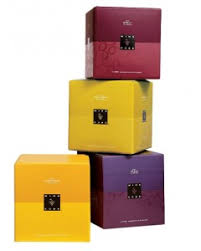
I’m talking about box wines or bag-in-box (BIB) wines (the Australians call them cask wines) that feature an airtight wine-filled plastic bladder inside a cardboard box. You use a built-in spigot to get to the wine. They can be found on the bottom shelf of the wine wall and behind the bar and out of sight at your local restaurant. They come in several sizes — 3 liter and 5 liter containers are the most common.

Box wines have a bad reputation. They first appeared in the 1970s and were filled with generic bulk wines.  They were one step down from the popular 1.5 liter “magnum” bottles of  “Burgundy,” “Chabils” and the notorious “Rhine” wine. Box wine was cheap, nasty stuff that acquired a frequently deserved bad reputation.

[Re]-Thinking Inside the Box

It’s time to reconsider box wine. Screw caps had a bad reputation, too, until quite recently. We associated them with low grade swill until fine wines appeared under screw cap (the New Zealand producers were in the vanguard) and we began to appreciate that that screw caps have many advantages. Now screw caps are actually associated with quality for some types of wine, especially youthful whites, and no one expects to pay less or get less because of the screw-top closure.

The technology of box wine is very solid. The airtight bladder is a neutral container that is well suited to holding wine for relatively short periods of time. (Don’t cellar box wine — consume within a year of production — check out the “drink by” date on the box.) The bladder and spigot do in fact protect the wine from oxygen in the short run, so it will last longer once opened (especially if the box is stored in the fridge) than similar leftover wine in bottles.

Bladders are so good at the particular thing that they do that they have become an industry standard technology for bulk  imported wines, which are shipped in huge bladders inside steel shipping containers (big bag in big box) and then bottled in the import market. So you may already be drinking box wine and not know it.
The Box Also Rises

The most recent Nielsen retail wine sales figures (reported in the October 2009 issues of Wine Business Monthly) suggest that box wine sales are growing. Wine sold in 3, 4 and 5 liter containers (most of it is box wine, I think) accounts for just under 10 percent of US supermarket wine sales, according to the Nielsen data (compared to 65% for standard bottles with the remainder in 1.5 liter and other formats). Sales are rising in this category, with 3 liter packages up 8.7% in the last year on a dollar basis, for example, and 5 liter packages are up 9.3% by value.

The total market for box wines rises if we include on-premises sales. Recent data (see previous posts) indicate that box wines (served to customers in carafes and by the glass) are strong sellers in casual dining establishments.

The rise of box wine is part of the trading down effect, clearly, since most box wines fall into the two price categories that are experiencing the highest growth. Sales of wines that are less than $3 per 750ml bottle equivalent have risen 7.1 percent according to Nielsen and by 10% for wines between $3 and  $5.99. Supermarket sales of $20+ wines, on the other hand, have fallen by 3.4%.

Nasty, Brutish and Short?

Does this mean that Americans have traded down all the way to the bottom, back to the nasty box wines of the 1970s? The answer, incredibly, is no. Or at least not necessarily, according to the October 15 issue of Wine Spectator.  You can’t miss this issue on the newsstand — it features a cover story on “500 Values for $20 or Less” and includes a set of box wine reviews that make interesting reading.

Wine Spectator purchased 39 box wines in packages that ranged from 1 liter to 5 liters. Twenty seven wines were rated as “good” (a score of 80-84) and ten “very good” (85-89). The names of the 2 wines that scored below 80 were not reported.

The top box wine, going by the rating numbers, is a white: Wine Cube California Chardonnay, which sells in Target Stores for $17 per 3 liter box, which is $4.25 per standard bottle equivalent. It earned a very respectable 88 points. Wine Cube is a partnership between Target and Trinchero, the maker of a wide range of wines including Sutter Home.

The best red wine (at 87 points) is the Black Box Cabernet Sauvignon Paso Robles 2006, which costs $20 for 3 liters or $5 per standard bottle equivalent. Black Box is a widely distributed Constellation Brands product.

Good and Cheap?

Some box wine, apparently, is both pretty good and pretty cheap. Perhaps just to show that they really do rate wines blind, Wine Spectator gave a pretty good 84-point score to a non-vintage Carlo Rossi Cabernet Sauvignon California “Reserve” wine. Five liters for $13, in case you are interested,  That’s $1.97 per standard bottle equivalent.

How can decent wine be this cheap? One answer, of course, is that you can choose to make the wine itself less expensive by economizing in the cellar in many ways (less oak or none at all for red wines, for example). But to a considerable degree the box itself is responsible for the savings.

The bag in box container costs less than $1, according to the Wine Spectator article, which automatically saves $4 to $8 compared with a similar quantity of wine in standard glass bottles and the box they come in. Shipping costs are also less since the boxes weigh much less than glass bottles for the same quantity of wine and are less likely to be damaged in transit.  There are environmental benefits too, especially in areas where glass bottle recycling is problematic because the sour economy has undermined the market for recycled glass.

Is box wine the future of wine? No. The wine market is too complex to be dominated by any single trend. But with better wine in better boxes (and with consumers embracing a more relaxed idea of wine) box wine deserves to play a bigger role in the future of wine. Another triumph for The Box!

>>><<<

November 1, 2009: I was recently interviewed about box wines by Simon Morton of Radio New Zealand’s  This Way Up . Click on the link to listen to the interview.

Restaurant Wines: Good, Bad and Ugly

Many people have written to me over the years expressing their dismay at the sorry state of restaurant wine. Usually they complain about high restaurant prices and ask how they can possibly be justified. They are seldom satisfied with my answer — restaurants charge high prices because people will pay them. Now, however, the critique has shifted to the wines themselves and what they reveal about wine in America.

What Does American Really Drink?

My recent post on “Olive Garden and the Future of American Wine” (see previous post) seemed to catch many wine enthusiasts by surprise. It reported data from Restaurant Wine magazine for the best-selling wines in American restaurants as determined by distributor “on-premises” shipments. This data, based on volumes shipped to all “on-premises” establishments in 2008, reveals that when America goes out it drinks a lot of White Zinfandel, Pinot Grigio and (gasp!) “Chablis.” Only one red wine made the top 20 list: Yellow Tail Shiraz.

The list changes only a little if we look at the data for wine brands (as opposed to specific wines):

  1. Kendall-Jackson
  2. Sutter Home
  3. Beringer Vineyards
  4. Franzia Winetaps
  5. Inglenook
  6. Yellow Tail
  7. Copper Ridge
  8. Cavit
  9. Woodbridge
  10. Salmon Creek (Bronco)

The complete list of the top 20 brands is dominated by America’s three largest wine companies with three brands each from Constellation Brands (Woodbridge, Taylor California Cellars and La Terre), Gallo (Copper Ridge, Barefoot Cellars and Ecco Domani) and The Wine Group (Franzia, Inglenook and Almaden). These three giants have large brand portfolios and strong distribution machines. They get their wines into every nook and cranny, both retail and on-premises sales. You can see the results virtually everywhere.

Only 4 of top 20 are international brands (Yellow Tail, Cavit, Ecco Domani and Mezzacorona). I think the fact that three of these four are Italian wine brands says something about the importance of Italian restaurants, including especially Olive Garden, in the American wine market.

Another Picture: The Wine & Spirit Rankings

The Restaurant Wine data give us one picture of the market, Wine & Spirits magazine’s annual restaurant report (April 2009 issue) provides a different (and perhaps more comforting) image. W&S asks a group of wine-focused restaurants to report which wines are on their lists — now how much they sell, but which ones are on offer. Since wines don’t stay on lists long if they don’t sell, this is an indirect measure of availability and popularity, although it isn’t the same as as volume rankings. Here is the W&S top 10 for 2008.

  1. Sonoma-Cutrer Vineyards
  2. Cakebread Cellars
  3. Jordan Vineyard & Winery
  4. Silver Oak Wine Cellars
  5. Ferrari-Carano Winery
  6. Robert Mondavi Winery
  7. Veuve Cliquot
  8. Chateau Ste. Michelle
  9. Rombauer Vineyards
  10. Kendall-Jackson Vineyards

Sonoma-Cutrer is #1 on this list, yet it appeared on only about 14% of the surveyed wine lists (and, as noted above, there is no indication of how much was sold).  Only one winery appears in both top 10 lists – Kendall-Jackson. Only two other wineries appears in both top 20s – Beringer and Chateau Ste. Michelle. Gallo and The Wine Group are missing from the W&S top 20, although Constellation Brands makes the list through Robert Mondavi.

Looking over the data, I find myself especially impressed by the performance of Kendall-Jackson and Chateau Ste. Michelle. Both makers seem to combine wide distribution with a range of wines at attractive price points. It isn’t surprising that they rank high on both lists. Perhaps other producers will try to emulate K-J and CSM, especially given this tough economic climate.

Good, Bad or Ugly?

If the first list of restaurant wine brands depresses you, then ignore it and focus on the second list, where White Zin is much harder to find, but don’t get too smug. Remember that there are many markets for wine and that the US is no different from other countries in this regard. Compared to Germany, in fact, much more fine wine is sold here and proportionately less of the bulk product.

For myself, I see a glass half full. My experience working with college students who study wine is that the inexpensive wines serve a really useful function of introducing students to wine and diverting them from beverages that are more closely associated with binge drinking.

Although some White Zin drinkers suffer from arrested development and never move beyond it, I am persuaded that many do. Every staircase, no matter how high it reaches, needs a bottom step.  We have a broad first step in America — no surprise there — but I think it is a step up.

Olive Garden and the Future of American Wine

How an investigation into trends in restaurant wine sales leads to an unexpected discovery.
Reading Down the Wine List

Everyone knows that restaurant wine sales are down as the recession has reduced both the number of diners and their willingness to spend a lot of money on wine. One of the best sources of news on restaurant wine sales is the Wine & Spirits magazine annual restaurant issue, which surveys selected wine-friendly restaurants and reports sales trends.

The W&S data give only part of the picture, however, since they tend to survey restaurants with more sophisticated wine-enthusiast customers. What’s happen to wine sales a bit further down the food chain?

Two studies by Ronn Wiegand (publisher and Master of Wine) in the current issue of Restaurant Wine report that US restaurant wine sales were off by 5.5 percent by volume  in 2008 while sales of the Top 100 wines fell by just 3.5 percent. This suggests some consolidation in this sector, which will make sense once I tell you what the best selling wines are.

The drop in restaurant wine sales overall is less than the numbers I’ve seen for upscale restaurants. One reason for this discrepancy as I understand it  is that Wiegand’s figures come from distributors, who report sales to all restaurants and on-premises establishments, not just purchases by select restaurants. So this gives us a picture of the broader market.

America’s Best Selling Restaurant Wines

Upscale restaurants of the sort that receive Wine Spectator awards get the most attention in the press, but casual dining restaurants are where the volume of wine sales is greatest. The top ten individual wines (by volume not value of sales) in 2008 were (drum roll) …

  1. Kendall-Jackson Vintner’s Reserve Chardonnay
  2. Cavit Pinot Grigio
  3. Beringer White Zinfandel
  4. Sutter Home White Zin
  5. Inglenook Chablis
  6. Ecco Domani Pinot Grigio
  7. Mezzacorona Pinot Grigio
  8. Copper Ridge Chardonnay
  9. Yellow Tail Chardonnay
  10. Franzia White Zin

None of these is an expensive wine and the #1 K-J is probably the costliest of the lot. The best selling restaurant (“on-premises”) wines are high-volume, widely-distributed inexpensive wines – just the sort that recession-ravaged consumers who want to trade down (in terms of price) and switch over (to a more relaxed view of wine) might find appealing.

Using the rule of thumb that a glass of restaurant wine sells for about the wholesale price of the bottle, these wines would sell from about $5 (for the Sutter Home) to maybe $8 (for the K-J Chard) per glass — and I suspect that a lot of this wine is sold by the glass. An affordable luxury, as they say.

Who Sells the Most Restaurant Wine (and How)?

If you are someone who dines mainly at three star restaurants where the wine list is really a leather-bound book that is handled with biblical reverence (and White Zinfandel must be a typographical error), the facts I’ve just stated about what America drinks when it dines out are probably pretty discouraging. But don’t give up hope just yet.

If you want to see the state of the art in American restaurant wine programs, follow your nose in the direction of the local shopping mall and get in line for a table at Olive Garden. Olive Garden’s 691 restaurants sell more wine than any other restaurant chain in the United States and its sales and education programs are a positive part of the transformation of American wine culture. Olive Garden is the optimistic future of American restaurant wine.

How does Olive Garden, a chain best known for its bottomless salad bowl and endless supply of tasty bread-sticks, sell so much wine (half a million cases in 2006, according to one source, probably much more than that today)? The short answer is education. Americans like wine and enjoy having it with food, but they are intimidated by everything about wine and need education before they are comfortable embracing wine. You’ve gotta learn ’em before you can turn ’em (into mainstream wine consumers).

The educational process at Olive Garden starts with staff, the people who are best placed to influence customer choice. Early on, Olive Garden established a relationship with the family that owns Rocca delle Macie winery in Tuscany. Specially selected staff travel to Italy each year to live, shop, eat, drink, cook and in general soak up knowledge and experience that can be used and shared back home — a  nice employee incentive that pays off in higher wine sales.

Back home, in partnership with several California wineries, Olive Garden has established a similar institute in Napa Valley.  Many restaurants expect that their wait-staff will pick up wine knowledge – Olive Garden really works at it by providing literally hundreds of thousands of hours of training. Of course, it has the chain-wide scale to make this investment pay off.

Selling Wine By Giving It Away

So Olive Garden staff are likely to know their wine list (37 wines from Italy, California, Washington and Australia, 35 of which are available by the glass) and which wines match well with different dishes, but how to you get patrons to try them – and especially to move out of their comfort zone and try something new?

The answer is … wait for it … to give away free samples! Patrons at many Olive Garden restaurants (this is America — local regulations vary) are offered small samples of different wines along with advice on menu pairing. The Italian house wines are the Pincipato brand made by Cavit that sells for $5.35 a glass and $32 for a 1.5 liter bottle meant to be shared family-style. Bottle prices of other wines range from $21 for the Sutter Home White Zin on up to $110 for Bertani Amarone. Most choices are in the $24-$34 range.

Olive Garden takes the free sample idea seriously, giving away 30,000 cases of wine in 2006 and presumably more today. That’s about 3-4 million tastes, according to my back-of-the envelope calculation. And it’s worth it, both in terms of wine sales and customer satisfaction. Customers like the wine, once they’d had a chance to try it, Olive Garden says, and it helps them enjoy the whole family dining experience more. No argument here — I can see how having one of those 1.5 liter bottles on the table would help a family relax and enjoy their meals.

The Olive Garden website continues the education process for customers who develop an interest, with basic Wine 101 information along with an interactive guide to pairing specific wines with particular menu items.

Confidence Game: Olive Garden, Costco and Trader Joe’s

The Olive Garden system sells wine, obviously, and it sells the idea of wine in a very healthy way. Olive Garden customers are more likely to try new wines and have fun with wine, I think, because they trust the Olive Garden brand.

Olive Garden has obviously invested a lot in its wine program and in research about what will appeal to its customers. There is less perceived risk in trying something new at Olive Garden. This is perhaps especially  important in selling some of the Italian wines, where both the producer (Mandra Rossa, for example, or Arancio) and wine name (Fiano or Nero d”Avola) would be unfamiliar to most diners.

In a way, Olive Garden has the same advantage when it comes to selling wine as Trader Joe’s and Costco. The seller’s trusted brand gives buyers confidence in making an otherwise uncertain purchase.

Olive Garden is big enough and smart enough to make the investment required to pursue this wine strategy. It’s a good thing in terms of the development of a healthy American wine culture, but it does contribute to the consolidation of the industry noted at the start of this post. Olive Garden needs large, reliable supplies of each wines to make its system work (minimum quantity 7500 cases, I think), which rules out smaller producers.

But Olive Garden doesn’t have to be everything to everyone and there is plenty of room in the marketplace for other types of restaurants and wine programs. If Olive Garden helps introduce middle America to a healthy idea of wine, it will have done a great service.  And I think that’s exactly what’s happening.

Sense and Nonsense

I’m very flattered that David Boyer, who writes the influential Classification of 1855 blog, has included The Wine Economist on his shortlist of useful wine blogs. David lays out specific criteria for his list:

The blog should:

–       be informative, accurate, and readable while conveying actual wine knowledge, or have a specific viewpoint of the wine world

–       appeal to a wide audience, starting from those just learning to those that would be considered wine experts

–       post on a regular basis; you wouldn’t believe the number of blogs that looked promising but have posted only once since, like, January

And the blog should not:

–       be entirely inundated with advertising

–       load its homepage unusually slow

–       be limited to specific wine varieties or price points (if you want to find a blog that specializes in so-called “value wine” like under $10 or $15, they’re out there. Good luck with finding much drinkable wine though – let me know how that works out for you).

–       contain much, if any, information about food, beer, or distilled spirits. Interestingly I love some of that stuff and even need some of it (like food), but I did not want to send you to a blog that becomes blurry, unfocused, and outside the reason you come to this site: wine.

–       be a professional publication such as a newspaper column or commercial periodical or operated by a single winery

Here’s what he says about The Wine Economist:

Wine Economist – making sense of nonsense in the wine world. Professor Michael Veseth (Ph.D.) teaches International Political Economics at the University of Puget Sound in the State of Washington. He is author and co-author of more than a dozen books about economics but what’s cool is that he is able to articulately bridge the economics discipline with his love and knowledge of wine. I find his subjects very provocative, sometimes controversial, and always well written and researched, which tend to evoke a response from his readers (like me). I respond to his posts as often as time allows.

Making sense of nonsense! I  kinda like that. Thanks, David, for your support!

Book Review: Oceans of Wine

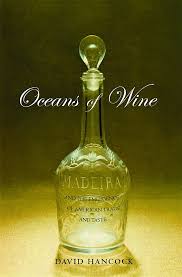
David Hancock.  Oceans of Wine: Madeira and the Emergence of American Trade and Taste. Yale University Press, 2009.

As the author of a book called Mountains of Debt I am predisposed to like a book called Oceans of Wine based on the title alone. In fact, it is a masterpiece. I wish I knew as much about anything as David Hancock clearly knows about the Madeira wine trade between 1640 and 1815. This serious social and economic history is filled with interesting facts, detailed analysis and thoughtful insights. What a delight!

America’s First Wine

Madeira was America’s wine in the 18th century, when we were a wine-drinking country but before a domestic industry had taken root. Wines from this small island found their way into shops, taverns and cellars throughout America, one element among many in what this book reveals to be a surprisingly complex network of trade connections that supported an unexpectedly cosmopolitan consumption culture.

Wine exports became a trade necessity when Madeira lost its comparative advantage in sugar production in the 17th Century and, unlikely as it may seem,  its wines soon dominated the Atlantic trade. Madeira could be found just about everywhere in America, from the cellars of wealthy families in big cities to humble country taverns and shops.

Although it would be nice to be able to say that its great success was the result of a unique terroir, in fact Madeira wine evolved into a highly manipulated manufactured product, blended, fortified, heated, agitated and tailored to the preferences of specific consumer markets. It was, in short, everything that wine snobs today hate and fear about wine, but it was treasured and enjoyed by the societies that created it. Give up romantic notions of wine’s pure and glorious past all who enter here!

Atlantic Commodity Chains

The wine trade evolved, in Hancock’s deft telling of the story, through complex formal and informal networks where information was successfully exchanged via “conversations” between buyer and seller and between and among network members at each stage of the complex production and distribution process.

If you think that the interactive, diffused global commodity chain of today is a new thing, you need to read this account of how the Madeira trade worked 300 years ago!

Hancock is not content to simply paint a landscape of Madeira trade. He uses each link in the commodity chain (from Madeira viticulture all the way to American country tavern) as an opportunity to drill down into detailed (and generously illustrated) essays on the economic and social institutions of the time. The result is a work of remarkable scope and depth — a noteworthy accomplishment.

Seriously Interesting

This is a great book of economic and social history told through the wine trade. It is a serious book of history that offers many lessons. Like Madeira itself, it will give much pleasure to many audiences, including historians, wine drinkers and economists. Bravo!

Note: Thanks for Francine Graf, my editor at CHOICE magazine, for suggesting this book.

Wine Recession: Winners & Losers

Some people think that the long hard winter of the economic crisis is coming to an end and “green shoots” are emerging. It is too soon to tell if this view is correct, but not too early to begin to assess which parts of the wine economy have been hardest hit by the recession and which have actually benefited. Herewith a brief analysis of winners and losers.

Wine Market Breakdown

There are several ways to break down the winners and losers in the wine market. The first and most obvious is by price segment. Distributors are finding wines in the $25 and up category difficult to move through normal retail or “off premises”  sales channels. This doesn’t mean that everyone is buying Two Buck Chuck, however. The “super-premium” $10-$15 segment continues to grow, for example, although the trading down effect is still significant. The woman who was willing to pay $20 two years ago now aims to spend $15 or less, with similar changes further down the line.

Some wine brands have been particularly well positioned to attract value-seeking buyers. Gallo’s Barefoot wines, for example, have gained market share among the “fighting varietals” and the CMS by Hedges red and white blends have done well in the $10-$12 category, as have many others.

Since most Wine Walls are arranged with the most expensive wines on the top shelf and the cheapest at the bottom, it is almost as if the top shelf has been eliminated and all the other wines moved up one rank. Whether this is a temporary or a permanent shift remains an open question. I explicitly do not assume that everything will reset back to “normal” once the recession’s game of musical chairs has come to an end.

On-premise sales have declined, too, as restaurants have felt the recession’s sting. It has been especially interesting to watch as restaurants adjust by switching to lower cost wines from beyond the “usual suspect” regions. Reds from Spain and whites from Oregon, for example, can be sold profitably at lower price points than the better known French and Californian alternatives. Because buyers may not be as familiar with these wines they can enjoy the adventurous experience of “switching over” rather than simply “trading down.” Restaurants can maintain their margins at lower prices.

Wine Geography

Inevitable the recession has had uneven effects on different regions and countries. The news from Northern California is not good, for example, with many reports of surplus grapes, some that will not find a buyer this year. Cost is a big factor. Napa and Sonoma are high cost growing regions. The rule of thumb is that $2000/ton grapes produce $20/bottle wine — that’s how it pencils out when all the costs and mark-ups are accounted for. It is difficult to know who will buy wine made with $3000/ton grapes in the present market if, as we are told, the $25+ segment is a “dead zone.”

There is better news here in Washington state, on the other hand. Sales of Washington wine are rising at a 9% rate according to recent data. This makes sense because so much of Washington’s wine is positioned in the $15 and under category. About three quarters of all Washington wine is produced by Ste Michelle Wine Estates’s brands such as Chateau Ste Michelle and Columbia Crest that provide good quality and good value.

Argentina is another winner. Much like Washington State, Argentina produces good value wines at every price point and has increased sales across the board, although I suspect that Malbec at $10-$12 leads the way. While the overall US wine market has grown by 4.8% over the last year according to the most recent Nielsen Scantrack numbers, sales of Argentinian wines have risen by 46.8% — a tremendous if unsustainable rate of growth. By comparison Chilean wines sales have risen by 12.7%.

New Zealand’s wine industry is heading toward a crisis, as I have written before, but this seems less about the recession than a simply matter of demand and supply. You cannot double and redouble vineyard acreage forever and expect the export market to absorb every drop.

Australia is suffering, too, but like New Zealand I think the recession is a secondary “tipping point” factor. Wine imports from Australia are down 2.5 % for the last 52 weeks and Syrah/Shiraz sales are off 5.2% for the same period. Australia is facing all sorts of problems — drought, fire, recession and so forth — but the biggest problem maybe that “brand Australia” has gone out of sytle, taking the whole Syrah/Shiraz category with it. Even unfashionable Merlot has done better, with 0.8% growth.

The French Connection

I think France is the big loser from the recession, especially the segments that previously earned a “prestige premium,” particularly Bordeaux and Champagne. There is enough Champagne squirreled away in producer cellars to supply the market for several years. I think the big houses would pass on making any new wine this year if they could.

Even the famous chateaux are cutting price in Bordeaux this year, so I can only imagine what things are like for the producers of ordinary bottlings and bulk wine. French wine is a drag on the market even in Britain, where South African wines are surging ahead. Brand France, like Brand Australia, is in steep decline, although for different reasons.

There is a lot to be learned from a close study of the wine recession. The most important, at this point, is that it is more than a decline in demand. There are hints of more profound structural changes taking place. The more things change, the French say, the more they stay the same. I wonder if that will be true this time as the recession’s grip slowly weakens?

8/31/2009 update: An article in today’s Times of London suggests how severe the crisis is in Champagne. (Click on the link to read the rest of the story.)

Hopes of a glut of cheap champagne are set to be dashed when vineyards meet next week to agree on a big cut in production to prop up prices.

With sales falling, producers may be ordered to leave up to half their grapes to wither on the vine in an attempt to squeeze the market.

Merchants are pushing for an historic reduction in yield as they seek to ensure that champagne remains an expensive luxury. “Everyone agrees that production has to be cut because no one here wants to see prices fall,” an industry insider said. “The only disagreement is on the scale of the cut.”

The backdrop to the debate is a slump in sales for champagne makers, from 338 million bottles in 2007 to 322 million last year and a predicted 270 million this year. The fall stems in part from a slide in demand, estimated at about 10 per cent, and in part from destocking by distributors, notably in Britain and the United States.

9/3/2009 update:  A great article in today’s Wall Street Journal on the crisis in Champagne. Check it out!

Book Review: Doubts about Bordeaux

Benjamin Lewin MW, What Price Bordeaux? Vendage Press (an imprint of the Wine Appreciation Guild), 2009.

Wine is bottled poetry, I have read, and bottled geography, too. It is also liquid doubt.

Uncertainty is a key obstacle to the purchase of wine because it is so difficult to know what’s really in the bottle at time of purchase (and, of course,  if you will like it) . There are thousands of different wines from different places made in a myriad of styles. The uncertainty is magnified by the fact that wine changes with each vintage, each vintage changes as it ages, and we all have different tastes. Add to this the fact that some wines are frauds – not what they seem to be  — and others are “lemons” with bad corks or random flows. It’s surprising, when you think about it, that anyone buys wine at all.

Diluting the Brand

Doubt is one of the biggest obstacles to the successful intersection of demand and supply for wine and much effort is expended in making consumers more confident in their purchases. Brands are one solution. A brand that has established a reputation for quality and consistency is a valuable thing in the wine market. This applies to both private brands like Robert Mondavi  and to communal brands, like Champagne.

Champagne was the first wine appellation – a geographic designation meant to deter fraud and encourage confident consumption. It is probably the most valuable “brand” in all wine.

If Champagne is the top wine brand then Bordeaux must come a close second. Bordeaux wines are possibly the best, arguable the most famous and certainly the most expensive in the world. Or at least some of them are, because Bordeaux’s production includes much that is common, foul or unsellable at any price.

The paradoxes of Bordeaux and its famous brand are the subject of Benjamin Lewin’s new book, What Price Bordeaux? Although Dr. Lewin might disagree, I would say that one theme of his book is that the Bordeaux brand is a bit of a fraud. Bordeaux’s reputation is rooted in history, for example, as is the case of much Old World wine, but we learn that the Bordeaux wines of today bear little resemblance to wines of the past.

This is a good thing, in some respects. The Bordeaux wines of history were thin products, “corrected” to meet market demand by the addition of darker wines from Spain and the South of France. Bordeaux wines today are more like their arch rivals from the Napa Valley, both by choice and as a  consequence of global warming, which has nearly eliminated the climate differences between the two regions.

Wine Mythbusters

The top brands in Bordeaux were established by the Classification of 1855, which grouped the chateaux into a rigid quality hierarchy based upon market prices at that time. This, Dr. Lewin’s analysis suggests, was a bit of a fraud as well, and not a very reliable guide to wine choices today.

My favorite chapter examines the “second wine” phenomenon. Many Bordeaux producers (and almost all of the top chateaux) produce a second wine (selling at a lower price) in addition to the flagship bottling. The second wine is marketed to people like me, who probably can’t afford to buy the top wine but want an idea of what it might taste like. We buy the cheaper product and imagine the taste of the grand vin.

The problem, Dr. Lewin tells us, is that there is no fixed idea of what a second wine should be and no certain relationship between the greater and lesser products. Indeed, he says, many second wines are poor values – over-priced because they benefit from the borrowed reputation of the top wine. Better off with a better wine at lower cost from a lower-tier producer, he suggests. Good advice for people who taste what’s in the bottle, not what they imagine to be there based upon the label.

Dr. Lewin’s book is unusually full of data for a wine publication – wine writers are better with stories than bar graphs – but it fits perfectly his myth-buster approach. The maps and figures are colorful and engaging – or at least they engaged the wine geek in me. Each chapter examines some particular aspect of the Bordeaux brand and reveals the reality behind the curtain. I admire both the book and Dr. Lewin’s research and expertise, although I would have appreciated a stronger central argument.

It is pretty clear that this exposé is a labor of love not malice – Dr. Lewin is convinced that the wines and the Bordeaux brand could both be much better. The first step is to acknowledge the facts and that’s where this book comes in. Dr. Lewin has done a service to the Bordeaux producers in this regard. Now it is up to them.

Stein’s Law and New Zealand Wine

Stein’s Law, named for presidential economic advisor Herb Stein who coined it, holds that if something cannot go on forever it will eventually end.

If that sounds like an obvious conclusion remember that, Freakonomics aside, most of what economists do is point out the obvious to people who somehow fail to see it.

Think about everyone who was surprised that the housing bubble imploded and that credit crashed. Everyone knew that rising housing prices and expanding mortgage debt couldn’t go on forever, but many acted like it would never end. If only they had remembered Stein’s Law!

I wonder if this is a Stein’s Law moment for the New Zealand wine industry?

Objectively the New Zealand wine industry has all of the classic characteristics of a bubble (and I’m not talking about sparkling wine here). The industry has expanded at a break-neck pace in recent years, fueled by foreign investment. The home market is quite small, so increasing output has been pushed into export markets, especially Australia, the U.S. and Great Britain. New Zealand wines are best sellers in each of these markets.

Incredibly, New Zealand has been able to continually expand export sales while maintaining its historically high export price. (No country has received a higher average price for its table wine exports in recent years.) The high prices, of course, draw in more investment, so production continues to grow and the cycle repeats.

Chateau Ponzi

If I told you a story like this about a financial investment of some sort you’d probably tell me that it sounds like a Ponzi scheme — no way this can go on forever. Pretty soon the market will be saturated and prices will have to fall. This is what worried the New Zealand winemakers I talked with when I visited there a few years ago: the moment when exports at a premium price would become unsustainable. They worried that their fine wines would become commodities, sold in bulk at permanently lower price points.

Any luxury good retailer will tell you that it is hard to push prices back up once buyers come to expect discounts.

Yesterday’s Marlborough Express suggests that the tipping point may have been reached. The article reports that

New Zealand Winegrowers’ annual report released yesterday shows exports surged 24 per cent to $992 million and the industry is on track to reach the $1 billion mark this year, a year ahead of expectations.

This was largely driven by bulk exports, which Mr Smith said were a concern to the industry. Historically, bulk wine exports have accounted for less than 5 per cent of total export volume; in the past year this quadrupled to nearly 20 per cent as producers looked to shift excess inventories.

Bulk exports might relieve pressure on wineries in the short term, but in the long term they could damage the market positioning and the reputation of New Zealand wine, Mr Smith warned.

The fact of falling prices due to bulk sales is hard to dispute.  I have not seen big discounts on New Zealand wine here in the U.S., but the Marlborough Express reports that

A surplus of Marlborough sauvignon blanc is driving down wine prices, says a Nelson wine producer. Brightwater Vineyards’ owner, Gary Neale, says his company is up against an oversupply of discounted Marlborough sauvignon blanc exports.

Mr Neale sells his wine for 10.50 (NZ$25.80) in Britain, but British consumers are being offered three bottles of Marlborough sauvignon blanc for 10 , or 3.99 for one bottle. An email from his Sydney agent tells of New Zealand wine being sold at A$4 a bottle, and Marlborough sauvignon blanc is selling there for as little as A$2.75 when buying six bottles.

“In the past, Australia has been a very easy and a profitable market, but Australia is absolutely flooded with cheap Marlborough sauvignon blanc,” says Mr Neale.

Two Buck Kiwi Wine

With the Australian dollar trading at about 83 U.S. cents this morning, that makes makes the Marlborough six-pack price a little over $2.25 US per bottle — Two Buck Chuck (TBC) range.

An article posted today on Decanter.com reports low prices in the U.K. market, too, although not so low as in Australia, and sounds an optimistic note.

The sale of £3.99 Marlborough Sauvignon Blanc is a short-term ‘blip’, according to the European head of New Zealand Winegrowers.

Following the record 2008 and 2009 vintages, increased production created an oversupply problem, giving rise to the first-ever £3.99 New Zealand wines as producers tried to clear tank space.

But David Cox, European director for New Zealand Winegrowers told decanter.com: ‘We are going to see the odd £3.99 New Zealand wine but not very often. I don’t think the consumer will ever get to the stage where they think they can get New Zealand wines for under £4.’

£3.99 translates to about $6.50 US — well clear of the TBC price, but frighteningly low for New Zealand wines in the UK market. Let’s put this price in context.

New Zealand producers received an average price of $6.00 for their exports in 2001-2005. Retail prices in the export markets were necessarily much higher to reflect transportation and distribution costs, tariffs and retail mark-ups. No wonder so many Marlborough Sauvignon Blancs have been priced in the $15-$20 range in the past.

If NZ wines are retailing for the equivalent of $6.50 in London then, working backwards, this suggests that net producer prices have plunged to less than $3, at least for the bulk wine product. That’s a huge drop and it is hard to see how production is sustainable at this price point.

All Black?

So is this it? Has the bubble burst? Is the future of New Zealand wine all black? No. The reputation of New Zealand wine is very strong and it may well be that consumers will be able to differentiate the bulk product at bulk price from the premium product higher up on the shelf as they do for products from France and California. The danger is that the whole national brand is devalued. That would be a devastating blow.

It would be a mistake to over-react to this news, but it would also be a mistake not to react at all.

Stein’s Law holds here as it does in so many cases and the surpluses will go away one way or another — either because the growers act to control them or else because the market collapses and they get sold off at bulk wine prices.

Chateau Cash Flow: The Rise of House Brand Wine

Decanter.com reports that house brand wine sales are rising in Great Britain even as the overall market slumps.

Retailers are reporting impressive growth of own-label wines as cash-strapped customers look to rein in their spending.

A Datamonitor survey reports 41% of all grocery sales in the UK are now own-label, up from 38.2% in 2008, and wine sales are following the upward trend.

Supermarket retailer Sainsbury’s told decanter.com its own-label wines had grown at double the rate of its wine range this year. A spokeswoman said: ‘Last year we revamped our own-label packaging and we have put a lot of effort behind the range in store and in the media.’

House brands aren’t so important in the U.S. wine market [yet] but they may well be in the future. The best known U.S. house brand wines are Charles Shaw (a.k.a. Two Buck Chuck) at Trader Joe’s and Kirkland Signature at Costco. Big Box retailers Target and Wal-Mart have launched their own house brands in recent months and other retailer’s have commissioned discount brands (not yet closely associated with their names) in an attempt to get a grip on the trading-down market. Look for this trend to continue, especially if the economic downturn persists.

Chateau Cash Flow

House brands are a solution to several problems, which is why they are likely to increase in importance. On the consumer side, they provide buyers with reputational assurances. You might wonder if a $3 wine can be any good, but you are more likely to try it if Trader Joe’s or Wal-Mart stands behind it. As I have written before, a $3 unknown wine at Safeway makes you think “how can it be any good?” while a $3 wine with the Trader Joe’s imprimatur makes you think “how bad can it be?” You might buy the latter but not the former.

The British have years of experience with house brands — it is why they are [for now] the world’s most important wine market and why Britain’s supermarkets are arguably the most sophisticated wine distribution machines on earth. The U.S. is catching up, but Britain still leads.

Reputation is especially important when consumers are trading down, moving into unfamiliar territory on the lower shelves. Decanter reports that while some British consumers are trading down to house brands, building that market, existing customers are trading up within the house brand portfolio! If this trend continues it will be hard to resist the house brand strategy.

Supply Side Wine

House brands have big advantages on the supply-side, too. Producers with surplus wine are often happy to sell it off through house brand bopttlings because it generates cash flow without directly undercutting their own brands and market. In my international economics class we call this “dumping.” You sell off unintended surpluses (of which there are plenty just now) through retailers in a different market segment, allowing you to maintain reputation and price points in the home market. If you start discounting wine to sell it, we have learned, it is sometimes difficult to regain the ground you have lost.

Some British retailers have moved aggressively into the supply chain, buying up grapes and surplus wines and acting as full-fledged negociants, but it isn’t really necessary to make such a large commitment to get into the house brand wine business. There are plenty of regional and national firms who can quickly respond to demand. No large investment is required, cost is low.

House brands can also have a somewhat fluid identity (not tied tightly to a particular region or style), which allows them to benefit from global opportunities, sourcing Sauvignon Blanc from Chile, for example, and Pinot Noir from Northern Italy or the South of France.

The main problem is to be sure that quality is good enough. Otherwise you have put your own brand in jeopardy.

Three Way Battle

The world’s wine markets are a battleground for three models of wine sales. The German model is based upon low cost (one euro per liter) and hard discount sellers like Aldi. The American model is all about corporate brands like Gallo and Constellation Brands. The British model is built upon upscale supermarkets and the house brands they sell.

Recent news suggests that the British model is gaining ground, both in the UK and here in America, where it is the model that drives Costco sales (Trader Joe, on the other hand, uses a version of the German system). It will be interesting to see if this trend persists once the recession eases up.