Starbucks and the Coffee-Wine Paradox

The Water-Diamond paradox is a classic problem in economics. Water is essential to life, but it is relatively cheap in most situations. Diamonds, on the other hand, are non-essential luxuries in most uses, yet they cost the earth compared to water. How is this possible? How can market price deviate so clearly from practical value? A tough problem. John Law, John  Locke, Copernicus and Adam Smith all tried to provide sensible answers.

In Vino Paradox

Starbucks (the Seattle-based company that sells coffee with a side of lifestyle) presents us with a similar puzzle today. I call it the coffee-wine paradox in honor of the original problem.

Starbucks has started selling wine. Not at branded Starbucks stores, but at three experimental “15th Avenue Coffee and Tea” shops in Seattle.  As near as I can tell they have not yet begun to market a Starbucks wine (the image here, courtesy of Google Image Search, is apparently bogus), but who knows what will happen in the future?

I know a number of coffee bars here in the Pacific Northwest that double as wine bars and authentic espresso bars in Italy nearly always serve alcoholic beverages including wine. Starbucks knows how to sell branded goods. Connect the dots. Maybe there is Starbucks Pinot Grigio in your future?

So what is the paradox? Well, the joke is that Starbucks coffee products are very expensive. You know what I mean — the mythical four dollar caffè latte? But when you compare Starbucks coffee to wine, it looks like coffee is unbelievable cheap. Thinking in terms of absolute price both wine and coffee cost a lot but, as in the water-diamond problem, their relative prices seem totally out of line. Why is wine so expensive compared to coffee and why is coffee so darn cheap?

Pulling the Supply Chain

Coffee cheap? Well, consider what a diagram of the global supply chain for a Starbucks latte would look like. The high tech espresso machine is usually Italian-made. The milk is probably a local product and the labor likewise, but the coffee and flavorings such as chocolate and vanilla come from all over the world and pass through many processes and middleman hands on their way to you.

Wine, by contrast, is the simplest of products. It practically makes itself. Even with the notorious three-tier distribution system here in the US, it is a whole lot easier to get wine into your glass than coffee into your 20-ounce cardboard takeaway cup.

And think about the wine bar versus espresso bar experience. Servers at the wine bar retrieve the bottle and pour some in your glass.  Pretty simple. At the espresso bar, by contrast, your coffee made to order with sometimes extravagant special requests (a tall half-caff soy vanilla latte with caramel?). No doubt about it, in terms of both global sourcing and labor-intensive local production,  Starbucks coffee seems like it would be a lot more expensive to produce and serve than my mythical Starbucks wine.

So here’s the paradox. $4 for a cup of coffee (or espresso-favored coffee drink) seems impossibly expensive. Ridiculous. A joke. But $4 is impossibly cheap for a glass of decent wine these days when you are dining out. What do you think Starbucks would charge for a glass of wine? If they conform to the industry rule of thumb (and I don’t know if the 15th Avenue shops do) the price for each glass would equal the wholesale cost for the bottle. So you’d expect to pay $6 and up for fine wine (wine poured from a bottle in this context) or less if it is drawn from a bag-in-box hidden somewhere in the back room.

Generic industrial wine sells for more than a premium custom-brewed coffee product. No question about it. Wine costs too much and coffee is too cheap. Why? That’s the first part of the coffee-wine paradox.

A Factor of Sixteen

A second aspect of the coffee-wine paradox is revealed in the November 2009 issue of Decanter magazine in a short but very interesting article on coffee. It seems that coffee, like wine, comes in all sorts of variations from cheap bulk product to the equivalent of vineyard-designated grand cru coffee cuvées (if that isn’t stacking the adjectives a bit too high).

Coffee connoisseurs will pay enormous sums to get the finest, rarest coffees. Decanter quotes the price of the winning coffee from a recent international competition at £13 per 250 grams of roasted beans or roughly 40 U.S. dollars per pound. On a per-cup basis, according to the article, the top coffee sells for about sixteen times the most humble Cup of Joe. That’s a pretty high premium to have the best instead of the simply pretty good.

Consider the corresponding wine ratio. If we take Two Buck Chuck as our Nescafé equivalent, the most expensive wine on the market would cost $32 in California (where Two Buck Chuck really costs $1.99) and $48 dollars per bottle nearly everywhere else in America. But this is ridiculous. The most expensive wines cost much more than this. If you read the wine magazines you frequently encounter prices of hundreds and even thousands of dollars for the finest, rarest wines. The coffee factor is sixteen from bottom to top. The wine factor, by comparison, is fifty, sixty, a hundred, even more.

What is the solution to the coffee-wine paradox? Why does wine seem to cost so much more than coffee despite the factors that would seem to raise coffee’s cost? And why do the best wines cost so much more, in relative terms, than the best coffees? What’s your answer? Watch this space for mine!

Wine and the China Syndrome

A few years ago I edited a book on globalization for a New York Times series. I was given everything that was published in the NYT in the 20th century and asked to tell the story of globalization’s rise and fall and rise again. One of the things I uncovered as I studied the history of world trade over those 100 years was what I call the China Syndrome.

Nightmares and Dreams

The China Syndrome is both the dream that China will buy all the goods we try to sell her and the fear that she will return the favor and take over our markets. The Times was full of China Syndrome a hundred years ago. History buffs might want to look up an article called “The Future of our Trade with China” that promoted the dream on April 13, 1900 and an early suggestion of the nightmare in “Japan and China find a Ready Market Here” published on September 3, 1905. Both are reprinted in my NYT volume.

The same dreams and nightmares are commonplace today. I was reminded of this recently while reading the Grape Wall of China blog, a reliable source for China wine news and views.  An article by Jim Boyce (aka Beijing Boyce) caught my eye: “No Worries: Australian targeting China wine market at every level.” The article tells of Australia’s dreams for Chinese wine sales.

The Blunder Down Under

The Australian wine industry is dreaming about a Chinese future because their present reality is an emerging nightmare. Australian wine is being battered by a number of factors, both natural and market driven. Australian wine sales are falling here in the United States and in Britain, too, I understand. Although there are many distinctive and delicious Australian wines, “Brand Australia” is pretty much defined by one-dimensional Shiraz and over-oaked Chardonnay, both of which have fallen from consumer favor. The “brand” was easy to understand and promote, but it didn’t have legs. Many consumers seem to have moved on and there are plenty of options for them to choose from. The recession only makes things worse.

The situation in some parts of Australia is really dire. Constellation Brands, for example, is closing its second Australian winery for lack of either a market for its output or a buyer for its assets. The global recession puts the big multinationals like Constellation under more pressure than in the past. They are less able to afford to nurse along failing brands. That’s bad news for the particular part of Australian wine that seems to define the brand. It’s time to dream up a better plan.

Australia has adopted a new marketing plan called Landmark Australia that is meant to highlight the quality and diversity of its fine wine industry. It’s a good idea but a difficult one to put into practice — hard to un-ring the Yellow Tail bell, if you know what I mean. And I am generally suspicious of regional or national marketing plans because I think collective brands (especially quite diverse and ill-defined ones) are always harder to sell than private brands.

Working in China … or Not

The Landmark Australia plan may be working in China. Or maybe not.

Beijing Boyce reports that Australia is promoting its new image pretty vigorously and has risen to #2 in bottled wine imports after France. The French have 40% of the fine wine market to Australia’s 20-22%. The U.S., Italy and Chile trail far behind. So perhaps Australia will be successful in redefining itself in a new market and maybe, ultimately but with more difficulty, in markets like America and Britain where it is already established. The geographical proximity to China is certainly an advantage.

There’s evidence of the China Syndrome dream in the data, but also hints of a possible nightmare. It seems that Australia is doing even better (in terms of rising market share) in the bulk wine market than in sales of bottled wine. Grape Wall reports that

… in the first half of 2009, Australia ranked second as a source of imported bulk wine. While Chile (~15 million liters) represented half of the ~31.5 million liters entering China, Australia came second with a quarter. Argentina (last year’s number two, with a quarter share) and the United States (~6.5 percent each), Spain (~5 percent), and South Africa and France (just over 1 percent each). This is quite a leap from the past four years, when Australia represented from 2 percent (2005) to 10.5 percent (2007).

One reason for higher sales at the low end of the market is that surplus bulk wine is being dumped (sold below cost). Hard to compete with that, of course. I know it is better to get something than nothing for all that surplus wine, but it is hard to be optimistic when this market segment is Australia’s greatest Chinese success. Australia wants to get out of the bulk market, in terms of its brand, not deeper into it.

China versus Colorado

How real is the dream part of the China Syndrome for wine? I asked Tom Hedges of Hedges Family Estate (an important independent producer here in Washington State and a pioneer in the Red Mountain AVA) because he is particularly knowledgeable about export markets in Asia. Tom put the dream into perspective. Here is his take:

As an American producer, we have the U.S. market, which today is number one or number two in the world for total consumption.  An example is flying to Denver costs $300 round trip, and takes no time.  Our potential to sell in Colorado alone is equal to or better than that in all of China;  the Chinese consume very little wine, in total, of which 85% is Chinese production.  And, being [an emerging] consuming market, they want only two kinds of wine:  Famous and cheap.  About 99% of the world’s wineries are neither, which means you have to develop a market for your brand.  Costly!

Tom’s clear conclusion was that he could achieve more and do it more economically by focusing on Denver and Boulder instead of Shanghai and Beijing.The allure of China is great,” he says, “the economic reality not so great.  American producers still have lots of Colorados to conquer here in the U.S.

This view aligns perfectly with my own, for now at least. Not many of those folks who dreamed the China Syndrome dream a hundred years ago woke up to great wealth, although a few probably did. I guess that’s why the call them dreams.

Gourmet, Rachael Ray, Chardonnay Connection

1940-2009 RIP

I was trying to explain to my students the lasting importance of Robert Mondavi and I suddenly realized that Julia Child was the key. Mondavi tried to do for wine in America what Julia tried to do for food. This made me think about other parallels between our wine and food cultures — and the significance of the last issue of Gourmet magazine.

The End of Gourmet

Condé Nast announced yesterday that it was pulling the plug on Gourmet magazine, America’s signature culinary monthly since 1940. The cause of death, clearly, is the economic crisis, which has reduced advertising pages by over 30 percent. Gourmet‘s subscribers (there are nearly a million of them) will have to find something else to read on the still-cluttered Food & Lifestyles section of the newsstand. Bon Appétit (another Condé Nast title) is the obviously choice, although it is not a perfect substitute — more recipes I’m told, and less upscale travel and leisure.

Gourmet‘s obituary appeared everywhere — even on the front page of the New York Times. The Times made it clear that this wasn’t just a business decision (although Condé Nast assured us it was — the McKinsey consulting firm made the call). This is really the end of an era. And not a good end.

“It’s Rachael Ray’s world now,” the story declared, referring to the 30-minute-meal Food Network star; “we’re all just cooking in it.” Roll over, Julia Child (as Chuck Berry might have said) and tell Escoffier the news.

Rachel Ray Chardonnay?

Setting aside for a moment the premise of the Times article — that Gourmet defines the era — I wonder if what’s true for food in America is also true for wine? This must be a valid concern because it is he gist of the question that I’m most frequently asked by journalists — is the current slump in fine wine sales (especially wines selling for $20 or more in the shops) a temporary trend or a permanent shift in demand? Is this the end of an era for wine? When the economy perks up eventually, will people want to buy very expensive wines again? Or is the switch to cheaper, simpler wines (my made-up Rachel Ray Chardonnay) here to stay?

The question became more interesting as I read the Times article. I tried to substitute wine terms for food terms in the article and it seemed to make sense. Here’s what I mean.

The death of Gourmet [insert name of expensive wine] doesn’t mean people are cooking less [drinking less] or do not want food magazines [good wine], said Suzanne M. Grimes, who oversees Every Day With Rachael Ray, among other brands, for the Reader’s Digest Association.

“Cooking [wine drinking] is getting more democratic,” she said. “Food [wine] has become an emotional currency, not an aspiration.”

It has also become democratized via the chatty ubiquity of Ms. Ray [Gary Vaynerchuck?] and the Food Network stars. Ms. Reichl [the Gourmet editor — insert Robert Parker or maybe Jancis Robinson] is a celebrity in the food [wine] world, but of an elite type. She [or maybe he] “is one of those icons in chief,” said George Janson, managing partner at GroupM Print, part of the advertising company WPP. But what harried cooks [budget conscious wine drinkers] want now, it seems, is less a distant idol and more a pal.

The substitution works, pretty well, don’t you think? And the McKinsey consultants surely did their job. Food and wine down the tubes. Maybe Robert Mondavi and Julia Child are both turning in their graves!

Exaggerated Rumors

But rumors of the death of both fine dining and fine wine are probably exaggerated, as Mark Twain might have said. Gourmet is an iconic brand and the fact that Condé Nast cut it rather than Bon Appetit surely does mean something. But we have to remember that print magazines themselves are an endangered species in this internet age. What information we consume and in what form are both changing very rapidly. Magazines will change rather rapidly in the next few years to remain relevant or else they’ll fade away. Gourmet isn’t the first and won’t be the last to bite the dust.

So I am not willing to declare fine wine (or the Gourmet food lifestyles) dead on the basis of this news alone. The question of whether Americans will return to their old wine-drinking habits when the recession ends remains open for now.

Note: A lot of great wine writing appeared in Gourmet over the years. Look for a future post that tries to understand the changing American wine work through the Gourmet lens.

Olive Garden and the Future of American Wine

How an investigation into trends in restaurant wine sales leads to an unexpected discovery.
Reading Down the Wine List

Everyone knows that restaurant wine sales are down as the recession has reduced both the number of diners and their willingness to spend a lot of money on wine. One of the best sources of news on restaurant wine sales is the Wine & Spirits magazine annual restaurant issue, which surveys selected wine-friendly restaurants and reports sales trends.

The W&S data give only part of the picture, however, since they tend to survey restaurants with more sophisticated wine-enthusiast customers. What’s happen to wine sales a bit further down the food chain?

Two studies by Ronn Wiegand (publisher and Master of Wine) in the current issue of Restaurant Wine report that US restaurant wine sales were off by 5.5 percent by volume  in 2008 while sales of the Top 100 wines fell by just 3.5 percent. This suggests some consolidation in this sector, which will make sense once I tell you what the best selling wines are.

The drop in restaurant wine sales overall is less than the numbers I’ve seen for upscale restaurants. One reason for this discrepancy as I understand it  is that Wiegand’s figures come from distributors, who report sales to all restaurants and on-premises establishments, not just purchases by select restaurants. So this gives us a picture of the broader market.

America’s Best Selling Restaurant Wines

Upscale restaurants of the sort that receive Wine Spectator awards get the most attention in the press, but casual dining restaurants are where the volume of wine sales is greatest. The top ten individual wines (by volume not value of sales) in 2008 were (drum roll) …

  1. Kendall-Jackson Vintner’s Reserve Chardonnay
  2. Cavit Pinot Grigio
  3. Beringer White Zinfandel
  4. Sutter Home White Zin
  5. Inglenook Chablis
  6. Ecco Domani Pinot Grigio
  7. Mezzacorona Pinot Grigio
  8. Copper Ridge Chardonnay
  9. Yellow Tail Chardonnay
  10. Franzia White Zin

None of these is an expensive wine and the #1 K-J is probably the costliest of the lot. The best selling restaurant (“on-premises”) wines are high-volume, widely-distributed inexpensive wines – just the sort that recession-ravaged consumers who want to trade down (in terms of price) and switch over (to a more relaxed view of wine) might find appealing.

Using the rule of thumb that a glass of restaurant wine sells for about the wholesale price of the bottle, these wines would sell from about $5 (for the Sutter Home) to maybe $8 (for the K-J Chard) per glass — and I suspect that a lot of this wine is sold by the glass. An affordable luxury, as they say.

Who Sells the Most Restaurant Wine (and How)?

If you are someone who dines mainly at three star restaurants where the wine list is really a leather-bound book that is handled with biblical reverence (and White Zinfandel must be a typographical error), the facts I’ve just stated about what America drinks when it dines out are probably pretty discouraging. But don’t give up hope just yet.

If you want to see the state of the art in American restaurant wine programs, follow your nose in the direction of the local shopping mall and get in line for a table at Olive Garden. Olive Garden’s 691 restaurants sell more wine than any other restaurant chain in the United States and its sales and education programs are a positive part of the transformation of American wine culture. Olive Garden is the optimistic future of American restaurant wine.

How does Olive Garden, a chain best known for its bottomless salad bowl and endless supply of tasty bread-sticks, sell so much wine (half a million cases in 2006, according to one source, probably much more than that today)? The short answer is education. Americans like wine and enjoy having it with food, but they are intimidated by everything about wine and need education before they are comfortable embracing wine. You’ve gotta learn ’em before you can turn ’em (into mainstream wine consumers).

The educational process at Olive Garden starts with staff, the people who are best placed to influence customer choice. Early on, Olive Garden established a relationship with the family that owns Rocca delle Macie winery in Tuscany. Specially selected staff travel to Italy each year to live, shop, eat, drink, cook and in general soak up knowledge and experience that can be used and shared back home — a  nice employee incentive that pays off in higher wine sales.

Back home, in partnership with several California wineries, Olive Garden has established a similar institute in Napa Valley.  Many restaurants expect that their wait-staff will pick up wine knowledge – Olive Garden really works at it by providing literally hundreds of thousands of hours of training. Of course, it has the chain-wide scale to make this investment pay off.

Selling Wine By Giving It Away

So Olive Garden staff are likely to know their wine list (37 wines from Italy, California, Washington and Australia, 35 of which are available by the glass) and which wines match well with different dishes, but how to you get patrons to try them – and especially to move out of their comfort zone and try something new?

The answer is … wait for it … to give away free samples! Patrons at many Olive Garden restaurants (this is America — local regulations vary) are offered small samples of different wines along with advice on menu pairing. The Italian house wines are the Pincipato brand made by Cavit that sells for $5.35 a glass and $32 for a 1.5 liter bottle meant to be shared family-style. Bottle prices of other wines range from $21 for the Sutter Home White Zin on up to $110 for Bertani Amarone. Most choices are in the $24-$34 range.

Olive Garden takes the free sample idea seriously, giving away 30,000 cases of wine in 2006 and presumably more today. That’s about 3-4 million tastes, according to my back-of-the envelope calculation. And it’s worth it, both in terms of wine sales and customer satisfaction. Customers like the wine, once they’d had a chance to try it, Olive Garden says, and it helps them enjoy the whole family dining experience more. No argument here — I can see how having one of those 1.5 liter bottles on the table would help a family relax and enjoy their meals.

The Olive Garden website continues the education process for customers who develop an interest, with basic Wine 101 information along with an interactive guide to pairing specific wines with particular menu items.

Confidence Game: Olive Garden, Costco and Trader Joe’s

The Olive Garden system sells wine, obviously, and it sells the idea of wine in a very healthy way. Olive Garden customers are more likely to try new wines and have fun with wine, I think, because they trust the Olive Garden brand.

Olive Garden has obviously invested a lot in its wine program and in research about what will appeal to its customers. There is less perceived risk in trying something new at Olive Garden. This is perhaps especially  important in selling some of the Italian wines, where both the producer (Mandra Rossa, for example, or Arancio) and wine name (Fiano or Nero d”Avola) would be unfamiliar to most diners.

In a way, Olive Garden has the same advantage when it comes to selling wine as Trader Joe’s and Costco. The seller’s trusted brand gives buyers confidence in making an otherwise uncertain purchase.

Olive Garden is big enough and smart enough to make the investment required to pursue this wine strategy. It’s a good thing in terms of the development of a healthy American wine culture, but it does contribute to the consolidation of the industry noted at the start of this post. Olive Garden needs large, reliable supplies of each wines to make its system work (minimum quantity 7500 cases, I think), which rules out smaller producers.

But Olive Garden doesn’t have to be everything to everyone and there is plenty of room in the marketplace for other types of restaurants and wine programs. If Olive Garden helps introduce middle America to a healthy idea of wine, it will have done a great service.  And I think that’s exactly what’s happening.

Book Review: Oceans of Wine

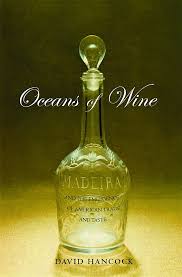
David Hancock.  Oceans of Wine: Madeira and the Emergence of American Trade and Taste. Yale University Press, 2009.

As the author of a book called Mountains of Debt I am predisposed to like a book called Oceans of Wine based on the title alone. In fact, it is a masterpiece. I wish I knew as much about anything as David Hancock clearly knows about the Madeira wine trade between 1640 and 1815. This serious social and economic history is filled with interesting facts, detailed analysis and thoughtful insights. What a delight!

America’s First Wine

Madeira was America’s wine in the 18th century, when we were a wine-drinking country but before a domestic industry had taken root. Wines from this small island found their way into shops, taverns and cellars throughout America, one element among many in what this book reveals to be a surprisingly complex network of trade connections that supported an unexpectedly cosmopolitan consumption culture.

Wine exports became a trade necessity when Madeira lost its comparative advantage in sugar production in the 17th Century and, unlikely as it may seem,  its wines soon dominated the Atlantic trade. Madeira could be found just about everywhere in America, from the cellars of wealthy families in big cities to humble country taverns and shops.

Although it would be nice to be able to say that its great success was the result of a unique terroir, in fact Madeira wine evolved into a highly manipulated manufactured product, blended, fortified, heated, agitated and tailored to the preferences of specific consumer markets. It was, in short, everything that wine snobs today hate and fear about wine, but it was treasured and enjoyed by the societies that created it. Give up romantic notions of wine’s pure and glorious past all who enter here!

Atlantic Commodity Chains

The wine trade evolved, in Hancock’s deft telling of the story, through complex formal and informal networks where information was successfully exchanged via “conversations” between buyer and seller and between and among network members at each stage of the complex production and distribution process.

If you think that the interactive, diffused global commodity chain of today is a new thing, you need to read this account of how the Madeira trade worked 300 years ago!

Hancock is not content to simply paint a landscape of Madeira trade. He uses each link in the commodity chain (from Madeira viticulture all the way to American country tavern) as an opportunity to drill down into detailed (and generously illustrated) essays on the economic and social institutions of the time. The result is a work of remarkable scope and depth — a noteworthy accomplishment.

Seriously Interesting

This is a great book of economic and social history told through the wine trade. It is a serious book of history that offers many lessons. Like Madeira itself, it will give much pleasure to many audiences, including historians, wine drinkers and economists. Bravo!

Note: Thanks for Francine Graf, my editor at CHOICE magazine, for suggesting this book.

Wine Recession: Winners & Losers

Some people think that the long hard winter of the economic crisis is coming to an end and “green shoots” are emerging. It is too soon to tell if this view is correct, but not too early to begin to assess which parts of the wine economy have been hardest hit by the recession and which have actually benefited. Herewith a brief analysis of winners and losers.

Wine Market Breakdown

There are several ways to break down the winners and losers in the wine market. The first and most obvious is by price segment. Distributors are finding wines in the $25 and up category difficult to move through normal retail or “off premises”  sales channels. This doesn’t mean that everyone is buying Two Buck Chuck, however. The “super-premium” $10-$15 segment continues to grow, for example, although the trading down effect is still significant. The woman who was willing to pay $20 two years ago now aims to spend $15 or less, with similar changes further down the line.

Some wine brands have been particularly well positioned to attract value-seeking buyers. Gallo’s Barefoot wines, for example, have gained market share among the “fighting varietals” and the CMS by Hedges red and white blends have done well in the $10-$12 category, as have many others.

Since most Wine Walls are arranged with the most expensive wines on the top shelf and the cheapest at the bottom, it is almost as if the top shelf has been eliminated and all the other wines moved up one rank. Whether this is a temporary or a permanent shift remains an open question. I explicitly do not assume that everything will reset back to “normal” once the recession’s game of musical chairs has come to an end.

On-premise sales have declined, too, as restaurants have felt the recession’s sting. It has been especially interesting to watch as restaurants adjust by switching to lower cost wines from beyond the “usual suspect” regions. Reds from Spain and whites from Oregon, for example, can be sold profitably at lower price points than the better known French and Californian alternatives. Because buyers may not be as familiar with these wines they can enjoy the adventurous experience of “switching over” rather than simply “trading down.” Restaurants can maintain their margins at lower prices.

Wine Geography

Inevitable the recession has had uneven effects on different regions and countries. The news from Northern California is not good, for example, with many reports of surplus grapes, some that will not find a buyer this year. Cost is a big factor. Napa and Sonoma are high cost growing regions. The rule of thumb is that $2000/ton grapes produce $20/bottle wine — that’s how it pencils out when all the costs and mark-ups are accounted for. It is difficult to know who will buy wine made with $3000/ton grapes in the present market if, as we are told, the $25+ segment is a “dead zone.”

There is better news here in Washington state, on the other hand. Sales of Washington wine are rising at a 9% rate according to recent data. This makes sense because so much of Washington’s wine is positioned in the $15 and under category. About three quarters of all Washington wine is produced by Ste Michelle Wine Estates’s brands such as Chateau Ste Michelle and Columbia Crest that provide good quality and good value.

Argentina is another winner. Much like Washington State, Argentina produces good value wines at every price point and has increased sales across the board, although I suspect that Malbec at $10-$12 leads the way. While the overall US wine market has grown by 4.8% over the last year according to the most recent Nielsen Scantrack numbers, sales of Argentinian wines have risen by 46.8% — a tremendous if unsustainable rate of growth. By comparison Chilean wines sales have risen by 12.7%.

New Zealand’s wine industry is heading toward a crisis, as I have written before, but this seems less about the recession than a simply matter of demand and supply. You cannot double and redouble vineyard acreage forever and expect the export market to absorb every drop.

Australia is suffering, too, but like New Zealand I think the recession is a secondary “tipping point” factor. Wine imports from Australia are down 2.5 % for the last 52 weeks and Syrah/Shiraz sales are off 5.2% for the same period. Australia is facing all sorts of problems — drought, fire, recession and so forth — but the biggest problem maybe that “brand Australia” has gone out of sytle, taking the whole Syrah/Shiraz category with it. Even unfashionable Merlot has done better, with 0.8% growth.

The French Connection

I think France is the big loser from the recession, especially the segments that previously earned a “prestige premium,” particularly Bordeaux and Champagne. There is enough Champagne squirreled away in producer cellars to supply the market for several years. I think the big houses would pass on making any new wine this year if they could.

Even the famous chateaux are cutting price in Bordeaux this year, so I can only imagine what things are like for the producers of ordinary bottlings and bulk wine. French wine is a drag on the market even in Britain, where South African wines are surging ahead. Brand France, like Brand Australia, is in steep decline, although for different reasons.

There is a lot to be learned from a close study of the wine recession. The most important, at this point, is that it is more than a decline in demand. There are hints of more profound structural changes taking place. The more things change, the French say, the more they stay the same. I wonder if that will be true this time as the recession’s grip slowly weakens?

8/31/2009 update: An article in today’s Times of London suggests how severe the crisis is in Champagne. (Click on the link to read the rest of the story.)

Hopes of a glut of cheap champagne are set to be dashed when vineyards meet next week to agree on a big cut in production to prop up prices.

With sales falling, producers may be ordered to leave up to half their grapes to wither on the vine in an attempt to squeeze the market.

Merchants are pushing for an historic reduction in yield as they seek to ensure that champagne remains an expensive luxury. “Everyone agrees that production has to be cut because no one here wants to see prices fall,” an industry insider said. “The only disagreement is on the scale of the cut.”

The backdrop to the debate is a slump in sales for champagne makers, from 338 million bottles in 2007 to 322 million last year and a predicted 270 million this year. The fall stems in part from a slide in demand, estimated at about 10 per cent, and in part from destocking by distributors, notably in Britain and the United States.

9/3/2009 update:  A great article in today’s Wall Street Journal on the crisis in Champagne. Check it out!

Stein’s Law and New Zealand Wine

Stein’s Law, named for presidential economic advisor Herb Stein who coined it, holds that if something cannot go on forever it will eventually end.

If that sounds like an obvious conclusion remember that, Freakonomics aside, most of what economists do is point out the obvious to people who somehow fail to see it.

Think about everyone who was surprised that the housing bubble imploded and that credit crashed. Everyone knew that rising housing prices and expanding mortgage debt couldn’t go on forever, but many acted like it would never end. If only they had remembered Stein’s Law!

I wonder if this is a Stein’s Law moment for the New Zealand wine industry?

Objectively the New Zealand wine industry has all of the classic characteristics of a bubble (and I’m not talking about sparkling wine here). The industry has expanded at a break-neck pace in recent years, fueled by foreign investment. The home market is quite small, so increasing output has been pushed into export markets, especially Australia, the U.S. and Great Britain. New Zealand wines are best sellers in each of these markets.

Incredibly, New Zealand has been able to continually expand export sales while maintaining its historically high export price. (No country has received a higher average price for its table wine exports in recent years.) The high prices, of course, draw in more investment, so production continues to grow and the cycle repeats.

Chateau Ponzi

If I told you a story like this about a financial investment of some sort you’d probably tell me that it sounds like a Ponzi scheme — no way this can go on forever. Pretty soon the market will be saturated and prices will have to fall. This is what worried the New Zealand winemakers I talked with when I visited there a few years ago: the moment when exports at a premium price would become unsustainable. They worried that their fine wines would become commodities, sold in bulk at permanently lower price points.

Any luxury good retailer will tell you that it is hard to push prices back up once buyers come to expect discounts.

Yesterday’s Marlborough Express suggests that the tipping point may have been reached. The article reports that

New Zealand Winegrowers’ annual report released yesterday shows exports surged 24 per cent to $992 million and the industry is on track to reach the $1 billion mark this year, a year ahead of expectations.

This was largely driven by bulk exports, which Mr Smith said were a concern to the industry. Historically, bulk wine exports have accounted for less than 5 per cent of total export volume; in the past year this quadrupled to nearly 20 per cent as producers looked to shift excess inventories.

Bulk exports might relieve pressure on wineries in the short term, but in the long term they could damage the market positioning and the reputation of New Zealand wine, Mr Smith warned.

The fact of falling prices due to bulk sales is hard to dispute.  I have not seen big discounts on New Zealand wine here in the U.S., but the Marlborough Express reports that

A surplus of Marlborough sauvignon blanc is driving down wine prices, says a Nelson wine producer. Brightwater Vineyards’ owner, Gary Neale, says his company is up against an oversupply of discounted Marlborough sauvignon blanc exports.

Mr Neale sells his wine for 10.50 (NZ$25.80) in Britain, but British consumers are being offered three bottles of Marlborough sauvignon blanc for 10 , or 3.99 for one bottle. An email from his Sydney agent tells of New Zealand wine being sold at A$4 a bottle, and Marlborough sauvignon blanc is selling there for as little as A$2.75 when buying six bottles.

“In the past, Australia has been a very easy and a profitable market, but Australia is absolutely flooded with cheap Marlborough sauvignon blanc,” says Mr Neale.

Two Buck Kiwi Wine

With the Australian dollar trading at about 83 U.S. cents this morning, that makes makes the Marlborough six-pack price a little over $2.25 US per bottle — Two Buck Chuck (TBC) range.

An article posted today on Decanter.com reports low prices in the U.K. market, too, although not so low as in Australia, and sounds an optimistic note.

The sale of £3.99 Marlborough Sauvignon Blanc is a short-term ‘blip’, according to the European head of New Zealand Winegrowers.

Following the record 2008 and 2009 vintages, increased production created an oversupply problem, giving rise to the first-ever £3.99 New Zealand wines as producers tried to clear tank space.

But David Cox, European director for New Zealand Winegrowers told decanter.com: ‘We are going to see the odd £3.99 New Zealand wine but not very often. I don’t think the consumer will ever get to the stage where they think they can get New Zealand wines for under £4.’

£3.99 translates to about $6.50 US — well clear of the TBC price, but frighteningly low for New Zealand wines in the UK market. Let’s put this price in context.

New Zealand producers received an average price of $6.00 for their exports in 2001-2005. Retail prices in the export markets were necessarily much higher to reflect transportation and distribution costs, tariffs and retail mark-ups. No wonder so many Marlborough Sauvignon Blancs have been priced in the $15-$20 range in the past.

If NZ wines are retailing for the equivalent of $6.50 in London then, working backwards, this suggests that net producer prices have plunged to less than $3, at least for the bulk wine product. That’s a huge drop and it is hard to see how production is sustainable at this price point.

All Black?

So is this it? Has the bubble burst? Is the future of New Zealand wine all black? No. The reputation of New Zealand wine is very strong and it may well be that consumers will be able to differentiate the bulk product at bulk price from the premium product higher up on the shelf as they do for products from France and California. The danger is that the whole national brand is devalued. That would be a devastating blow.

It would be a mistake to over-react to this news, but it would also be a mistake not to react at all.

Stein’s Law holds here as it does in so many cases and the surpluses will go away one way or another — either because the growers act to control them or else because the market collapses and they get sold off at bulk wine prices.

Chateau Cash Flow: The Rise of House Brand Wine

Decanter.com reports that house brand wine sales are rising in Great Britain even as the overall market slumps.

Retailers are reporting impressive growth of own-label wines as cash-strapped customers look to rein in their spending.

A Datamonitor survey reports 41% of all grocery sales in the UK are now own-label, up from 38.2% in 2008, and wine sales are following the upward trend.

Supermarket retailer Sainsbury’s told decanter.com its own-label wines had grown at double the rate of its wine range this year. A spokeswoman said: ‘Last year we revamped our own-label packaging and we have put a lot of effort behind the range in store and in the media.’

House brands aren’t so important in the U.S. wine market [yet] but they may well be in the future. The best known U.S. house brand wines are Charles Shaw (a.k.a. Two Buck Chuck) at Trader Joe’s and Kirkland Signature at Costco. Big Box retailers Target and Wal-Mart have launched their own house brands in recent months and other retailer’s have commissioned discount brands (not yet closely associated with their names) in an attempt to get a grip on the trading-down market. Look for this trend to continue, especially if the economic downturn persists.

Chateau Cash Flow

House brands are a solution to several problems, which is why they are likely to increase in importance. On the consumer side, they provide buyers with reputational assurances. You might wonder if a $3 wine can be any good, but you are more likely to try it if Trader Joe’s or Wal-Mart stands behind it. As I have written before, a $3 unknown wine at Safeway makes you think “how can it be any good?” while a $3 wine with the Trader Joe’s imprimatur makes you think “how bad can it be?” You might buy the latter but not the former.

The British have years of experience with house brands — it is why they are [for now] the world’s most important wine market and why Britain’s supermarkets are arguably the most sophisticated wine distribution machines on earth. The U.S. is catching up, but Britain still leads.

Reputation is especially important when consumers are trading down, moving into unfamiliar territory on the lower shelves. Decanter reports that while some British consumers are trading down to house brands, building that market, existing customers are trading up within the house brand portfolio! If this trend continues it will be hard to resist the house brand strategy.

Supply Side Wine

House brands have big advantages on the supply-side, too. Producers with surplus wine are often happy to sell it off through house brand bopttlings because it generates cash flow without directly undercutting their own brands and market. In my international economics class we call this “dumping.” You sell off unintended surpluses (of which there are plenty just now) through retailers in a different market segment, allowing you to maintain reputation and price points in the home market. If you start discounting wine to sell it, we have learned, it is sometimes difficult to regain the ground you have lost.

Some British retailers have moved aggressively into the supply chain, buying up grapes and surplus wines and acting as full-fledged negociants, but it isn’t really necessary to make such a large commitment to get into the house brand wine business. There are plenty of regional and national firms who can quickly respond to demand. No large investment is required, cost is low.

House brands can also have a somewhat fluid identity (not tied tightly to a particular region or style), which allows them to benefit from global opportunities, sourcing Sauvignon Blanc from Chile, for example, and Pinot Noir from Northern Italy or the South of France.

The main problem is to be sure that quality is good enough. Otherwise you have put your own brand in jeopardy.

Three Way Battle

The world’s wine markets are a battleground for three models of wine sales. The German model is based upon low cost (one euro per liter) and hard discount sellers like Aldi. The American model is all about corporate brands like Gallo and Constellation Brands. The British model is built upon upscale supermarkets and the house brands they sell.

Recent news suggests that the British model is gaining ground, both in the UK and here in America, where it is the model that drives Costco sales (Trader Joe, on the other hand, uses a version of the German system). It will be interesting to see if this trend persists once the recession eases up.

American Wine Laws: Time for a Change?

No food for sale in this NYC Trader Joes. No wine for sale at the Trader Joes next door.

Only in America? You can't buy food at this NYC Trader Joe's wine store. And you can't buy wine at the Trader Joe's next door.

A European visitor pulled me aside recently to complain about American wine laws, which considerably restrict the what, where and how of wine sales and consumption compared to more relaxed European practices.

“I thought there was separation of Church and State in America,” he said, showing that he hadn’t forgotten what he learned in Civics class years ago as a high school exchange student in Cleveland. He put the blame for America’s wine parochialism squarely on the influence of conservative religious groups.

Church and State vs. Special Interests

Religious groups are political powerful, I told him, and they no doubt have had some influence on the development of America’s wine laws. But that’s not the reason the laws don’t change, I said. It is the interests of those who gain from the current set up. He wasn’t convinced. He seemed to think that a moral explanation was inherently more persuasive (or more American?) than an economic one. But I still think I’m right.

My explanation — that economic forces organize around any set of regulations, become entrenched and use their political and economic clout to prevent change — has a good economic pedigree. It is the theory of structural rigidities developed by Mancur Olson in his two classic books, The Logic of Collective Action and The Rise and Decline of Nations.

Olson’s theory is elegantly simply. Restrictive economic arrangements benefit a small number of actors a great deal, so they have a strong incentive to organize and fight change. Eliminating the restrictions benefits a larger but widely diffused set of actors who have correspondingly smaller individual incentive to take action.

Even though the collective gain from liberalizing arrangements is likely to exceed the collective loss, the concentrated established interests have more of an incentive to influence legislators and regulators than the general public. This is why regulations, once enacted, are difficult to change. Public gain cannot seem to trump concentrated private interests.

Olson developed this theory in The Logic of Collective Action and used it in The Rise and Decline to explain why rich, stable economies sometimes experience slower growth rates. Stability allows interests to become entrenched and structural rigidities to solidify. Change becomes more and more difficult and potential collective gains from innovation are systematically sacrificed on the altar of vested interest.

Every once in a while, Olson argued, advanced nations need something that will shake things up and weaken the grip of special interests. Then all sorts of change becomes possible.

A Loaf of Bread But No Jug of Wine

An article by Graham Rayman in the August 11, 2009 Village Voice provides evidence to support this theory. New York is one of 15 US states where it is illegal to purchase wine or beer in a supermarket (and you can’t buy bread or cheese in a NY wine shop, either). It isn’t so much separation of Church and State as the division of  Wine and Cheese. Supermarkets can sell wine, beer and spirits as provided by the law, and some do this, but they must have separate stores with separate entrances, checkout stands and so forth.

Two doors, two lines, two sets of store staff. Greater legal control alcohol sales is possible, I suppose, but at a considerable sacrifice in convenience.  It is probably not a surprise that wineries and wine enthusiasts would want to change this, but it isn’t an easy thing to do.

The Village Voice article explains how liquor store interests organized and lobbied the NY legislature to kill a recent bill that would have permitted supermarket sales. The main force behind the proposal was the state government’s need for revenue — the state projected that increased sales though supermarkets would have added to state tax coffers. The story focuses on the anti-reform lobby — it would be interesting to know more about than the author reports here about how supermarket chain and corporate wine producer interests reacted to the bill. But the point about the blocking power of small but concentrated interests is well made.

Shake It Up, Baby

Supermarkets are just one distribution vector for wine, of course, and New Yorkers have many competitive specialist stores to keep prices down and service up, so we don’t need to feel too sorry for them. But it does seem that the increased convenience of grocery store sales would help expand the wine market and promote wine as a lifestyle choice. It’s too bad the reform effort failed.

The inconvenience of wine buyers in the 15 supermarket-ban states is important, but the grip of special interests on wine regulations extends to other areas.The cumbersome three-tier distribution system and restrictions on inter-state wine shipments are two other areas where entrenched interests have successfully fought off liberalization efforts.The result is the restrictive system my European friend finds so difficult to understand.

If Mancur Olson is right, restrictive regulations will be difficult to change unless something happens to shake things up. Maybe the economic crisis, which has put every link in the wine value chain under stress, will ultimately provide just such an opportunity. Consumers, wine producers and even state tax departments all have something to gain from changing the system now.

We Will Sell No Wine [Reform] Before Its Time

I told my European friend not to hold his breath waiting for wine reforms to trickle up from grassroots wine enthusiasts. The real hope is that the big players will push for liberal reforms.

Personally, I pin my hopes on Costco, the largest single wine retailer. And I wonder if Wal-Mart will get involved now that it is selling wine in many stores (it even has its own version of a Two Buck wine called Oak Leaf). OK, Wal-Mart is a long shot, given its Arkansas roots, but these are unusual times — almost anything is possible.

The New York defeat is a definite setback (and the California plan to increase wine taxes is a step in the wrong direction) but maybe European-style wine market regulations are an idea whose time has finally come.

8/27/2009 Update

Interesting article in the New York Times about Whole Foods’ failed attempt to open a wine shop in New York City.

Whole Foods learned the hard way that opening a wine store in New York is not easy. The wine shop at its market in the Time Warner Center was closed by the state liquor authority because the shop was deemed part of the supermarket; state law bans selling wine in food stores. Then Whole Foods’s license request for a wine shop near its store in the Bowery was denied because of community opposition. But the company succeeded in starting a wine store in the same building as its newest store on the Upper West Side: it opened on Aug. 24, and the supermarket will open on Aug. 27.

Read the whole story at

http://www.nytimes.com/2009/08/26/dining/26whole.html?_r=1

Wines from Spain: Challenges and Opportunities

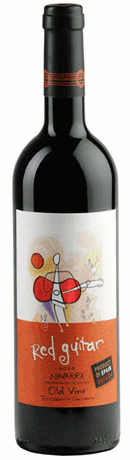
You know that a market niche is expanding when Constellation Brands decides to move into it, as it  has done with Red Guitar, an old vines Tempranillo-Granacha blend from Spain’s Navarra DO that sells for about ten bucks.

Red Guitar is marketed as “a rich, smooth and stylish celebration of the Spanish lifestyle” — a wine for the times, I guess, when consumers are looking for products that let them trade down in terms of price while trading up to a fun, more casual way of living.

Don’t Know Much

I didn’t know very much about the wines of Spain and the Spanish wine industry, so I went back to the classroom this week to try to catch up at a three day seminar on Spain’s wines organized by The Wine Academy of Spain and taught by Esteban Cabezas. My fellow students came mainly from within the wine industry — sommeliers, distributors and retailers. I learned a lot and sampled dozens of great wines. We didn’t taste Red Guitar, but we did survey the market from $5 bottles on up to the highest levels, including table wines, Sherry and sparkling Cavas. Yes, I know. Tough work …

Education is important to the future of the wines of Spain.  As I have written before, the number of unfamiliar regions and grape varieties is a challenge that must be addressed if wines from Spain are to achieve their obvious market potential. Constellation Brands’ decision to market Red Guitar as a “lifestyle” brand probably reflects the difficulty of selling wine from unfamiliar places made with unfamiliar grapes in a market where the international  varietals and styles are the lingua franca. Spanish winemakers need to get the word out — to educate consumers and sellers. Classes like the one I attended are a good step in this direction.

Uncorking the Potential of Wines from Spain

It’s useful to think about Spain’s wine industry using a basic SWOT (Strengths-Weaknesses-Opportunities-Threats) framework. Wines from Spain have many strengths that go beyond their obvious quality in the glass. Spanish food and culture are hot and Spain is a popular tourist destination, factors that can be leveraged in the marketplace. Intangible cultural factors have always helped sell Italian wines, so it is not unreasonable to think that Spain will benefit from them as well. Red Guitar’s marketing strategy is an obvious attempt to do just this.

There are weaknesses, too, of course. While the sparkling Cavas are very popular, offering Champagne quality at beer prices in some cases, other segments of the Spanish industry suffer from consumer ignorance or indifference. Sherry wines from Andalusia, for example, suffer the same challenge as Riesling wines. Consumers think they know what they are (simple, sweet stuff) but they are wrong. The diversity of styles and complexity of the best wines gets lost. For those who know them Sherry wines are the great bargains of the wine world. But most consumers never find out what they are missing. That needs to change.

The amazing diversity of Spain’s table wines is a strength in this market, where consumers are unusually willing to try new products if they perceive good value. But diversity is also a weakness to the extent that it confuses consumers (especially American consumers)  who are looking for a “brand” identity and can’t find it. Spain doesn’t have  a distinct regional identity that would draw in consumers initially and then encourage further experimentation as some other wine producing areas do.

In Search of “Brand Spain”

New Zealand has “brand” Marlborough Sauvignon Blanc, for example, which put that country on the wine map and gave millions of wine drinkers an excuse to try NZ wines. Oregon has its Pinot Noir, which has helped make it a wine region of international note despite its surprisingly small total production. Spain (like Washington State wine in this regard) produces so many different types and styles of wine that no one of them defines it. The regional identity is unclear. This is a barrier when trying to break into new markets, but a strength once a market beachhead has been established.

Although my terrioriste friends cringe when they hear me say this, I think it would be great if Spain had a Mondavi or Antinori who could define a “brand Spain”  in the global market. I think that a number of quality producers are trying to achieve this, but the industry is still pretty fragmented. Perhaps the consolidation that is sure to accompany the current economic downturn will move this process along.

The continuing economic crisis  is a great opportunity for Spain to expand export market share, especially in the United States where the market for wine is till growing in the mid-market segments. Spain, like Argentina, has a reputation for good value and distinctive wines and this is very useful right now.

Catch-22

It is important, however, to avoid being defined by low price alone. Spain’s first and fourth largest export markets (Germany and France) buy mainly low cost wines to stock the shelves of Aldi and similar discount sellers. Spain needs to focus on the UK and US (numbers two and three on their export table) where higher prices and margins are possible.

Another threat to Spain’s success in the international market is the temptation to conform too closely to the international market style (Pancho Campo, Spain’s leading wine authority, called this “the Australian style” in a Skype-dialogue with my class). Wines that are all alike become commodities at some point and it seems to me that Spain, with its already huge lake of surplus wines, wants to get out of that part of the market.

But there’s a Catch-22. It is easier, perhaps, to break into the market with a good value me-too wine. But it is hard to build upon that foundation (hence Australia’s current wine slump). Better to be yourself, distinctive, even quirky, it you can get consumers to give you a try.

As you can see, the prospects for Spain are as complex and multi-dimensional as the wines themselves.  I am optimistic that Spain’s wine industry will navigate this complicated passage successfully. Look for more on this topic in future posts.

Note: I would like to thank the Wine Academy of Spain and Catavino for allowing me to participate in the seminar on wines of Spain. Special thanks to my professor, Estaban Cabezas, and to Simone Spinner.

Tasting Note 8/11/2009: We tried the Red Guitar with dinner tonight and it was completely lacking in distinguishing qualities. It is hard to imagine that anyone who was introduced to the wines of Spain by Red Guitar would try another Spanish wine. Last night, however, we had the Borsao Tres Pichos, an Old Vines Granacha that sells for only a few dollars more, which was completely enchanting. You need to try Spain’s wines to know if you like them, but quality varies (and not just with price), so choose with care.