 There is a chapter in my new book Wine Wars II: The Global Battle for the Soul of Wine that’s titled “We are all terroirists now” and makes the case that the sense of place that I call terroirism is a powerful force in the world today.
All terroirists? Really? Terroirists (not to be confused with terrorists)? Well, I admit it might be a bit of a stretch, but how often to do find Richard Nixon, Karl Polanyi, John Maynard Keynes, and Joseph Schumpeter all referenced in a wine book? You might disagree with where I take the argument and what I have to say about wine and terroir, but I guarantee you will find the ride interesting.,
This much I think we can all agree upon. Sometimes the power of terroir is undeniable. The sense of a particular place is so strong that special wines just have to be made to serve as both tribute and showcase. Herewith three nominees for terroirist tribute.
 To the Heights
Artesa Elevation Block Estate Vineyard Cabernet Sauvignon 2019, Mount Veeder, Napa Valley
The Raventós Codorníu family, famous for their excellent Cava wines, came to California to make sparkling wines and Codorníu Napa, situated in the Los Careneros district, opened to much acclaim in 1991. But there was more than bubbles on their mind and a sister winery was born in 1998 to make still wines, too. Artesa is Catalan for “handcrafted” and that focus hands-on was the guiding principle.
When it came time to think about renewing the original vineyard plantings, focused attention was drawn to one particular vineyard high on the hill — so high that it had a complex terroir all its own. It was, in fact, so elevated that it was technically in the Mount Veeder AVA. Maybe the original Pinot and Chardonnay could be replaced with Cabernet to make a really special terroirist wine?
And so the project began, with careful attention to matching specific blocks to just the right Cabernet clones. Sue and I were lucky to be able to taste the result on a video link with winemaker Ana Diogo-Draper and we were just amazed by the layers of flavor and the super-long finish. Complex, balanced, lively — what a great wine — nothing at all like the generic “Napa Valley red wine” that I have often criticized.
Artesa’s elevated Cabernet makes the terroirist case in every way. And there is more to come. When they renewed the Elevation Vineyard they also planted Tempranillo! Can’t wait to taste that, too!
The Original
Bonterra The McNab, McNab Ranch Vineyard Cabernet Sauvignon 2020, Mendicino Country
 If you look closely at the label of this wine you will see a group of sheep. The McNab Ranch, an east-to-west box canyon up in Mendocino Country, was a sheep ranch before the folks at Bonterra looked closely at its vineyard potential. It became one of the original American biodynamic vineyards and helped propel both biodynamics and Bonterra ahead.
I hesitated a bit in pulling the cork on this wine because it is a 2020 — kinda young as with all three wines discussed here — and because it is one of the last wines to be made from the original McNab vines. It’s time to renew the vineyard, my Bonterra contacts report, and it will be interesting to see what the next generation of vines produces.
The guiding principles will be the same, I’m sure, but as in the Artesa case, this is an opportunity to exploit the complexities that nature presents. I hope we have a chance, in a few years, to taste this lively, complex, fascinating wine again alongside the next generation of Bonterra McNab Ranch wines.
In the meantime, however, this McNab is the OG — an original in several respects and a fascinating vision of terroirist wine.
 Show Horse
Trothe Cabernet Sauvignon 2019, Horse Heaven Hills
The Andrews family have been farming the land in the Horse Heaven Hills area of Washington state for four generations. First came drylands wheat then eventually other crops and then, back in the 1970s, the first grape vines. That’s a long time ago in Washington wine terms, and it perhaps suggests the sort of generational thinking that has guided the Andrews family operations.
The Andrews were growers not winemakers, so their grapes were blended together with other grapes and turned into the wines that powered the Washington industry grow over the last several decades. At some point, the current Andrews generation probably began to wonder how wine made from the best of their grapes would compare with top wines from Washington? California? the world? It’s a natural question to ask. Only one way to find out.
And so was born the Trothe project. Ray McKee, the former head red wine maker for Chateau Ste Michelle, was brought on board to craft the wines. He had been buying the Andrews’ fruit for years and appreciated the distinctive terroir and its potential. The current release is getting a lot of deserved attention and I understand there are more wines in the tiny pipeline. It will be interesting to see what comes next as the particular terroir of the Andrews estate is explored to make Trothe wines.
 Andreas Viestad,
  But there’s a problem. Taken as a food book or a history book or a cultural guide for anyone who loves Italy or Rome, it is hard to deny Dinner in Rome‘s charm. But from a wine perspective it is hard not to be disappointed.
 Would it be possible to write a history of the world that framed wine and the civilization of the glass in a different way? Yes, I know it is possible because it has already been done. Economist editor Tom Standage’s 2005 book
 What do we talk about when we talk about wine? How does the way we talk about wine affect the way we think about it? Does the language of wine create a barrier to entry for consumers?
 They say that you can’t judge a book by its cover, but people do exactly that all the time. You probably shouldn’t judge a wine by its label, either, but in fact labels can be quite powerful by making a favorable first impression and then, once that initial sale has been made, establishing a memorable identity.
 What would happen if a winery put complete product and nutritional information on the back label? Would consumers take one look at the calories and additives and run screaming to the beer aisle? Or would they take in the information (or not — the way they do with other types of products) and still make a purchase? Like Blake Gray, I think the information might be a plus, but at the very least it wouldn’t be much of the negative.


 The winter holidays are a great time for wine lovers — food, fun, friends, and family. Just add wine and stir! What could be better? But,
 So the Champagne Mangin wines are distinctive, but which one should we choose? Well, we didn’t over-think the question this time. The Brut Rosé is such a beautiful color, we just had to pop the cork! And we were not disappointed. From first sip to last, with food and without, it was amazing, both on the nose and in the mouth. What a great way to begin the long Thanksgiving holiday weekend. It would be impossible to top the Brut Rosé, but perhaps we could try something equally unexpected?
 Things were going rather well, so we decided to continue down the path of sparkling, pink wines with an unexpected twist. This led us to “Il Rosa” Spumante Brut from
  The
The  What are the wines’ grape varieties?
 One of the wonderful things about wine is its ability to surprise and delight — there are always new wines made with unusual wine grapes and from unexpected places to enjoy. A person who is bored with wine, given this great discovery potential, is bored with life!
 Knowing of our interest in native grape varieties, António Graça, the head of Research and Development at
 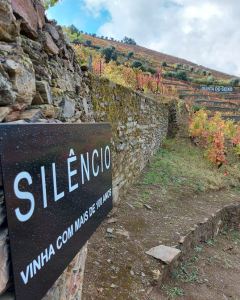 “This has led us to develop new vines and wines using blends or single variety wines made from minority varieties, some representing less than 50 hectares as total planted acreage today. The revelation of their sensory aspects has been very reassuring. Examples are Touriga Femea (literally «female Touriga»), Tinta Francisca in the Douro, Sercialinho in Bairrada or Encruzado and Alfrocheiro in Dao.”
 My latest book,
