The Wine Economist returns to the road in a few weeks. Here are some of the stops we plan during the summer months.
June 2018
I’ll be speaking about “Around the World in Eighty Wines” and leading a wine tasting as part of the University of Puget Sound’s Summer Reunion Weekend Alumni College. June 8-9, 2018. The good folks at Carpenè Malvolti, the famous Conegliano Prosecco house, have kindly donated some of their fine wine for a tasting. Lucky alumni students!
>>><<<
Sue and I will be in Forte dei Marmi, Italy on June 18 for VinoVIP. I will talk about money and wine in the global market context. I am very excited to join a group of Italian wine luminaries on the program and to meet everyone at this great event at the famous Italian seaside resort. We will stop briefly in Bologna on our way to VinoVIP to see old friends (I taught at the Johns Hopkins/SAIS Center in Bologna many years ago) and to visit Eataly World.
Here is the VinoVIP program:
Money & Wine: A Global Perspective (Mike Veseth),
“Italian challenges” (Angelo Gaja),
“how to manage a wine company: the basics” (Ettore Nicoletto, CEO Gruppo Santa Margherita),
“routes of wine – main markets: what are they buying?” (Denis Pantini from Nomisma wine research unit),
“SWOT of Italian wine industry” (Piero Mastroberardino). Quite an all-star lineup!
I’m happy to speak at a private program featuring “Around the World in Eighty Wines” to support the Northwest Sinfonietta music organization on July 29.
September 2018
Sue and I are tentatively planning to participate in the 3rd global wine tourism conference sponsored by the United Nations World Tourism Organization (UNWTO) The conference will be held on September 6-7 in Chisinau, Moldova.
Sue and I recently returned from a press tour to three French wine regions — Languedoc, Roussillon, and the Loire Valley — that are benefiting from the current surge in demand for French wines in the U.S. market. As I noted last week, France is back on consumer radar, especially with buyers thirsty for Rosé and sparkling wines.
A Lighter Shade of Pale?
I think there is smooth sailing ahead for Rosé, Blanquette, and Cremant producers from these regions at least in the short run, although Elizabeth Gabay MW argued in a rather brilliant masterclass that we attended at the Chateau de Blois that some Rosé producers are sacrificing potential quality in a quest to make their wines fashionably pale, pale pink. This practice might come back to bite them in the future depending upon how the export markets develop.
The conventional wisdom is that Rosé buyers prefer pale rather than robust pink color in their Rosé wines — the lighter the better — and so producers make the near clear wines they think will sell best, even if they aren’t necessarily the best wines they could make. It is the flip side of the over-extracted red wines that so many wineries produce. I’m not sure the conventional wisdom about pale pink holds here on the Pacific Coast of North America, where California not Provence is the reference point for Rosé, but that’s another column.
Pink and sparkling wines from France are selling really well. The makers of other wines, both red and white, face some headwinds and how they navigate around or through them will determine whether they will share the market boom.
Challenging Stereotypes in Languedoc
France is an Old World wine region and this means many things, including especially that most of its regions inherit in one way to another the practices and reputations of the past. Sometimes this is beneficial, but not always. Languedoc and Roussillon have to overcome undesirable stereotypes of their wines in many markets.
The image that Languedoc conjures up for wine drinkers of a certain age is of cheap, strong, tannic red wines meant to fill jugs and bottles at low prices. Languedoc became the cheap French wine lake initially when the railroads connected the South to the industrial and population centers further north and then again when cheap wine imports from Algeria dried up after it gained independence. Quantity not quality defined Languedoc — a reputation that still haunts it.
Now I am not going to say that cheap wine production has disappeared, but the momentum has decidedly shifted to better wines made with more marketable grape varieties such as Grenache, Syrah, and Mourverde along with standbys like Carignan.
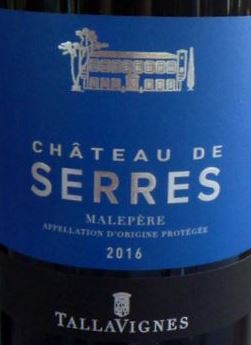
We enjoyed a delicious AOP Malepere red from Chateau de Serres at lunch one day in Carcassonne. It is a blend of Merlot, Cabernet Franc, and Cabernet Sauvignon that displays a Languedoc stereotype myth-busting elegance. Fantastic!
Some producers we spoke with admitted that they tried to downplay their Languedoc roots in order to sidestep the reputation problem in export markets, hoping that the wines will simply speak for themselves. They hope, too, that younger consumers who have no memory of the old days will have an open mind to trying the wines.
Cheap and Sweet? Not Interested!
The Roussillon producers we spoke with saw old reputation as less of an issue mainly because their region is not so well-known as Languedoc. Roussillon is often lumped in with Languedoc or left out altogether. They see today’s market as an opportunity to build a strong reputation from scratch.
But that doesn’t mean that stereotypes don’t exist in Roussillon. A colleague asked where we were headed one afternoon and when told we were going to Rivesaltes he turned up his nose — “Too bad! I’am not interested in cheap sweet wines.”
When we arrived at Domaine de Besombes we met winemakers from the region and shared a delicious Catalan barbecue lunch. And we tasted their delicious stereotype-breaking dry red and white wines, too. Sue was particular fond of the wines made by Laurent Pratx of Serre Romani. The grandson of the man who founded the local cooperative, Pratx returned to Roussillon after working in the Rhone Valley committed to taking his wines in new, independent directions.
We tasted sweet wines at the end of the meal, but these were not the cheap sweet wines of our friend’s memory. They were wonderful, especially the Domaine de Besombes 1949 shown at the top of the page, which has special meaning for us — that’s our vintage, too!
We were fortunate to be invited to a rather special banquet where all the wines were sweet and from this region. I will paste the menu with pairings below. It was a memorable experience. I think my favorite combination was the sea bass with lemon, nuts, and popcorn with the 1990 Maison Cazes Rivesaltes Ambré.
Everyone Loves the Loire
Wine producers in the Loire Valley have a different problem from those in Languedoc. Everyone loves the Loire, which is why it is a hugely popular tourist destination. The beautiful scenery, historic chateaux, rich food, and fine wines are hard to beat.
But it is not always easy to translate the tourist impression into wine export market sales because the Loire isn’t one thing when it comes to wine, it is many, and it is easy to get lost in this complexity. The Loire is Muscadet, for example, which can be a simple delicious wine and also, as we learned a wine of great character and complexity with extended lees-aging.
The Loire is dry Rosé de Loire and also sweetish Rosé d’Anjou. It is the crisp Sauvignon Blanc from Touraine, Chenin Blanc from Vouvray, Cabernet Franc from Samur, and much more. Altogether the Loire comprises 50 appellations and demarcations, creating a jigsaw puzzle that can be difficult to navigate. Famous appellations stand out, less prominent ones that live in their shadows have trouble getting attention.
One of my favorite discoveries of this trip, for example, were the Sauvignon Blanc wines of Chenonceau, a fairly young appellation in Touraine. Chenoncau is more famous for the chateau of the same name than the wines. Too bad — because the wines can be spectacular. I suspect there is a lot more to discover here among the regions and producers who lack name recognition.
Will these headwinds hold French wine back from advancing in the hyper-competitive U.S. market? The competition is intense, so there are no guarantees, but we found many excellent wines and committed wine makers, too, so a broader French wine boom could be coming.
What do you think of when you think of French wine? If you are like most people, your thoughts probably stray to the iconic regions of Burgundy, Bordeaux, and Champagne. These regions and their wines are fundamental to the way we understand U.S. French wine and wine generally.
The Rhone and Alsace are probably on your radar, too, as they should be given their wonderful wines. Languedoc, Roussillon, and the Loire Valley likely show up further down the list. Important wine regions, but not quite in the same league as the others in terms of reputation and market presence.
But the wines Sue and I found during a recent press tour of these regions are so well matched to current market trends that I think this situation is going to change. No, Languedoc isn’t going to replace Bordeaux in anyone’s wine investment portfolio, but I do think these regions are positioned to gain both respect and market share, especially here in the United States. I will use the next several columns to explain how and why and also to explore some issues we discovered along the way and headwinds that could slow progress.
Growth in the overall U.S. wine market has slowed in the last year, but there are two categories that continue to boom: sparkling wines and Rosé wines. Here’s how the wines of Languedoc, Roussillon, and the Loire fit in.
Blanquette and Cremant
Sparking wine is booming in the U.S. market and while Prosecco is the driving force, wines from other regions are benefiting from the surge. Cava from Spain, for example, is getting more attention in part because of its great affordability. And French sparkling wines from places other than Champagne are in the mix.
The Languedoc’s Blanquette de Limoux is both delicious and historic — it lays claim to being the first sparkling wine made using the classic method. It was Champagne before Champagne. Some say that Dom Perignon, the famous priest given credit for inventing Champagne, actually learned the special method when he worked in Limoux. Impossible to prove, but fascinating to consider.
The United States in Blanquette de Limoux’s most important export market, accounting for 32% of export sales. No surprise considering the sparkling wine boom and Blanquette’s excellent quality/price offer.
Seven regions of France produce sparkling wines called Cremant, including the Loire Valley and we really enjoyed these wines. One reason might be that Cremant de Loire’s menu of grape variety possibilities include Chenin Blanc, which does so well here and is so delicious in its sparkling form.
The Bubble Boom is much more than Prosecco and Champagne and Languedoc and the Loire are well-positioned to benefit from increased attention to these wines.
Pretty in Pink
Pink seems to be the new black when it comes to wine sales. Rosè wine sales in the U.S. have increased by more than 66% in the last year according to recent Nielsen figures and the surge isn’t limited to North America. I’ve heard that French supermarkets now sell more pink wines than white wines. Incroyable!
Although many consumers think Provence when they consider French Rosè wines, we tasted delicious versions in the Languedoc and Roussillon. A quick survey of the pink wine section of our local upscale supermarket revealed a good selection of Rosè from these regions at attractive prices. Our standby Gérard Bertrand Languedoc “Cote des Roses” (made from Grenache, Cinsault, and Syrah) was abundantly available at Costco on a recent visit.
In fact Languedoc pink wine exports to the U.S. are booming, up 100% in the last year according to one authority we spoke with. Pink Power! The Paul Mas Prima Perla Crémant de Limoux Brut Rosé shown in Sue’s photo at the top of this column, which we enjoyed at a dinner at Chateau de Pennautier near Carcassone in the Languedoc region, is perhaps the perfect wine for this moment. It is pink and sparkling … and delicious!
The Loire produces fantastic Rosè wines, but it is important to pay attention to appellation. Rosè de Loire is always dry while Rosè d’Anjou is always slightly sweet. These are just two of this region’s noteworthy pink wines.
Beyond Bubble and Pink
Languedoc, Roussillon, and the Loire produce a host of different wines — the list goes far beyond the bubbles and pinks I have referenced here — but these particular wines are key as export emphasis increases to compensate for sagging French domestic wine sales. One reason these wines succeed where other wines from these regions get less attention is that the geography of the typical wine shop display wall favors these wines over the regions’ other products. Here’s why.
If you are looking for red or white wines from these regions, you will probably find them in a “France” section of the wine wall, where they are likely to be tucked away in a corner to make room for wines from better known French regions. Hard to stand out in this crowd, given the importance of reputation in the maketplace. They will be there, but not always in a featured position, and their closest competition will be other, often very different, wines of France, not wines of the same kind from other countries.
Pink and sparkling wines are different. They form their own categories and are increasingly placed altogether in one spot on the wine wall. Rosé wines from around the world sit together on one shelf and bubbles on another, fostering head-to-head comparison and competition that benefits wines from Languedoc, Roussillon, and the Loire and those consumers who are curious enough to try them.
Will success in sparkling and Rosé wines transfer over to the other fine wines that these regions produce? The positive impressions that these wines make on consumers will certainly have benefits. But there are challenges — headwinds, I like to call them — that must be overcome. That’s what I will talk about next week.
>>><<<
Sue and I participated in the media programs of Terroir and Millésimes in Languedoc and in Roussillon from April 15-22 and Val de Loire Millésimes from April 22-25 as guests of the regional producer associations. Thanks very much to the Langedoc, Roussillon, and Loire groups who hosted us and to everyone we met along the way. This is the first of a series of columns examining what we learned at these events.
There is a big world of American wine out there, full of surprises. Wine is made in all 50 states, so “Support your local wine industry” is practical advice. Sometimes this requires you to head off the the vineyards, but sometimes they can come to you. Case in point … the booming Boise, Idaho wine scene.
There is an urban winery trail of sorts developing in Boise and our friend Jim Thomssen spirited us away for a quick survey of the scene between sessions of the Idaho Wine Commission meetings in February. His goal, it developed, was to show the diversity that is driving Idaho wine and, I think it is fair to say, American wine today, too.
One Size Does Not Fit All
One size does not fit all in Idaho wine. Idaho is dominated by Chateau Ste Chapelle and Sawtooth winery, which are part of the Precept wines portfolio that also includes Waterbrook, Canoe Ridge, Sagelands, House Wine, and Gruet among others. Precept owns Idaho’s two largest wineries and a huge proportion of its vineyards, whence many smaller wineries source their grapes. Ste Chapelle makes excellent wines (we tasted a vertical of their Tempranillo with dinner one night) as well as a series of “soft” blends that are Idaho best-sellers.
In our previous visits we have focused on wineries in the Sunnyslope region of the Snake River Valley, where grapes are grown and wine is made. Some of our favorites include Bitner Vineyards, Huston Vineyards, Koenig Vineyards, and Fujishin Family Wine Cellars. They set a high standard for quality and their wines are delicious.
Given our tight schedule, Jim scheduled appointments at two wineries just outside the downtown core, Telaya Wine Co. and Split Rail Winery. The wineries are about the same size in terms of annual production and source grapes from both Idaho and Washington, but that is where the similarities end.
Precision Winemaking
Earl Sullivan is a scientist by training and a former international pharmaceutical industry executive and Telaya winery reflects the precision and systems thinking that comes with that background, both in terms of the wines, which are balanced and structured, and the winery itself, which was strategically located next door to a destination hotel along Boise’s popular river walk.
Production and hospitality spaces in the two-year old winery were custom designed to facilitate efficient wine-making and to provide visitors a warm welcome. The patio by the river is a popular spot in warm weather.
We especially liked the Turas blend of Syrah, Malbec and Petit Verdot from the Snake River Valley and the elegant single-variety Petit Verdot, too. Precision wine-making can yield delicious results and Earl Sullivan’s well planned and executed wine business is very successful.
Relentless Experimentation
A short drive away, Split Rail Winery is a very different experience. The brightly-painted winery and tasting room live in a former auto repair shop out on the highway. Jed Glavin’s philosophy is to explore his favorite Rhone varieties (including a tasty SGM field blend that we sampled) and to provide wine in all imaginable delivery systems including bottle, keg (for the on-trade), cans, and take-out growlers. I have included an image io the Strange Folks line of canned wines. Pull tabs, not corks. Pretty crazy, huh?
Jed’s intention is to experiment relentlessly and he’s OK with it if he never makes the same wine twice, letting vintage variation and other factors rule. It says something about Jed that he’s willing to take so many risks to see what develops.
And it says something about Idaho in general and the Boise area in particular that he has an enthusiast following that is excited to see what he will come up with next.
A Happening Place
In fact Boise is quite a happening place, with crowded restaurants featuring local ingredients, a bustling craft beer scene, and some interesting cider makers, too. In fact, cider was one of the features of this visit. A Basque friend introduced us to Basque cider during a visit to Spain last year and, knowing that Boise has a large Basque population, we sought out (and found!) several of these very dry ciders, including one on draft at the Basque Market restaurant, just across the street from the iconic Bar Gernika.
Jim took us to Meriwether Cider Co. out on the highway near Split Rail where a variety of tasty ciders (very different from the Basque products) are made and a loyal local following has developed. Cider has many advantages over wine — you can make it year around from stored apples, not just once a year when the grapes are ripe. And cider making has a tradition of flavorings and infusions that encourages experimentation. We know some winemakers in Oregon who also make cider and are very successful in both markets.
The Leadbetter family that owns Meriwether Cider will soon open a cider house in downtown Boise to feature both their products and those of other local cider makers. I was pleased to meet Gig Leadbetter at the wine meetings, which included cider industry people in Idaho because of the many synergies and, I suppose, the obvious need for producers in smaller markets to work together when they can.
The Idaho wine industry is anything but cookie-cutter in terms of size, scope, and style — and that’s part of what makes it so interesting. The fact that broad local support has developed for this rainbow of wine is inspiring, both for Idaho and for American wine.
As I noted last week, wine is everywhere in America, or nearly so, and while it is common knowledge that the U.S. is the world’s largest wine market and that wine is produced in all 50 states, the diversity of the wine experience here sometimes comes as a surprise. Case in point …
What if I told you that one of the largest wineries in the U.S., home to what is probably the largest direct-to-consumer winery club program in the world, is based in Illinois, not California?
Illinois? (I can hear you saying this). No way! You’ve got to be kidding? Well, Cooper’s Hawk winery is no joke and learning about it helps us understand how wine is changing in the U.S. and where it could be going.
Top 50 U.S. Wineries
Wine Business Monthly‘s February 2018 issue lists the 50 largest wine companies in the U.S., from #1 Gallo (estimated production 70 million cases) to #50 McMannis Family Vineyards (340,000 cases). Most of the wineries are located in California as you would expect with a few exceptions such as Washington-based Ste Michelle Wine Estates (#8), #13 Precept Wine, and #36 Mesa Vineyards of Fort Stockton, Texas (550,000 cases).
Number 34 on the list with 570,000 case annual production and a wine club that is approaching 300,000 members is Cooper’s Hawk Winery and Restaurant of Woodridge, Illinois. All that wine is sold directly to restaurant patrons and wine club members. It is an interesting case study of wine’s growing (and changing) place in American culture.
A Wine-Centered Lifestyle Brand
The first Cooper’s Hawk location opened in 2005 and the chain, which identifies itself as a “lifestyle brand centered around wine” has grown to 30 stores in the mid-west (Illinois, Indiana, Ohio, Michigan, Missouri, Wisconsin) plus Maryland, Virginia, and Florida. Five new locations are scheduled to open in 2018. A total of 4.4 million guests visited Cooper’s Hawk last year.
A Cooper’s Hawk experience combines several elements. It is a restaurant, of course, with a wide-ranging upscale menu that encourages patrons to think food and wine with a suggested pairing for each dish. Bin 70 (Cooper’s Hawk Pinot Gris) is the suggested match for pan-roasted Baramundi, for example, and red wine braised short ribs are matched with Bin 04 (the Cooper’s Hawk Red, a Cab-Merlot-Syrah blend).
Ordering wine by the numbers rather than listing the wine names on the food menu is a way to keep things simple, rather like many people order by number from an Asian restaurant menu. You don’t necessarily need to speak wine to enjoy it at Cooper’s Hawk.
Each restaurant features a “Napa-style” wine tasting room and an “artisanal retail market,” where various food and lifestyle items are sold along with the Cooper’s Hawk wines. The idea is to bring the feel of a wine-country tasting room and restaurant to customers who are attracted to wine lifestyle experiences.
47 Varieties
A total of 47 different Cooper’s Hawk wines are listed on the online wine menu, divided into several categories, including International, Sparkling, White, Red, Sweet Red, Sangria, Fruit Wine, Dessert, Mulled Wine, Barrel Reserve, and top drawer Lux. As the video above indicates, grapes are trucked to the Illinois winery from California, Washington, Oregon, and other regions and the wines made, aged, bottled and shipped to Cooper’s Hawk stores.
Cooper’s Hawk invites its guests to embrace wine and gives them both broad choice and attractive pricing. Bottles of wine sell for what glasses of wine might go for at other restaurants. Retail shop prices begin at under $15 per bottle and top out at $39.99 for the Lux Pinot Noir. Restaurant prices are a bit higher, as you would expect, but the mark-up is surprisingly small. You can have that $40 retail Lux Pinot for $47.99 in the restaurant.
All 47 wines are available by the glass, with prices starting at less than $7. A glass of Lux Pinot Noir or Lux Meritage will cost you $13. How you view these prices depends on context, I think. If you are used to New York City restaurant prices, these wines are incredibly cheap — so cheap you might hesitate to try them. On the other hand, if lower-shelf supermarket wines are your reference, the prices might seem a bit high. It is clear from Cooper’s Hawk’s success,, however, that there is a sweet spot for an upscale casual dining restaurant wine list and they seem to have found it.
World’s Largest Wine Club?
One of the most interesting elements of the Cooper’s Hawk phenomenon is its wine club, which has nearly 300,000 members and is growing at a 25% per year rate. Guests who join the club are offered special “members only” wines plus invitations to various exclusive programs and events. Although there is an option to have monthly wine allocations shipped to your door, the pricing structure strongly encourages members to pick up their wines at the tasting room, which obviously produces repeated visits to the restaurant and reinforces the lifestyle relationship.
I am kind of fascinated by Cooper’s Hawk, which seems to have struck a chord with many American consumers by making wine the central element of a carefully crafted experience. I am therefore disappointed that I have so far been unable to visit one of the locations. Our travels take us many places, but so far the opportunity to belly up to a Cooper’s Hawk tasting room bar has eluded me.
But I have tasted a couple of the wines. The Cooper’s Hawk Lux Pinot Noir was the featured wine at this year’s Screen Actors Guild awards (Cooper’s Hawk is the official SAG wine partner) and we received samples of this wine plus the Lux Chardonnay, which were served at the event’s gala dinner, as part of the promotion of this partnership.
The details of the wines we received are a bit of a mystery — the Chardonnay and Pinot Noir are American appellation (not California or Oregon as you might expect). The Pinot was medium-bodied with a strong oak presence on the nose and palate that eventually faded to reveal varietal character. Perhaps the wine needed more time in the bottle to pull itself together or perhaps this is a winemaking decision to feature more oak on the premium product. The oak was nicely integrated in the Lux Chardonnay, on the other hand, and the wine was very enjoyable.
No one reads The Wine Economist for tasting notes, of course, and I’ve only sampled a couple of the wines. It is clear that these wines appeal to Cooper’s Hawk customers, who order them with meals and come back for more. Very impressive.
Cooper’s Hawk has achieved amazing success by creating or expanding a market that few of us imagined could be so large. Cooper’s Hawk recently announced and growing list of collaborations with famous wineries (Francis Ford Coppola, Boisset Collection) and celebrity chefs (Tyler Florence among others) that promise to expand the brand’s lifestyle appeal.
Is Cooper’s Hawk the future of American wine? No — wine is too complicated to have a single road ahead. But the Cooper’s Hawk phenomenon does suggest several important trails to explore — direct-to-consumer sales, focus on experience not just product, innovative marketing structures, and broadening the consumer base beyond the Wine Spectator reader “usual suspect” base to explicitly include Food Network viewers and foodies more generally. I think there’s a lot to learn about the market for wine in America from Cooper’s Hawk.
>>><<<
The Wine Economist will pause for a couple weeks while Sue and I are in France to participate in Terroir and Millésimes in Languedoc and Roussillion from April 15-22 and Val de Loire Millésimes from April 22-25. Looking forward to meeting fascinating people, drinking wonderful wines, and learning as much as we can. Full report to follow when we return and have had time to digest our experiences.
I was busy this winter speaking at national and regional wine industry gatherings here in the United States: the Unified Wine & Grape Symposium in Sacramento (the western hemisphere’s largest wine industry meeting) and smaller but equally ambitious wine business meetings in Colorado, Idaho, and Washington State.
It’s been inspiring to meet so many hard-working and talented wine people and to talk with them about their challenges and achievements. I’d like to give a sense of what I learned in today’s column but — fair warning — I only have room here to scratch the surface of what I saw and heard and the places I’ve been.
As I said in my “State of the Industry” presentation at the Unified Symposium, wine is bustin’ out all over America. More consumers drank more wine in 2017 from more producers in more places than ever before. The United States is well on the way to fulfilling Thomas Jefferson’s (and Phillip Wagner‘s) dream of a widespread wine-making and wine drinking nation.
American Wine By the Numbers
Wine America commissioned a study by John Dunham & Associates of the American wine industry’s economic impact and the 2017 numbers are impressive (here is a pdf summary of the study). The total economic impact of American wine was more $219 billion, when both direct and indirect effects were included, and spread across all 50 states. Follow this link if you want to see the numbers for particular sectors or regions.
Wine Business Monthly‘s February 2018 issue surveyed the American wine scene and found nearly 10,000 wineries in the U.S. today (the exact number was 9,654), of which 7,751 were brick-and-mortar bonded wineries and 1903 were “virtual” wineries. California (1241) and Oregon (301) account for most of the virtual wineries. Nearly 40% of Oregon wineries are virtual — brands based upon wine produced under contract by others or sometimes purchased on the bulk wine market.
California makes the most wine, of course, and has the most bonded wineries (3,151) followed by Washington (713), Oregon (473), and New York (365). California was both the most wineries and the largest ones. It is no wonder that the California section of your local shop’s wine wall is so large.
My speaking schedule took me to Washington, Colorado, and Idaho this year. Colorado is 12th on the winery league table (behind Missouri and ahead of Illinois), with 121 bonded and 6 virtual wineries. Idaho sits in 28th place with 47 bonded and 5 virtual wineries. Although the scale is obviously smaller in regions like these, compared with California, that doesn’t mean that potential quality and ambition are any less.
Grappling with Challenges
Sue and I were much impressed by the energy and intensity we saw in the winemakers we met as they grappled with their particular challenges and opportunities. At the Unified Symposium in Sacramento, for example, special seminars inspired by last year’s wildfires were organized around emergency planning, preparedness, and response.
The Colorado program included applied research on Phylloxera, which has now come to parts of the state, and necessary practices to deal with it more effectively and to slow its spread. Paul Hobbs presented a seminar and growing and making Malbec, so put Colorado Malbec on your radar.
Idaho has its own vineyard problems — a killer freeze last year wiped out a lot of the production capacity. Growers are working together to rethink what should be grown, where, and how, treating the problem as an opportunity to improve. I was especially impressed by one conference session that I was not allowed to attend. Each year the Idaho winemakers gather in private to taste and frankly evaluate each other’s wines. The idea is everyone needs to improve quality if the regional industry’s reputation is to grow. No outsiders allowed in these pointed discussions.
To Tip or Not to Tip?
Sometimes regional meetings rely upon outside consultants for imported expertise, but often the biggest gains come from internal discussions like this. I sat in on one session at the Washington Winegrowers meetings, for example, where participants shared their experiences running tasting rooms. With direct-to-consumer sales more important than ever, tasting rooms need to adopt the best practices — but what does that mean in highly localized wine markets? It was fascinating to hear what worked and didn’t and why.
One issue that I did not expect to come up in the tasting room discussion was tipping. Tipping is for restaurants and cruise ships, not for wineries, or so I thought. But once you are using computer-based credit card payment systems, it is a simple task to insert a tip option ranging from zero to ten percent to twenty to whatever you like. Some winery owners were dead set against tipping — we pay our tasting room staff a good wage, no need to tip them to do their jobs. Others reported that customers brought the subject up, asking how they could tip — they appreciated the personal service that much.
One winery owner, who seemed to enjoy stirring things up, said he gave visitors who wanted to tip three options: 10%, 20%, and 200%. That 200% tip possibility usually generated an interesting conversation, he said, and that’s just what he had in mind.
There is a big world of American wine out there beyond California. If you haven’t taken advantage of the opportunities, consider this a wake-up call. The world of local American wineries is not as ubiquitous as craft breweries, which seem to lurk around every corner, but they are widespread and deserve your attention and support.
>>><<<
This is the first of a short series of columns on the changing face of wine in America. Come back next week to learn the surprising story of the world’s largest winery club and the innovative winery project behind it.
Our Blood is Wine, directed by Emily Railsback, released by Music Box Films, 2018. Available as video-on-demand via iTunes, Amazon, Google Play, etc.
Our Blood is Wine is a fascinating look at traditional wine-making in Georgia (the republic, not the U.S. state) and how it survived the traumatic Soviet era to be widely celebrated today as a natural wine icon. This documentary has been made with the same restraint and respect for tradition that the Georgians use in making their qvevri wines. The wines let nature tell its story to a greater extent than most wines do. And the film lets Georgia tell its story in a very natural way, avoiding unnecessary intervention. Highly recommended.
I admit that I was a bit concerned when I learned about Our Blood is Wine. Georgia is unique and I worried that the film would treat it with the generic techniques that are so often found in wine films — sunny vineyard scenes, the changing of the seasons, pick-up trucks with faithful dogs. You know what I mean. These scenes are charming and beautiful, but they are clichés. They could be anywhere, so they end up being nowhere. Wine films are filled with them.
Georgia is different, special, so the film needed to be different, too. Sitting at a key geopolitical crossroads, Georgia has experienced invasion, occupation, and foreign rule repeatedly and yet somehow the people, their culture, Christian religion, unique language and alphabet, have all survived. Georgians are survivors and the same is true of their wines.
Our Blood is Wine shows the hard work and sacrifice of artisan winemakers in Georgia instead of sunny vineyard scenes. We travel along with Chicago-based sommelier Jeremy Quinn, our inquisitive guide, but he is not the star of this show. He usefully yields the screen to the Georgians who have created these wines, preserved the indigenous grape varieties, and crafted the fantastic qvevri themselves.
One thing that keeps the film moving is the fact that we mainly see people at work and often (as in a scene where several sweating shirtless men carefully move a large, awkward, heavy qvevri into place) the actions speak as loud as any words ever could. The hard work contrasts with the beautiful Georgian music that forms the film’s soundtrack.
The Soviet era, which the film shows through archival footage, was particularly hard on Georgian wine. Georgia-born Joseph Stalin made sure that he had a constant supply of good wine from his home region, but the rest of the country’s wine industry was not so lucky. Private vineyards were seized and industrial wine production replaced private cellars to satisfy undiscriminating palates elsewhere in the Soviet empire.
Traditional wine-making practices survived through home production and even today most Georgian families make wine for their own consumption, some of it very good. Georgian wine consumption is high by U.S. standards. The rule of thumb for a party is two bottles of wine for each female guest and three bottles for each male. The domestic industry is necessarily focused on export since it is hard to compete with homemade wine for local sales.
There are, as I wrote in 2016, three wine industries in Georgia today. Some large producers focus on sweeter wines (which can be very good) to sell to traditional Russian and former-Soviet markets. Another industry has grown up around exports of clean international-style wines made with indigenous Georgian grapes. And, finally, a relatively small craft industry exists to satisfy the growing global demand for the natural wines made in qvevri — traditional hand-made clay pots that are buried in the earth. These wines and the people who make them and love them are the focus of Our Blood is Wine.
Sue and I were delighted when, at the end of the film, the art of Georgian wine was driven home through the work of an artist who actually paints with wine and the juice of the grapes instead of oil or watercolor. Saperavi art? Could it be, we wondered? Yes! The artist was our friend Elene Rakviashvili, who helped us to learn about Georgian wine and culture when we visited in 2016.
Our Blood is Wine is worth seeking out for what it teaches about Georgia, history, culture, politics, and of course wine. One of the best wine documentaries of recent years.
The fact that wine is such a global business was one of factors that motivated me to study it seriously in the first place. My 2005 book Globaloney(named a Best Business Book of that year by Library Journal) included a chapter that examined the evolution of global wine markets and that got me hooked.
Globalization’s Terroir
Globaloney was a heart a series of case studies that together argued that globalization is not an unstoppable tsunami that sweeps away all before it, but rather a complex set of forces that play out differently in different industries. Fast food globalization, for example, is different from slow food globalization. And while high fashion and used clothing are both traded in global markets and acted upon by some of the same general forces, their specific patterns and impacts are very different.
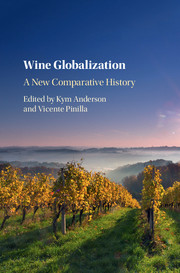
Globalization reflects its terroir, I used to tell audiences at book talks, and the volume that Kym Anderson, Vincente Pinilla, and their talented team of authors have assembled take this idea one step further. The core of the book is a collection of historical case studies of how national wine industries have developed in both the old and new wine worlds in the context of global markets.
Two things struck me as I read the studies. First, I was excited by how detailed and interesting this research is. Fascinating. Irresistible. I couldn’t wait to turn the page to read more.
The second striking feature was how much wine globalization really does reflect its terroir. Although there are some common themes (the impact of phylloxera and the Great Depression, for example), the fact is that wine has developed and evolved in distinctly different ways in different parts of the wine world. Globalization has been an important factor in many cases, but not in the same way everywhere.
Argentina’s Unique History
Let me use the excellent chapter on Argentina by Steve Stein and Ana Maria Mateu as an example. Argentina’s wine history has been shaped by a series of strong internal and external forces. Let’s start with the grapes. Spanish missionaries from the Canary Islands brought high-yielding low-quality Criolla grapes with them and this set the tone for wine-making and drinking for much of the country’s history.
French wine authority Michel Aimé Pouget was lured away from his work in Chile to improve wine quality and he brought higher quality grapevines, including especially Malbec. Alas, the authors tell us, Malbec was frequently valued less for the quality of its wines than the fact that they were dark and strong and could therefore successfully be diluted with water without completely losing their identity as wine. Low standards like this defined the domestic market for decades.
British influence, in the form of the railroads that they financed and helped to build, had a profound impact on Argentina wine. Prior to the railroads that connected Mendoza and San Juan with bustling Buenos Aires, the domestic wine industry was quite small.
Mendoza and environs made wine for local consumption. Buenos Aires residents (more and more of them immigrants from Spain and Italy) filled their glasses with imported wine. Lower land transportation costs changed everything when the train line was completed, expanding the internal market and fostering a wine boom.
Anticipating the impact of the railroads, Mendoza officials sent recruiters to Europe to bring back experienced Spanish and Italian wine-growers and wine-makers who expanded the industry. With phylloxera spreading at home and hard times all around, the difficult decision to uproot and replant families and businesses to immigrant-hungry Argentina was easy to make.
Peso Problems
The list of international and global forces and effects in Argentina is a long one and I only scratch the surface here. In recent decades, for example, the government’s strong-peso policy of the 1990s (the peso was linked to the U.S. dollar) made imports of wine-making equipment and technology artificially cheap and wineries were quickly upgraded. The collapse of this monetary system and the peso crisis that followed made the output of those wineries artificially cheap to foreign buyers, a factor in the country’s wine export boom.
Rapid domestic inflation combined with an unyielding exchange rate earlier this decade made the peso over-valued again and the wine export boom fizzled. Policies are changing now. Perhaps the export boom will return, albeit in a different form. Too soon to tell at this point.
Argentina’s wine history and its experience with international and global forces is fascinating and other chapters in the book are equally interesting. Wine’s story is a complicated one, with each nation developing and responding in a different way depending on many factors including history, culture, institutional structure, timing, and government policy.
This book is a great resource for anyone interested in understanding the wine world today and how we got here. The volume concludes with “Projecting Global Wine Markets to 2025” by Kym Anderson and his colleague Glyn Wittwer, a set of forecasts and analyses based upon their econometric model of global wine markets.
Economists Know the Price of Everything …
Wine Globalization has many strengths that recommend it to a broad readership and one obvious weakness that will discourage some who would otherwise benefit from studying it: the price. If you are not familiar with the academic book market, the price of this volume will take your breath away: $139.50 for the hardback and $124 for the Kindle on Amazon.com.
This is how books are often priced by academic publishers, who need to spread high fixed costs over small expected press runs. If you have a son or daughter in college (or are in college yourself), you already know what textbooks cost these days. Incredible.
But all the news about price is not so discouraging. Kym Anderson and his colleagues at the Wine Economics Research Center at the University of Adelaide provide an enormous array of useful and interesting global wine market data (some of which informs the Wine Globalization volume) for the attractive price of … free. Free! Here are some of the data sets you might want to explore. (You can find even more data here.)
Hegel wrote that the Owl of Minerva only takes flight at dusk, suggesting that wisdom (the owl) finally awakes when the day is nearly done and the opportunity to benefit from insight has almost passed. It is a sad thought — I hope that Hegel is wrong — but it captures pretty well the gist of this new book by James Conaway, who has been writing about the Napa Valley for many years.
Conaway’s new book presents a series of vignettes and profiles that collective capture the ongoing wine war in the Napa Valley. Conaway is not a neutral observer in this battle, so this is a tale of white hats and black hats.
The White Hats include Andy Beckstoffer, Volker Eislele, and Randy Dunn, leaders in movements to preserve Napa’s farming and environmental heritage. The Black Hats include Mike Davis, Jean Charles Boisset, and especially Kathryn and Craig Hall, who have told their side of the wine wars story in their book A Perfect Score.
Reading Conaway’s book about what’s wrong with the Napa Valley made me sad because it reminds me about something that is wrong with society today. The Napa Valley of Conaway’s book is full of people with their backs to the wall, angry, suspicious, and unwilling to bend or compromise. Reminds me of any number of issues in society today (guns and immigration, for example).
There doesn’t seem be much room for meaningful dialogue. Sometimes it seems like there isn’t even a common language, much less common values or goals. Gridlock prevails: movement is slowed or stifled, but threats remain.
Only at the very end of the book — dusk, I suppose, or last light — does Conaway give a sense that there might be some coming together, working together. Hope it is not too late. But recent news is not encouraging.
Pressures continue to grow. Last week, for example, the Napa Country Board of Supervisors voted to put an initiative on the June ballot that would shut off development in certain areas. Pro and con forces seem to be prepared for a serious fight over the future. Meanwhile an interview with James Conaway suggests that he’s given up hope. Too little, too late.
I learned a lot about the Napa Valley, wine wars, and the White Hat and Black Hat combatants from this book, but I admit to being disappointed. Conaway takes a strong stand with his White Hat friends and his anger and outrage come through clearly. But I wonder what the conflict looks like from the perspective those who are in the middle, trying to balance interests and reconcile development and environment before the last light is gone? That’s a book that I would like to read.
Not that there aren’t glimpses here of what a working consensus might look like. I was especially intrigued by the sixteenth chapter, which gives an account of how John Williams of Frogs Leap Winery led a successful movement to restore a stretch of the Napa River. Water, Conaway suggests, is at the root of all conflict in Napa. Rivers both divide and unite. The Williams story shows that it is at least sometimes possible to find common ground.
Building that common ground where shared values are developed and real progress can be made is important both for Napa and for society in general. Having started with Hegel’s owl, I conclude with William Butler Yeats’ falcon, from “The Second Coming.”
Turning and turning in the widening gyre
The falcon cannot hear the falconer;
Things fall apart; the centre cannot hold;
Mere anarchy is loosed upon the world …
Silicon Valley Bank recently released their 2018 State of the Industry report on the U.S. wine market and if you haven’t read it you should. It is well researched, written, and argued. Most important, it will challenge your ideas about the U.S. wine industry and make you think.
Most of the media reaction to the report has focused on two “boom and bust” elements: the predictions that (1) the 20-year wine market expansion is coming to an end and (2) that the relentless rise in grape prices and vineyard valuations in Napa Valley will pause or plateau.
Both of these predictions are significant although, as the report notes, calling a “turn” in the market is inherently problematic and will be difficult to assess until a few years down the road. In the short term, for example, the report notes that the U.S. wine market should continue to grow in 2018, although at a slower pace. Value will grow faster than volume due to the “two track” U.S. market with growth in premium wine sales offsetting declining lower-shelf demand.
This Changes Everything?
Boom and bust make headlines, but there are two important points that the SVB report makes that I think should get more attention. The first is the fact that we are witnessing fundamental changes in the retail market environment. Not just retail wine market, retail everything (or just about). Who buys, when, where, and how, who consumes, when, where, why, and how. Even the way people pay is changing. Amazon is one driving force in this environmental transformation, but only part of it.
This fact was driven home to me a few weeks ago when I read that the Swiss luxury group Richemont (controlled by South Africa’s Rupert family), announced plans to buy out Yoox Net-a-Porter, an Italy-based luxury “etailer.” Richemont’s brands include Cartier, Van Cleef & Arpels, Piaget, Vacheron Constantin, Jaeger-LeCoultre, IWC Schaffhausen, Panerai and Montblanc. High end stuff.
You might think that consumers would be willing to buy books and t-shirts online but that they would hesitate to throw down $5000 or more for jewelry or a watch without holding it in their hands. But you would be wrong, or so the Richemont folks believe. The idea kind of takes my breath away.
It’s a new world for wine as for other things, the SVB report suggests. And the patterns and practices that were successful in years gone by, including but not limited to bricks-and-mortar versus online sales, are not guaranteed to work in the future. Time to question and rethink.
Talking ‘Bout the Generations
A second interesting but possibly under-appreciated point that the SVB report raises concerns generational analysis of the wine market. Most of what you read about wine today frames the changing market demographics in terms of baby boomers versus millennials. But, as this figure from Statista.com suggests, there is a “missing middle” to this analysis. The figure shows 2016 median household income by age of householder.
Lost in the focus on rising younger, poorer millennials versus declining older, richer boomers is the Gen-X generation who are in their 40s now (more or less) and reaching their peak earning (and consuming) years. They are, SVB argues, an important but sometimes underappreciated market for wine. And, as a recent Wine Access study reveals, although Gen-X is a smaller cohort than boomers or millennials, they are willing and able to spend proportionately more on wine.
I think these are very useful insights, although I’m always a bit cautious regarding generational analysis. My years as a university professor taught me that the differences between generations are sometimes less important than diversity within them. Sometimes it is appropriate to generalize about a generation, but not always.
Take boomers, for example. The conventional wisdom is that baby boomers have driven the wine market growth — and this is true — but remember that most boomers don’t drink wine regularly and many don’t drink it (or any alcohol) at all.
The boomer wine boom is driven by a relatively small segment of this generational group. In a way, the boomer wine phenomenon is about a subgroup that is at least somewhat atypical of its cohort — and that difference is key.
The SVB report goes well beyond boom and bust to include these significant insights and many others, too. Highly recommended for anyone who wants to understand the American wine industry today and where it is headed.
>>><<<
Congratulations to Rob McMillan and his team for a thought-provoking report.


 Sue and I recently returned from a press tour to three French wine regions — Languedoc, Roussillon, and the Loire Valley — that are benefiting from the current surge in demand for French wines in the U.S. market. As I
 Now I am not going to say that cheap wine production has disappeared, but the momentum has decidedly shifted to better wines made with more marketable grape varieties such as Grenache, Syrah, and Mourverde along with standbys like Carignan.
 When we arrived at
 What do you think of when you think of French wine? If you are like most people, your thoughts probably stray to the iconic regions of Burgundy, Bordeaux, and Champagne. These regions and their wines are fundamental to the way we understand U.S. French wine and wine generally.
 There is a big world of American wine out there, full of surprises. Wine is made in all 50 states, so “Support your local wine industry” is practical advice. Sometimes this requires you to head off the the vineyards, but sometimes they can come to you. Case in point … the booming Boise, Idaho wine scene.


 I was busy this winter speaking at national and regional wine industry gatherings here in the United States: the
  Wine Globalization: A New Comparative History
 James Conaway,
  Silicon Valley Bank